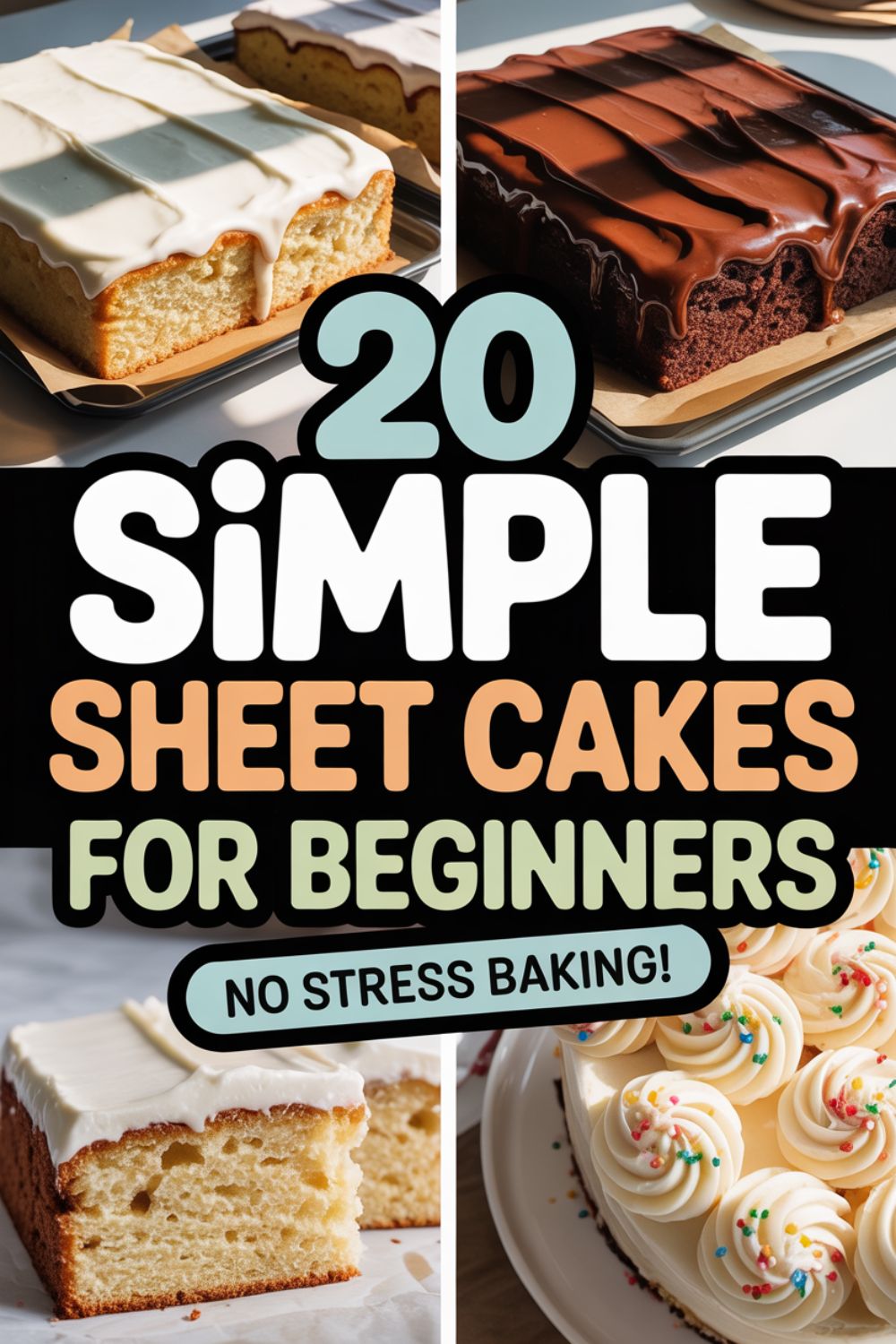
20 Simple Sheet Cake Recipes for Beginners
Look, I’m just going to say it: sheet cakes are the unsung heroes of the baking world. While everyone’s out here stressing over multi-layer masterpieces that require engineering degrees, sheet cakes are quietly feeding crowds, showing up to potlucks, and saving your sanity on a Tuesday night. They’re basically the friend who always comes through when you need them.
Here’s the deal—if you can stir batter and turn on an oven, you can make a killer sheet cake. No fancy piping skills required, no structural integrity panic attacks, and definitely no three-tier disasters waiting to happen. Just one pan, one cake, and a whole lot of deliciousness that you can frost right where it sits.
I spent years overthinking cakes before I realized that sheet cakes were the answer all along. Now? They’re my go-to for birthdays, office parties, and those random Thursday evenings when I just want something sweet without the drama. Trust me, once you nail these recipes, you’ll wonder why you ever bothered with anything else.
Why Sheet Cakes Are Actually Genius
Let’s talk about why sheet cakes deserve way more respect than they get. First off, they’re forgiving as hell. Made a little dent while frosting? Nobody’s gonna notice. Slight uneven baking? The frosting’s got your back. Compare that to a layer cake where one wonky tier can send the whole thing sliding off the counter like it’s auditioning for a slapstick comedy.
The beauty of a sheet cake is in its simplicity. You’re working with one level surface, which means frosting becomes this zen experience instead of a sweaty engineering project. Plus, according to King Arthur Baking, you can actually convert most layer cake recipes to sheet pan format—which basically unlocks your entire baking repertoire.
And can we talk about the frosting-to-cake ratio? Sheet cakes nail it. Every single slice gets a generous amount of frosting without that awkward dry middle layer situation you get with tall cakes. It’s democratic dessert at its finest.
The Science of Not Screwing Up Your Sheet Cake
Here’s what nobody tells you about sheet cakes: they’re actually easier to bake perfectly than their fancier cousins. The thinner profile means more even heat distribution, which translates to fewer dome disasters. Food Network’s testing found that achieving the right balance between fluffy texture and structural integrity comes down to proper mixing techniques and ingredient ratios.
The key? Don’t overmix once your wet and dry ingredients meet. I learned this the hard way after producing what can only be described as a vanilla-flavored hockey puck. Overmixing develops gluten, which makes your cake tough and chewy instead of tender and light. Mix until just combined, and resist the urge to keep stirring just because you can.
Temperature matters too. Room temperature ingredients blend more easily, creating a smoother batter and more even crumb. Cold eggs and butter? That’s a one-way ticket to lumpy batter town. Just pull everything out about an hour before you start baking, or do what I do and stick the eggs in warm water for five minutes.
The Reverse Creaming Method Game-Changer
Want to level up your sheet cake game? Try the reverse creaming method. Instead of creaming butter and sugar first, you coat your dry ingredients with fat before adding the liquids. According to Sally’s Baking Addiction, this technique creates an incredibly tender crumb because it minimizes gluten formation. It’s like a cheat code for professional-level texture.
I use my trusty KitchenAid stand mixer for this method, but honestly, a hand mixer works just fine too. The point is coating those flour particles with butter before moisture hits them. Science, people. It works.
20 Sheet Cake Recipes That’ll Make You Look Like a Baking Genius
1. Classic Vanilla Sheet Cake
This is your foundation recipe, the one you’ll come back to over and over. Simple vanilla bean goodness with a crumb so tender it basically melts in your mouth. I make this for birthdays, random Tuesday cravings, and whenever I need to remember that baking doesn’t have to be complicated. The vanilla flavor really shines when you use quality extract—or better yet, scrape an actual vanilla bean into the batter.
Top it with classic buttercream, or try the whipped buttercream variation that’s lighter than air. Seriously, I could eat it with a spoon. Get Full Recipe
2. Texas Chocolate Sheet Cake
If you haven’t had Texas sheet cake, you haven’t lived. This thin, rich chocolate cake gets topped with warm, poured chocolate frosting that soaks into every crevice. It’s the kind of cake that makes people ask for seconds before they’ve finished their first piece. The secret is adding the frosting while the cake is still warm—it creates this fudgy, almost brownie-like situation that’s absolutely addictive.
I use Dutch-process cocoa powder for deeper flavor, though regular unsweetened cocoa works in a pinch. Just don’t skip the pecans in the frosting. Trust me on this one.
3. Lemon Sunshine Sheet Cake
When life gives you lemons, make this cake. Bright, tangy, and perfect for spring gatherings or whenever you need something that tastes like sunshine in cake form. The cream cheese frosting balances out the lemon’s pucker-factor without overwhelming it. I’ve served this at summer barbecues where it disappeared faster than the burgers.
Pro move: Add lemon zest to both the cake and the frosting for maximum citrus impact. That’s where all the essential oils live, and they pack way more flavor than juice alone.
4. Funfetti Birthday Sheet Cake
Sprinkles aren’t just for kids, and anyone who tells you otherwise is lying to themselves. This vanilla cake studded with rainbow sprinkles is pure joy in edible form. The key is using jimmies (the rod-shaped sprinkles) instead of nonpareils, because they don’t bleed color into your batter during baking.
I keep a set of gel food colorings on hand to tint the frosting whatever color fits the occasion. Pink for Valentine’s, green for St. Patrick’s, or just stick with classic white and let the sprinkles do the talking. Get Full Recipe
For more celebration-worthy desserts, you might love these easy cookie recipes or these classic chocolate chip cookies that pair perfectly with cake at any party.
5. Strawberry Crunch Sheet Cake
This cake tastes like summer nostalgia mixed with those strawberry ice cream bars from your childhood. The cake itself is vanilla-based with strawberry flavor, but the real magic is the crunchy topping made from crushed cookies. It’s texture heaven—soft cake, creamy frosting, crispy topping. Total sensory overload in the best way.
You can find strawberry emulsion at most baking supply stores, and it gives better flavor than extract without thinning your batter. Game changer, especially for strawberry desserts.
6. Brown Butter Caramel Sheet Cake
Brown butter is one of those ingredients that makes you feel like a culinary genius with minimal effort. You literally just cook butter until it smells nutty and turns golden—that’s it. But the flavor payoff? Unreal. This cake combines brown butter in the batter with salted caramel frosting for a sophisticated flavor profile that still feels approachable.
I brown my butter in a light-colored saucepan so I can see when it hits that perfect amber color. Dark pans make it impossible to judge, and burnt butter tastes like regret.
7. Red Velvet Sheet Cake
Red velvet gets a bad rap for being “just chocolate cake with food coloring,” but that’s missing the point entirely. Real red velvet has a subtle cocoa flavor with a tender, velvety crumb (hence the name) that comes from the reaction between buttermilk and vinegar. The cream cheese frosting is non-negotiable—it’s what makes red velvet, well, red velvet.
Skip the entire bottle of red food coloring. A tablespoon or two is plenty, especially if you’re using quality cocoa powder. Your cake should be more burgundy than fire engine anyway. Get Full Recipe
8. Cookies and Cream Sheet Cake
Oreos make everything better, and this cake is living proof. Chocolate cake studded with crushed Oreos, topped with cookies and cream frosting, garnished with more Oreos. Is it over the top? Absolutely. Do people lose their minds when they see it? Also yes.
The trick is folding whole crushed Oreos into the batter gently—if you stir too hard, everything turns gray. Not cute. I use a silicone spatula for gentle folding that won’t deflate the batter.
9. Coconut Sheet Cake
Coconut cake is criminally underrated. This version uses coconut milk in the batter, shredded coconut mixed in, and coconut cream frosting topped with toasted coconut flakes. It’s like a vacation in cake form, minus the sunburn and airport hassles.
Toast your coconut flakes in a dry skillet until golden—it takes like three minutes but amplifies the flavor tenfold. Just watch it carefully because coconut goes from perfect to burnt faster than you can say “tropical paradise.”
10. Peanut Butter Chocolate Sheet Cake
Peanut butter and chocolate is the greatest love story ever told, and this cake is their wedding. Rich chocolate cake with creamy peanut butter frosting, drizzled with chocolate ganache. It’s the kind of dessert that makes people go quiet while they eat because they’re too busy experiencing pure bliss.
I swear by natural peanut butter for the frosting—the kind you have to stir. It has deeper flavor than the super-processed stuff, though it does make the frosting a bit softer. If you need something more stable, regular creamy peanut butter works fine too.
Looking for more peanut butter inspiration? These 5-ingredient cookies include some amazing peanut butter variations that are ridiculously easy.
11. Carrot Sheet Cake
Carrot cake is vegetables, which basically makes it health food. That’s my story and I’m sticking to it. This version is loaded with freshly grated carrots, crushed pineapple, walnuts, and warm spices like cinnamon and nutmeg. The cream cheese frosting is mandatory—no substitutions accepted.
Use the large holes on a box grater for your carrots. The fine grater makes carrot mush, and nobody wants wet cake. You want distinct carrot shreds that add texture and moisture without turning everything soggy.
12. Tiramisu Sheet Cake
All the coffee-soaked, mascarpone-filled glory of tiramisu without the fussy layering situation. This cake gets brushed with espresso while it’s still warm, then topped with a mascarpone whipped cream frosting and dusted with cocoa powder. It’s sophisticated enough for dinner parties but easy enough for a random Wednesday.
Don’t skip the coffee liqueur if you’re making this for adults. It’s what makes tiramisu taste like tiramisu instead of just coffee cake. For a non-alcoholic version, use coffee extract mixed into the espresso.
13. Banana Pudding Sheet Cake
This cake captures everything magical about banana pudding—tender vanilla cake, fresh banana slices, vanilla pudding filling, and vanilla wafer crumbs. It’s nostalgic comfort food that somehow feels fancy because you made it from scratch. Get Full Recipe
Use bananas that are ripe but still firm. Overripe bananas turn mushy and brown, which looks… not great. The vanilla wafers should be crushed but not pulverized—you want some texture, not vanilla wafer dust.
14. Blueberry Lemon Sheet Cake
Blueberries and lemon are the dynamic duo of summer baking. This cake balances tart lemon with sweet blueberries in a way that makes you want to eat the whole pan standing over the kitchen counter. Not that I’ve done that. Multiple times. This week.
Toss your blueberries in a tablespoon of flour before folding them into the batter—it helps prevent them from sinking to the bottom. I learned this trick after making a cake that was basically blueberry-free on top and blueberry soup at the bottom.
15. Cinnamon Roll Sheet Cake
This genius creation tastes exactly like cinnamon rolls but without all the yeast-proofing anxiety. Vanilla cake swirled with cinnamon sugar filling, topped with cream cheese glaze. It’s perfect for brunch, breakfast, or 2am snacking. No judgment on that last one.
To get those pretty swirls, drop spoonfuls of cinnamon-sugar butter mixture over the batter, then drag a butter knife through it in a zigzag pattern. Don’t overdo it or you’ll just mix everything together and lose the swirl effect.
If you’re into easy baking projects that deliver big flavor, check out these no-bake cookies for even simpler sweet treats.
16. Almond Joy Sheet Cake
Chocolate, coconut, and almonds come together in this candy bar-inspired cake that’s way better than the actual candy. Rich chocolate cake filled with coconut frosting, topped with chocolate ganache and whole almonds. It’s over the top and absolutely worth it.
Use sweetened shredded coconut in the frosting, and toast some for garnish. The toasted coconut adds this amazing nutty flavor that plays off the almonds perfectly. I sprinkle sliced almonds on top because whole almonds look pretty but are annoying to bite through.
17. Mint Chocolate Sheet Cake
Not just for Girl Scout cookie season, this cake combines chocolate and mint in a way that feels refreshing instead of toothpaste-y. The secret is using the right amount of peppermint extract—too much and you’ve made dental hygiene cake, too little and you just have chocolate cake. There’s a sweet spot, and finding it is worth the effort.
I add a few drops of green food coloring to the frosting for that classic mint chip look, but you can totally leave it white if you prefer. Either way, garnish with crushed Andes mints because they’re basically the perfect mint chocolate ratio already. Get Full Recipe
18. S’mores Sheet Cake
Everything you love about campfire s’mores without the mosquito bites and smoke in your eyes. Graham cracker cake base, chocolate frosting, toasted marshmallow topping. The marshmallows get torched with a kitchen torch for that authentic charred flavor, or you can broil them if you’re less pyro-inclined.
Crush graham crackers in a food processor or smash them in a bag with a rolling pin. Both methods work, but the food processor gives more uniform crumbs. Save some whole graham crackers for decorating the top—it drives home the s’mores theme.
19. Maple Bacon Sheet Cake
Sweet and salty never tasted so good. This maple-infused cake gets topped with maple cream cheese frosting and crumbled bacon. I know it sounds weird, but trust the process. The bacon adds this smoky, salty element that makes the maple flavor pop instead of being one-note sweet.
Cook your bacon until it’s crispy-crispy, not chewy. Chewy bacon on cake is a texture nightmare. Pat it dry with paper towels to remove excess grease, then crumble it once it’s cooled completely.
20. Strawberry Shortcake Sheet Cake
The grand finale. This cake layers everything you love about strawberry shortcake—tender vanilla cake, fresh sliced strawberries, and billowy whipped cream. It’s light, it’s fresh, and it tastes like summer in the best possible way. Unlike traditional strawberry shortcake, this version feeds a crowd without requiring individual assembly.
Macerate your strawberries with a bit of sugar for at least 30 minutes before using them. This draws out their juices and makes them syrupy and amazing. Those juices soak into the cake and create pockets of intense strawberry flavor. Use stabilized whipped cream if you’re making this ahead—regular whipped cream gets weepy after a few hours.
Essential Tools That Make Sheet Cake Life Easier
You don’t need a fancy kitchen to make killer sheet cakes, but a few key tools make the process way less frustrating. Here’s what actually matters:
The Physical Essentials
- Heavy-duty half sheet pan (13×18 inches) – This is non-negotiable. Flimsy pans warp in the oven and give you unevenly baked cakes. Spend the extra ten bucks on something solid.
- Offset spatula – Frosting a sheet cake with a regular knife is like trying to paint a wall with a toothbrush. The offset spatula is the tool that makes smooth frosting actually achievable.
- Parchment paper – Makes removal so much easier. I buy the pre-cut sheets because I’m lazy and they’re worth every penny.
Digital Resources & Recipe Collections
- Complete Baking Guide eBook – Comprehensive guide covering all the techniques mentioned here plus troubleshooting tips
- Sheet Cake Recipe Bundle – All 20 recipes in downloadable PDF format with step-by-step photos
- Frosting Masterclass Video Series – Learn every frosting technique you’ll ever need, from simple spreads to decorative swirls
Want more baking tips and recipe inspiration? Join our WhatsApp Baking Community where we share daily baking wins, troubleshooting help, and exclusive recipe variations. It’s like having a baking mentor in your pocket.
Common Sheet Cake Mistakes (And How to Avoid Them)
Even simple sheet cakes can go sideways if you’re not careful. Here are the mistakes I see most often, plus how to dodge them entirely.
The Doming Disaster
Sheet cakes shouldn’t dome dramatically in the center, but sometimes they do anyway. This usually happens when your oven runs hot or the edges bake faster than the middle. Solution? Use an oven thermometer to verify your actual temperature, and consider using cake strips around your pan to promote even baking.
If your cake still domes, just level it with a serrated knife once it cools. The frosting will hide any imperfections, and you get to eat the scraps. Win-win.
Dry, Crumbly Texture
Nobody wants sawdust cake. Dry cake usually comes from overbaking or using too much flour. The fix? Set your timer for five minutes less than the recipe suggests and check for doneness with a toothpick. When it comes out with a few moist crumbs (not wet batter, but not totally clean), you’re golden.
Also, measure your flour properly. Spoon it into your measuring cup instead of scooping directly from the bag, which packs it down and gives you way more flour than you need.
Frosting That Won’t Cooperate
Frosting that slides off the cake or refuses to spread smoothly is the worst. Temperature is usually the culprit—if your cake is even slightly warm, the frosting will melt. If your frosting is too cold, it’ll tear the cake surface as you spread it.
Let your cake cool completely (fridge is your friend here), and let your frosting sit at room temperature for 10-15 minutes if it’s been refrigerated. Both should be cool but not cold for optimal spreadability.
Need more cookie inspiration to go with your cake? These soft and chewy cookies and drop cookies are perfect beginner-friendly options.
Frosting Fundamentals That Actually Work
Great cake deserves great frosting, and you don’t need culinary school to nail it. Here’s what you need to know about the most common frosting types for sheet cakes.
American Buttercream
This is your classic powdered sugar and butter frosting. It’s sweet, it’s stable, and it’s incredibly forgiving. The ratio is roughly 3:1 powdered sugar to butter, with a splash of milk or cream to thin it out. Add vanilla extract (or whatever flavoring you want), and you’re done.
The key to avoiding grainy buttercream? Sift your powdered sugar and beat the frosting for at least 5 minutes. That whipping time incorporates air and breaks down any sugar crystals, giving you that smooth, professional texture.
Cream Cheese Frosting
Tangy, less sweet than buttercream, and absolutely perfect for red velvet, carrot cake, and anything lemon-flavored. The formula is similar to American buttercream but with cream cheese replacing some of the butter. Use full-fat cream cheese—the low-fat stuff makes runny frosting that slides right off your cake.
Don’t overbeat cream cheese frosting. Unlike buttercream, too much whipping makes it loose and impossible to spread. Mix until just combined and smooth, then stop.
Whipped Frosting
Light, airy, and way less sweet than buttercream. This is essentially stabilized whipped cream with a bit of cream cheese or mascarpone for structure. It’s perfect for fruit-based cakes or anytime you want something that won’t send everyone into a sugar coma.
You need to stabilize whipped cream if you’re using it for cake. Add powdered sugar and a bit of cornstarch or gelatin to keep it from deflating into sad, weepy puddles. Trust me on this—I learned the hard way at a birthday party where my beautiful cake turned into soup by hour two.
Decorating Ideas That Don’t Require Art School
Sheet cakes are a blank canvas, but you don’t need to be Picasso to make them look good. Here are some foolproof decorating approaches that always work.
The Rustic Swirl
Literally just spread your frosting and make swoopy patterns with an offset spatula. There’s no wrong way to do this. The imperfections are the point—it looks homemade and charming instead of trying-too-hard-perfect. Add some fresh berries or edible flowers if you want to fancy it up.
The Naked or Semi-Naked Look
Apply a thin layer of frosting so the cake shows through. It’s modern, it’s trendy, and it requires way less frosting than traditional methods. Plus, if you mess up the frosting, it just adds to the “intentionally casual” vibe. This works especially well with darker cakes like chocolate or red velvet.
The Sprinkle Border
Frost your cake however you want, then press sprinkles, chopped nuts, or cookie crumbs around the edges. Instant polish with minimal effort. The border frames the cake and hides any frosting sins around the perimeter. I keep assorted sprinkle collections on hand for exactly this purpose.
Fresh Fruit Arrangement
Slice up some strawberries, arrange citrus wheels, scatter blueberries—whatever fits your flavor profile. Fruit makes everything look more expensive and Instagram-worthy. Plus it cuts the sweetness a bit, which your guests will appreciate after their second slice.
Storage and Make-Ahead Tips
One of sheet cakes’ best features? They’re incredibly make-ahead friendly. Here’s how to plan your baking schedule without losing your mind.
Baking in Advance
You can bake sheet cakes 2-3 days ahead. Let them cool completely, wrap tightly in plastic wrap, and keep at room temperature if frosting within 24 hours, or refrigerate for longer storage. The cake actually improves a bit after a day—the crumb settles and slicing becomes cleaner.
For longer storage, freeze unfrosted cakes wrapped in plastic wrap and foil for up to 3 months. Thaw overnight in the fridge before frosting. I always make two cakes when I’m already in baking mode—one for now, one for the freezer. Future you will be grateful.
Frosting Timeline
Most frostings can be made a week ahead and refrigerated in an airtight container. Bring to room temperature and rewhip before using. Whipped cream frostings are the exception—make those the day you plan to serve for best results.
You can also frost cakes a day ahead. Cover loosely with plastic wrap (don’t let it touch the frosting) and refrigerate. Bring to room temperature for 30 minutes before serving so the frosting isn’t hard and the flavors are at their peak.
Proper Storage After Cutting
Once you’ve cut into your cake, press plastic wrap directly against the cut edges to prevent drying. This creates a seal that keeps moisture in. Store at room temperature for buttercream-frosted cakes, refrigerate anything with cream cheese, whipped cream, or fresh fruit.
Sheet cakes typically stay fresh for 3-4 days, though they rarely last that long in my house. If yours is still around on day five, it’s probably time to admit defeat and toss it.
Frequently Asked Questions
Can I use a different size pan for sheet cake recipes?
You can, but you’ll need to adjust baking time. A 9×13 pan (quarter sheet) will give you a thicker cake that needs longer baking—add 5-10 minutes and check with a toothpick. A larger 18×26 pan (full sheet) makes a thinner cake that bakes faster—reduce time by about 5 minutes. The recipe quantities work best with a standard half sheet pan (13×18 inches), which is what most home recipes are designed for.
Why did my sheet cake sink in the middle?
Usually this happens from opening the oven door too early (before the structure sets), overmixing the batter (which deflates air bubbles), or using expired leavening agents. Make sure your baking powder and baking soda are fresh—they lose potency after about 6 months. Also, resist the urge to peek until at least 75% of the baking time has passed. That blast of cold air can collapse an under-baked cake faster than you can close the door.
How do I prevent my cake from sticking to the pan?
The foolproof method is parchment paper with a light coating of cooking spray. Grease the pan, lay down parchment, then grease the parchment. This double insurance means your cake will release cleanly every single time. You can also use the old-school method of greasing and flouring, but parchment is easier and more reliable, especially for chocolate cakes where flour dust shows up on the surface.
Can sheet cakes be made gluten-free or vegan?
Absolutely. For gluten-free, use a 1:1 gluten-free flour blend designed for baking—King Arthur and Bob’s Red Mill both make good ones. For vegan cakes, replace eggs with flax eggs (1 tablespoon ground flaxseed + 3 tablespoons water per egg, let sit 5 minutes), use plant-based milk, and swap butter for vegan butter or coconut oil. The texture won’t be identical to traditional cake, but it’ll still be delicious.
What’s the best way to transport a frosted sheet cake?
If your cake is in a pan with a lid, you’re golden—just snap the lid on and go. For cakes on a platter or board, use toothpicks inserted into the top of the cake (stick them in about halfway), then carefully drape plastic wrap over them. The toothpicks hold the plastic away from the frosting so you don’t destroy your beautiful work. Put the whole thing on a flat surface in your car and drive like you’re transporting nitroglycerin. No sudden stops.
Final Thoughts on Sheet Cake Mastery
Here’s the truth: sheet cakes are probably the smartest thing you can add to your baking repertoire. They’re forgiving, they’re scalable, and they deliver maximum deliciousness with minimum drama. While everyone else is stressing over tier stability and dowel placement, you’ll be over here casually frosting a single layer and getting the same applause.
The recipes I’ve shared here cover everything from classic crowd-pleasers to fun flavor combinations that’ll make you the hero of every potluck. Start with the basics—vanilla, chocolate, lemon—and work your way up to the more adventurous options once you’ve got the technique down. There’s no trophy for jumping straight to the hardest recipe, and honestly, sometimes a perfectly executed vanilla cake beats a complicated flavor experiment that didn’t quite land.
Remember, baking should be fun. If you’re not enjoying the process, you’re doing it wrong. Sheet cakes take the pressure off while still letting you create something genuinely impressive. They’re the sweatpants of the cake world—comfortable, reliable, and somehow still acceptable in public.
So grab your half sheet pan, preheat that oven, and get baking. Your friends, family, and coworkers are about to become very, very happy people. And when they ask for your secret? Just smile and tell them it’s easier than it looks. Because it is.