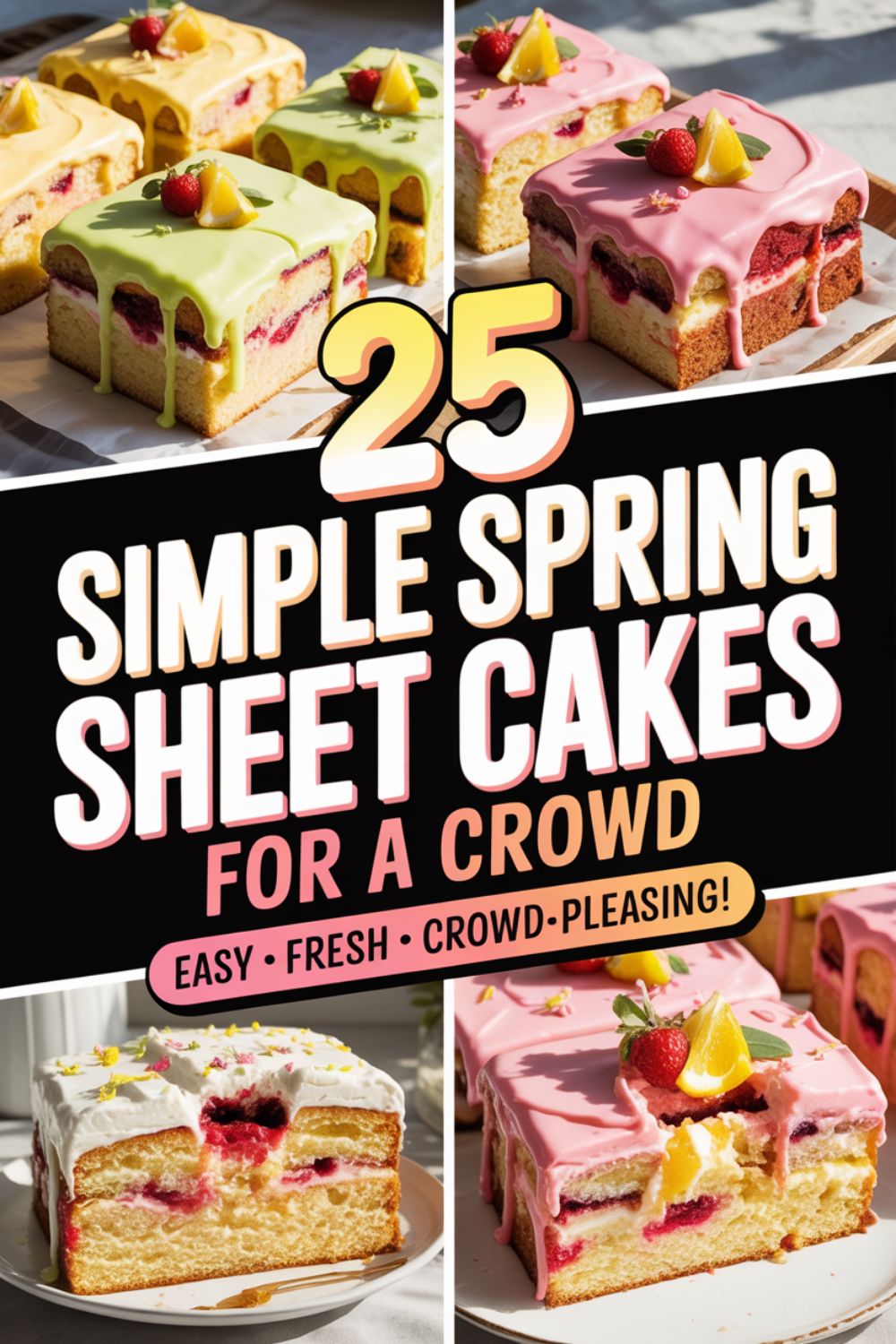
25 Simple Spring Sheet Cakes for a Crowd
Spring gatherings are the absolute worst time to be stuck in the kitchen when everyone else is outside enjoying the sunshine. You need a cake that feeds twenty people without requiring three hours of decorating or a degree in pastry arts. That’s exactly where sheet cakes come in—they’re the heroes nobody talks about until they’re frantically Googling “easy cake for 30 people” at 11 PM.
I’ve spent enough springs stress-baking layer cakes only to realize I could’ve made something simpler and just as delicious. Sheet cakes are straightforward, forgiving, and actually stay moist way longer than their fussy layer cake cousins. Plus, you can frost them right in the pan if you’re feeling efficient.
Here’s my collection of 25 spring sheet cakes that actually work for crowds. These aren’t complicated showstoppers—they’re reliable, crowd-pleasing recipes that let you spend more time with your guests and less time babysitting the oven.
Why Sheet Cakes Actually Make Sense for Spring
Sheet cakes don’t get enough credit. Everyone’s busy trying to stack three layers without causing structural collapse, meanwhile sheet cakes just sit there being perfect and low-maintenance. You bake them in a 13×9-inch pan (or a half-sheet if you’re really feeding an army), frost them once, and you’re done.
Spring weather is unpredictable, which means your outdoor party might turn into an indoor situation real fast. Sheet cakes travel well, they don’t need special storage, and honestly? They taste better. More surface area means more frosting-to-cake ratio, and I’m not apologizing for that math.
The other advantage nobody mentions: portion control becomes way easier. You can cut neat squares instead of trying to slice triangular pieces from a round cake while maintaining your sanity. When you’re serving thirty people, that matters.
Pro Tip
Line your sheet pan with parchment paper before adding batter. Seriously, just do it. You can lift the entire cake out after cooling, frost it on a cutting board, and skip the whole “will it come out cleanly?” anxiety spiral.
Classic Spring Flavor Combinations That Never Disappoint
Lemon Everything
Lemon sheet cakes are the unofficial cake of spring. The brightness cuts through the richness, and people somehow convince themselves citrus makes dessert healthy. I use fresh lemon juice and zest—the bottled stuff just doesn’t hit the same. A simple glaze works fine, but if you want to get fancy, cream cheese frosting with lemon zest takes it up a notch without requiring a culinary degree.
The trick with lemon cakes is not overdoing the tartness. You want bright and sunny, not “I just bit into a raw lemon” vibes. Balance is everything. If you’re looking for more citrus inspiration, these lemon cake recipes cover everything from subtle to aggressively citrusy.
Strawberry Shortcake Style
Take a vanilla sheet cake, top it with fresh strawberries and whipped cream, and suddenly you’re a spring entertaining genius. I macerate the strawberries first—just toss them with a bit of sugar and let them sit for 20 minutes. They release their juices and create this light syrup that soaks into the cake.
You can assemble this right before serving, which means no soggy cake anxiety. Keep the components separate until go-time. I slice the strawberries instead of leaving them whole because it’s exponentially easier to serve and eat. Nobody wants to chase a whole berry around their plate with a fork.
For a fun twist on spring flavors, try these strawberry cake variations that go beyond the basic shortcake setup.
Coconut Lime Situation
Coconut and lime together taste like spring break without the questionable decisions. The combo works because coconut is rich and lime is sharp—they balance each other out. I use coconut milk in the cake batter and add lime zest to the frosting. You get tropical vibes without needing to add pineapple or other divisive ingredients.
Toast some shredded coconut and sprinkle it on top for texture. Use a sheet pan with even heat distribution so the edges don’t dry out while the middle bakes. Nobody likes dry coconut cake—it’s like eating sweetened sawdust.
“I made the coconut lime sheet cake for my daughter’s graduation party and it disappeared in fifteen minutes. People kept asking if I bought it from a bakery. I absolutely did not tell them how easy it was.” — Rachel M.
Chocolate Options That Work for Spring
People act like chocolate is only for fall and winter, which is ridiculous. Chocolate works year-round, especially when you pair it with spring-appropriate flavors. The key is keeping things lighter—skip the heavy ganache and go for something that won’t make everyone need a nap immediately after dessert.
Chocolate Sheet Cake with Raspberry Frosting
This is my go-to when I need something that looks elegant but doesn’t require me to learn new skills. A basic chocolate sheet cake with raspberry buttercream hits that sweet-tart balance people love. I add a tiny bit of raspberry jam to the frosting for extra flavor and that pretty pink color.
Fresh raspberries on top make it look like you tried way harder than you did. Arrange them in rows or just scatter them randomly—both work. The important part is using good quality cocoa powder. The cheap stuff tastes like brown sadness. For more chocolate-forward options, check out these chocolate cake recipes that lean into rich, intense flavors.
Mocha Sheet Cake
Coffee and chocolate together is basically acceptable morning cake. Add a tablespoon of instant espresso powder to your chocolate cake batter—it intensifies the chocolate flavor without making it taste like coffee. Then frost it with a simple coffee buttercream. Adults appreciate this version way more than kids do, which sometimes works in your favor.
I use my offset spatula to get the frosting smooth without overthinking it. Sheet cakes don’t need to be perfect. Actually, they look better with a slightly rustic finish. The whole “I’m too effortless to care” aesthetic works here.
Fruit-Forward Cakes That Celebrate Spring
Blueberry Lemon Cake
Blueberries and lemon is one of those combinations that just works. The blueberries burst while baking and create these little jammy pockets throughout the cake. I toss the blueberries in a bit of flour before adding them to prevent them all from sinking to the bottom. Does it work perfectly? Not always. But it helps.
Fresh blueberries are obviously ideal, but frozen work fine if you’re making this in early spring when fresh berries are still expensive. Don’t thaw them first—add them frozen directly to the batter. A simple lemon glaze over the top ties everything together. Get Full Recipe
Peach Sheet Cake
Late spring brings early peaches, and this cake makes the most of them. Slice the peaches thin and arrange them on top of the batter before baking. They caramelize slightly and create this gorgeous pattern. I sprinkle a bit of cinnamon sugar over the peaches before the cake goes in the oven.
The cake itself stays simple—just a vanilla or almond base that lets the peaches shine. You want the fruit to be the star here, not the cake. Serve it warm with a scoop of vanilla ice cream if you really want to impress people. These moist cake recipes include several fruit-based options that stay tender without getting soggy.
Rhubarb Upside-Down Sheet Cake
Rhubarb screams spring, even though most people only know it from pie. An upside-down sheet cake lets you show off those pretty pink stalks while keeping things simple. Butter and brown sugar go in the bottom of the pan first, then the rhubarb, then the cake batter on top. When you flip it after baking, you get this beautiful caramelized fruit layer.
Rhubarb is tart, so balance it with enough sugar. I also add a bit of vanilla to the cake batter to round out the flavors. You can mix strawberries in with the rhubarb if you want something a little sweeter and more familiar. For more ideas with surprising presentation styles, try these upside-down cake variations.
Tools & Resources That Make Baking Easier
Here’s what actually helps when you’re baking for a crowd:
- Professional-grade sheet pan – Get one with straight sides and even heat distribution. The cheap ones warp in the oven and your cake bakes unevenly.
- Bench scraper – Perfect for smoothing frosting and lifting cake slices without destroying them.
- Digital kitchen scale – Measuring by weight instead of volume makes a huge difference in consistency.
- Spring Baking Recipe Collection (Digital Download) – Includes measurement conversions, troubleshooting guides, and shopping lists
- Sheet Cake Decorating Guide (PDF) – Simple techniques that make your cakes look professional without requiring piping skills
- Seasonal Ingredient Swap Chart – Shows you how to adapt recipes based on what’s actually available and affordable
Join our WhatsApp Baking Community for real-time tips, recipe swaps, and troubleshooting help when your cake inevitably does something unexpected.
Easy Frosting Options That Don’t Require a Piping Bag
Let’s be honest—most people don’t have the patience or hand-eye coordination for elaborate frosting designs. Sheet cakes work perfectly with simple frosting techniques. You literally spread it on with a spatula and call it done. Here are the frostings I actually use instead of just looking at pretty pictures of.
Classic Buttercream
American buttercream is sweet, easy, and doesn’t require any fancy techniques. Butter, powdered sugar, vanilla, and a splash of milk. That’s it. You can flavor it with anything—extracts, citrus zest, melted chocolate, instant coffee. The texture spreads easily and it sets up nicely so you can stack cake slices without everything sliding apart.
I make mine slightly softer than typical by adding extra milk. It spreads more easily and doesn’t tear the cake surface. For detailed techniques and flavor variations, these buttercream recipes cover pretty much every option you’d want.
Cream Cheese Frosting
Cream cheese frosting is tangy, less sweet than buttercream, and pairs beautifully with fruit cakes. Real cream cheese only—not the whipped stuff. Make sure your cream cheese and butter are at room temperature before you start or you’ll get lumps. Nobody wants chunky frosting.
I add a tiny pinch of salt to cream cheese frosting. It balances the sweetness and makes the other flavors pop. This frosting needs to stay refrigerated if you’re not serving immediately, especially in warm weather. Check out these cream cheese frosting variations for ideas beyond the basic version.
Whipped Cream Frosting
Whipped cream frosting is lighter than buttercream and less rich, which some people prefer. Stabilize it with a bit of gelatin or cream cheese so it doesn’t deflate immediately. I use cold mixing bowls and beat it until stiff peaks form—don’t over-whip or you’ll end up with butter.
This frosting needs to be applied closer to serving time since it doesn’t hold up as well as buttercream. But for spring cakes served within a few hours? Perfect. These whipped cream frosting recipes include stabilization techniques that actually work.
Quick Win
Freeze your cake layers for 15 minutes before frosting. The cold surface keeps crumbs from mixing into your frosting, and everything stays neat without requiring a crumb coat. Life-changing trick right there.
Decorating Ideas That Look Impressive But Aren’t
Sheet cakes offer a big, flat canvas that’s honestly easier to decorate than round cakes. You don’t need to worry about smooth sides or even layers. Just the top surface. Here’s what actually looks good without requiring artistic talent or three hours of your life.
Fresh Flowers and Herbs
Stick some edible flowers on top and suddenly your basic vanilla cake looks like it belongs in a magazine. Pansies, violas, and nasturtiums are all edible and gorgeous. Wash them gently first and make sure they’re actually labeled as edible—not all flowers are safe to eat, and you really don’t want to send your guests to the ER.
Fresh herbs like mint or basil also work, especially on lemon or berry cakes. A few sprigs tucked around the edges or scattered across the top add color and a subtle fragrance. This takes approximately 30 seconds and makes you look like someone who has their life together.
Fruit Arrangements
Arrange fresh berries, citrus slices, or sliced stone fruits in rows or patterns across the frosted cake. It’s geometric and pretty without requiring any actual skill. I usually do diagonal rows of strawberry slices or concentric circles of blueberries. Looks intentional, takes minimal time.
Add the fruit right before serving so it doesn’t bleed color into the frosting or make things soggy. I pat the fruit dry with paper towels first to remove excess moisture. For more ideas on making cakes look polished without advanced techniques, check out these minimalist decorating approaches.
Simple Glaze Drizzle
Mix powdered sugar with liquid (milk, cream, citrus juice) until it’s the consistency of thick syrup. Drizzle it over the cake in random patterns or neat lines. You can use a spoon, a squeeze bottle, or just pour it from a measuring cup. All methods work.
The glaze sets up slightly as it cools but stays a bit tacky, which actually helps if you want to sprinkle something on top—toasted coconut, chopped nuts, citrus zest. It sticks to the glaze. According to baking science research, the ratio of liquid to sugar determines whether your glaze will be opaque or translucent, thick or thin.
Make-Ahead Strategies That Actually Work
Spring is busy. You don’t have time to bake the morning of your event. Most sheet cakes taste better the next day anyway—the flavors meld and the texture improves. Here’s how to plan ahead without sacrificing quality.
Bake and Freeze
Unfrosted sheet cakes freeze beautifully for up to three months. Let the cake cool completely, wrap it tightly in plastic wrap, then wrap again in aluminum foil. Label it with the date and type because frozen cakes all look the same and you will forget what’s what.
Thaw overnight in the fridge still wrapped. This prevents condensation from making the top soggy. Frost it the day you’re serving it. The cake will taste fresh and nobody will know it spent time in your freezer. For more sheet pan strategies, these sheet pan cake recipes include tips on batch baking and storage.
Frost the Day Before
Buttercream and cream cheese frosting both hold up fine for 24 hours in the fridge. Cover the cake loosely with plastic wrap—use toothpicks stuck in the corners to hold the wrap off the frosting surface so it doesn’t stick. Pull it out about an hour before serving to take the chill off.
Whipped cream frostings don’t love this treatment as much. They can weep or deflate. If you’re using whipped cream, frost it the morning of your event at the earliest. Some sacrifices must be made for that light, airy texture.
Pro Tip
Make your frosting the day before and store it in an airtight container in the fridge. When you’re ready to use it, let it come to room temperature and re-whip it briefly. It’ll be easier to spread and look smoother than frosting made fresh in a rush.
Baking Essentials That Make Life Easier
These are the things that actually sit on my counter and get used constantly:
- Stand mixer with whisk attachment – You can mix by hand, but your arms will hate you. A decent stand mixer changes everything about baking.
- Glass mixing bowls in multiple sizes – They don’t retain odors, you can see what you’re mixing, and they’re microwave-safe for melting butter.
- Silicone baking mats – Reusable, non-stick, and you never run out at the wrong time like you do with parchment paper.
- Spring Entertaining Menu Planner (Digital) – Takes the guesswork out of planning desserts for crowds with serving size calculators
- Frosting Consistency Guide (PDF) – Visual reference showing exactly what your frosting should look like for different applications
- Emergency Substitution Chart – Because you will inevitably realize you’re out of something crucial at 9 PM
Our Recipe Testing Community on WhatsApp shares real-time results, fixes, and alternative ingredient suggestions when things don’t go according to plan.
Adapting Recipes for Dietary Needs
Spring gatherings mean diverse guest lists, which often means dietary restrictions. The good news is sheet cakes are pretty adaptable. You can make substitutions without completely destroying the recipe’s structure. Here’s what actually works based on things I’ve tested instead of just guessed at.
Gluten-Free Options
Replace all-purpose flour with a 1:1 gluten-free baking blend that includes xanthan gum. These blends are specifically formulated to mimic wheat flour’s properties. I’ve had good luck with several brands—the key is checking that they’re meant for baking, not just for thickening sauces.
Gluten-free cakes can be slightly more crumbly, so handle them gently when removing from the pan. They also dry out faster, so don’t overbake. Start checking for doneness five minutes earlier than the recipe suggests. For recipes specifically designed to work without gluten, try these gluten-free baking options that don’t taste like compromises.
Dairy-Free Substitutions
Replace butter with coconut oil or vegan butter in equal amounts. Use non-dairy milk like almond, oat, or soy—they all work fine in cakes. Coconut milk adds richness and works especially well in chocolate or tropical-flavored cakes. For frosting, use vegan butter or coconut cream.
Dairy-free frostings won’t taste identical to traditional versions, but they’re still good. Don’t try to make them taste exactly like buttercream—just make them taste good on their own terms. That mindset shift helps. Research on plant-based milk alternatives shows they provide similar moisture content with varying protein and fat levels.
Reduced Sugar Versions
You can typically reduce sugar by about 25% without drastically affecting texture. Beyond that, cakes become dense and dry because sugar does more than just sweeten—it tenderizes and helps with browning. Use natural sweeteners like maple syrup or honey, but reduce other liquids slightly to compensate for the added moisture.
Stevia and monk fruit sweeteners work in frostings better than in cakes themselves. The measurements get tricky in baked goods. If you’re specifically looking for lower-sugar options, these naturally sweetened cake recipes are formulated to work without regular sugar.
“I made the dairy-free lemon sheet cake for my daughter’s birthday because half her friends have allergies. Not a single kid noticed it was ‘different.’ They just destroyed it in about ten minutes and asked when I’d make it again.” — Jennifer T.
Troubleshooting Common Sheet Cake Problems
Things go wrong. Ovens lie about their temperature. You get distracted and overbake. The cake sticks to the pan despite your best efforts. Here’s how to fix the most common disasters or at least make them less noticeable.
Dry Cake
Overbaking is usually the culprit. Sheet cakes bake quickly because they’re thin. Check for doneness earlier than you think you should. A toothpick inserted in the center should have a few moist crumbs—not be completely clean. Residual heat continues cooking the cake after you remove it from the oven.
If you’ve already overbaked it, brush the cake with simple syrup (equal parts sugar and water, heated until dissolved). This adds moisture back in. The cake will taste slightly sweeter, but sweet is better than dry. Another option is to use extra frosting or add a layer of jam or curd between the cake and frosting for moisture.
Cake Stuck in Pan
Prevention beats cure here. Always grease your pan thoroughly and line the bottom with parchment paper. If it’s too late and your cake is already stuck, put the hot pan on a damp towel for a few minutes. The steam helps release it. Run a thin offset spatula around all the edges before attempting to lift it out.
Worst case scenario? Frost it directly in the pan. Nobody needs to know it wouldn’t come out cleanly. Cut and serve from the pan. It’s more casual but completely acceptable for backyard gatherings. These dump cake recipes are specifically designed to be served from the pan, so you’re in good company.
Uneven Baking
Hot spots in your oven cause some parts to bake faster than others. Rotate your pan halfway through baking. An oven thermometer reveals if your oven’s actual temperature matches what the dial says—mine runs 25 degrees hot, which explained years of mysterious baking failures.
Dark metal pans conduct heat more efficiently than light-colored ones. If you’re using a dark pan, reduce oven temperature by 25 degrees. The edges will bake at the same rate as the center instead of turning into crispy corners while the middle stays gooey.
Transporting Sheet Cakes Without Disaster
Moving a frosted sheet cake from your kitchen to someone’s party tests your patience and balance. The cake slides, the frosting smears, and you question all your life choices. Here’s how to get there with your cake and your sanity intact.
Use the Right Container
A cake carrier with a locking lid is worth the investment if you transport desserts regularly. They’re designed to hold cakes level without the top touching the lid. If you don’t have one, a large cardboard box works. Place the cake on a cutting board or sturdy base that’s larger than the pan for stability.
Put a damp kitchen towel under the cake board inside the box. The moisture creates slight suction that keeps the cake from sliding. This trick works surprisingly well and I learned it from a bakery owner who got tired of arriving at events with destroyed cakes.
Keep It Cool
Buttercream can soften in warm cars. If you’re driving more than 15 minutes in hot weather, bring an insulated cooler bag with ice packs. Put the ice packs on the bottom, not directly on the cake. You want cool air circulation, not frozen frosting.
Plan your trip to minimize time in the car. Pick up ice or other last-minute items before loading the cake. The less time it spends bouncing around in your vehicle, the better it looks when you arrive. For more large-batch baking and transportation tips, these party cake recipes include serving suggestions for big groups.
Frost at the Destination
Sometimes the smart move is transporting the cake and frosting separately and assembling on-site. This only works if your destination has a flat surface and you have a few minutes to frost. But it eliminates the whole “will this survive the drive” stress.
Keep the frosting in a container with a tight lid. Let it come to room temperature before spreading it if it was refrigerated. Cold frosting tears cake surfaces. Give yourself 10-15 minutes for assembly and you’ll arrive less frazzled than if you’d worried about a pre-frosted cake the entire drive.
Frequently Asked Questions
How far in advance can I make a sheet cake?
You can bake the cake up to three days ahead if you store it properly. Wrap the cooled, unfrosted cake tightly in plastic wrap and keep it at room temperature for up to 24 hours, or refrigerate for up to three days. Frost it the day before serving for best results. Frosted cakes with buttercream stay fresh in the fridge for 3-4 days, though the texture is best within the first two days.
What’s the best pan size for feeding 20-25 people?
A standard 13×9-inch sheet pan yields about 20-24 servings depending on how you cut it. If you need to feed more people, use a half-sheet pan (18×13 inches) which gives you about 35-40 servings. Just adjust baking time—larger pans bake slightly longer because there’s more batter to cook through.
Can I turn a regular cake recipe into a sheet cake?
Yes, most cake recipes adapt well to sheet pans. A standard two-layer 9-inch round cake recipe works perfectly in a 13×9-inch pan. The baking time usually decreases by about 5-10 minutes since sheet cakes are thinner than layer cakes. Start checking for doneness earlier than the original recipe suggests and look for a toothpick that comes out with just a few moist crumbs.
How do I keep my sheet cake from drying out?
Don’t overbake—check for doneness 5 minutes before the suggested time ends. Once cooled, cover the cake tightly with plastic wrap or store it in an airtight container. Adding a simple syrup soak (equal parts sugar and water boiled together and cooled) before frosting adds moisture that keeps the cake tender for days. IMO, this extra step makes a bigger difference than most people realize.
What’s the difference between a sheet cake and a slab cake?
The terms are often used interchangeably, but technically a sheet cake refers to a cake baked in a 13×9-inch pan (quarter sheet), while slab cakes are larger and baked in half-sheet pans (18×13 inches). Both use the same basic technique—single layer, frosted in the pan, cut into squares. The main difference is scale and how many people you’re feeding.
Final Thoughts on Spring Sheet Cakes
Sheet cakes don’t need to be boring or basic. The recipes I’ve covered give you enough variety to handle any spring gathering without repeating the same cake every time. From bright citrus flavors to rich chocolate options, there’s something here that’ll work for your specific crowd and skill level.
The beauty of sheet cakes is their flexibility. You can dress them up with elaborate decorations or keep them simple and rustic. Either way, you’re feeding a crowd without spending your entire day in the kitchen. That’s the actual goal—making something delicious that doesn’t require you to miss your own party.
Start with recipes that match your comfort level. If you’re new to baking, stick with simple vanilla or chocolate bases with straightforward frostings. Once you’re comfortable, experiment with different flavor combinations and decorating techniques. But honestly? Even a basic sheet cake with good frosting will disappear fast at any spring gathering.
The most important part is getting something on the table that people enjoy. Perfect presentation matters less than taste and timing. Make the cake, frost it, serve it, and actually spend time with your guests instead of stressing in the kitchen. That’s what spring gatherings should be about.