25 Cake Turntable Decorating Ideas That’ll Transform Your Baking Game
Look, I’m just going to say it: if you’re still trying to frost cakes without a turntable, you’re making life way harder than it needs to be. I spent years doing the awkward shuffle-around-the-counter dance, smearing buttercream with one hand while rotating my cake board with the other, wondering why my “smooth” finish looked like a toddler’s finger painting project.
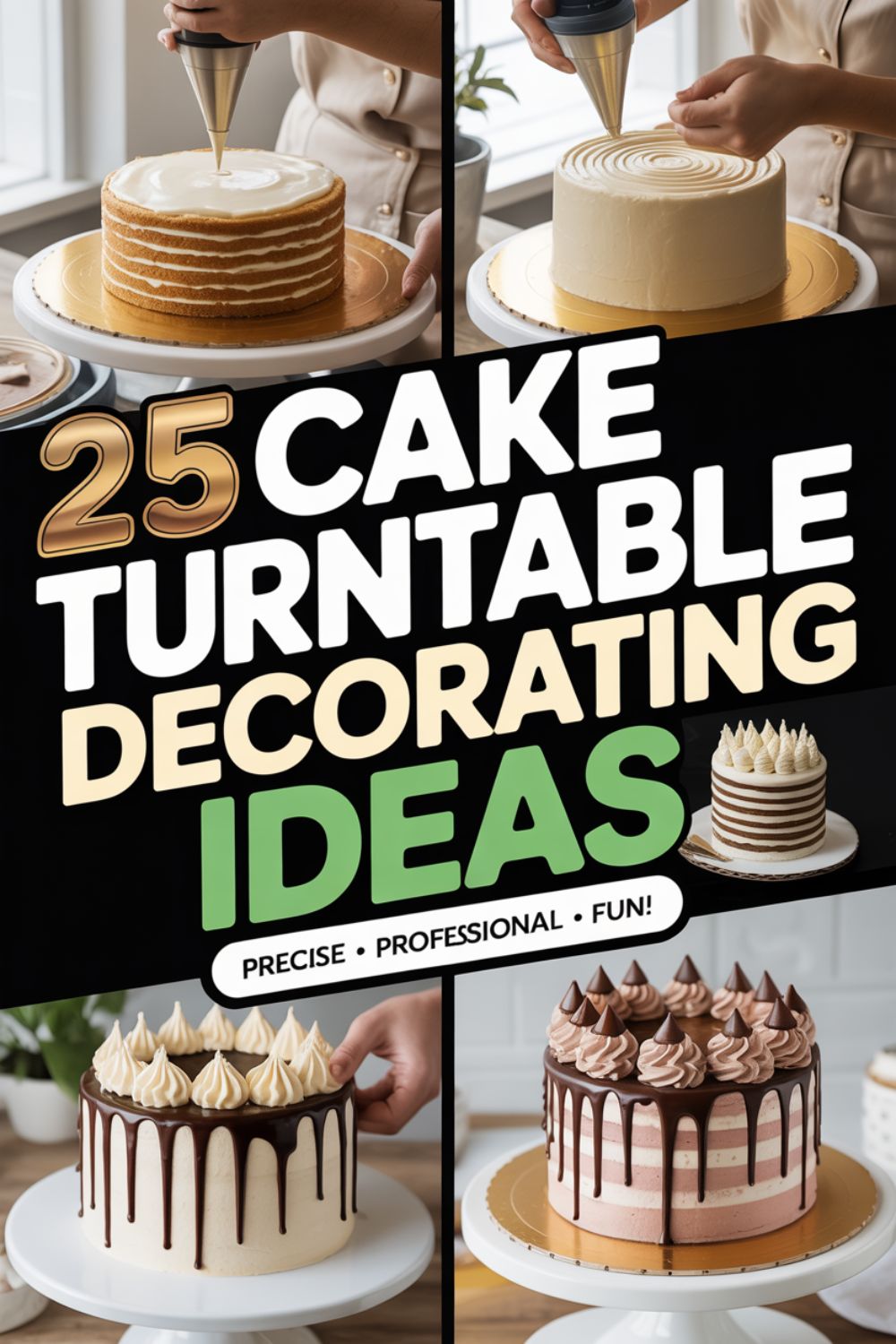
Then I got my first turntable, and honestly? Game changer. Suddenly those bakery-perfect swirls weren’t some mythical skill reserved for culinary school graduates. They were just… achievable. And that’s what we’re talking about today—twenty-five ways to actually use that spinning platform sitting on your counter, from basic buttercream techniques to showstopping designs that’ll make your Instagram followers think you’ve been secretly moonlighting at a fancy patisserie.
No fluff, no overcomplicated techniques that require seventeen specialty tools you don’t own. Just real, practical ideas you can start using tonight. Whether you’re decorating birthday cakes for your kids or perfecting that DIY wedding cake, your turntable is about to become your new best friend.
Why Your Turntable Is Actually Worth the Counter Space
Before we jump into the techniques, let’s talk about why this tool deserves a permanent spot in your kitchen. A quality cake turntable does more than just spin—it gives you consistent control over your decorating angle, keeps your hands free to focus on technique rather than repositioning, and honestly? It makes the whole process way less frustrating.
I used to think turntables were just for “serious” bakers. Turns out, they’re actually most helpful for beginners who are still figuring out how to hold a piping bag without their hand cramping up. The smooth rotation means you can concentrate on keeping your spatula steady instead of trying to rotate a heavy cake with one hand while simultaneously trying not to smudge your hard work.
According to professional cake decorators, the ability to tilt and rotate at various angles transforms intricate piping from a back-breaking ordeal into something almost… enjoyable? You’re not hunching over awkwardly or kneeling on your kitchen floor to get the perfect angle on that bottom border.
The Classic Smooth Buttercream Finish
This is the foundation technique everyone should master first. Get your cake onto the turntable, apply a generous amount of buttercream all over (don’t be stingy—you’ll scrape off the excess anyway), and grab an offset spatula. Hold it at a slight angle against the side of your cake and spin the turntable slowly with your other hand.
Here’s the thing nobody tells you: you’re not moving the spatula. Your hand stays in one position while the turntable does all the work. It feels weird at first, like patting your head and rubbing your stomach simultaneously, but once it clicks, you’ll wonder how you ever did it differently. The top is even easier—just hold the spatula flat and let the rotation create that perfectly smooth surface.
I use a bench scraper for the sides because the straight edge gives me cleaner lines than a curved spatula, but use whatever feels comfortable. Some people swear by icing smoothers—those plastic rectangles with a handle—and honestly, they work great if you can get over the fact that they look like miniature snowplows.
Getting That Bakery-Sharp Edge
Want to know the secret to those impossibly crisp edges where the top meets the sides? Chill your crumb-coated cake for 15 minutes before the final coat. The cold buttercream underneath gives you a firm foundation that won’t budge when you’re smoothing. Then, when you’re doing your final pass with the spatula, tilt it slightly inward at the top edge. The turntable rotation combined with that angle creates that signature 90-degree corner.
If you’re working with different frosting types, keep in mind that Swiss meringue buttercream smooths way easier than American buttercream because of its silkier texture. But American buttercream holds up better in warm weather, so pick your poison.
Textured Designs Using Simple Tools
Okay, so smooth is classic, but textured finishes are where you can really have fun without needing advanced piping skills. Cake combs are these cheap plastic triangles with different edge patterns—zigzags, waves, straight lines—and they’re criminally underused.
Same principle as the smooth finish: hold the comb against your frosted cake and spin the turntable. The pattern emerges like magic. I particularly love the rustic look you get from a simple straight-edge comb—it’s got that “artisan bakery” vibe without screaming “I tried too hard.”
For something even easier, use a regular fork. Yep, just a fork from your silverware drawer. Press it gently into the buttercream and drag it horizontally around the cake while spinning the turntable. You get these delicate horizontal lines that look surprisingly elegant. I did this for a lemon cake last month and got about twelve messages asking what technique I used.
Striped Ombre Effect
This one looks way more complicated than it actually is. Prepare three or four shades of the same color buttercream—say, dark pink, medium pink, light pink, and white. Apply them in horizontal stripes around your cake, roughly smoothing as you go.
Now here’s where the turntable earns its keep: hold your bench scraper against the cake and spin it slowly several times. The rotation blends the colors together into a seamless gradient. The key is not to over-smooth—you want some definition between the shades, not one muddy middle color.
I’ve seen people use this technique on strawberry cakes with pink shades, chocolate cakes with varying shades of brown, and even rainbow cakes with the full spectrum. The possibilities are genuinely endless, and the technique is identical regardless of your color choice.
Speaking of color gradients, you might also enjoy trying these unique flavor combinations or checking out marble cake designs that play with color contrast in the batter itself.
Basket Weave Piping
This is a classic technique that honestly looks intimidating but becomes almost meditative once you get the rhythm down. You’ll need a basket weave piping tip—it’s flat with ridges on one side—and a piping bag filled with buttercream.
Start by piping vertical lines around your entire cake. Then, using the same tip, pipe short horizontal lines across the vertical ones, alternating which vertical line you cover with each row. The turntable is crucial here because you’re constantly rotating to keep the pattern even. Your hands stay in relatively the same position while the cake moves beneath your tip.
IMO, this works best on taller cakes because you get more of that woven effect. I tried it on a short sheet cake once and it just looked… compressed. But on a three-layer cake? Absolutely gorgeous.
Troubleshooting the Weave
If your lines keep breaking or looking uneven, your buttercream is probably too stiff. Add a tablespoon of milk or cream and mix well—you want a consistency that pipes smoothly but still holds its shape. Also, make sure your piping bag isn’t too full; a bag that’s three-quarters full gives you better control than one stuffed to the brim.
Essential Turntable Tools I Actually Use
After wrecking more cakes than I care to admit, here’s what’s actually worth buying:
Physical Tools:- Heavy-duty aluminum turntable – Forget the lightweight plastic ones that wobble under a 9-inch cake. Get something with actual weight and ball bearings.
- Offset spatula set – You need both a large one for sides and a small one for detail work. Non-negotiable.
- Bench scraper – The secret weapon for sharp edges that nobody talks about enough.
- Cake Decorating Basics Video Course – Honestly transformed how I understood buttercream consistency
- Piping Templates PDF Pack – Printable guides you stick under parchment to practice pressure control
- Frosting Troubleshooting Guide – Every problem you’ll encounter and exactly how to fix it
Join our Baking Community WhatsApp Group for daily tips, recipe swaps, and honest answers about why your buttercream keeps splitting (spoiler: temperature issues 90% of the time).
Simple Rosette Border
If you can squeeze a piping bag, you can make rosettes. Use a star piping tip—something like a Wilton 1M or 2D—and pipe small swirls around the base or top edge of your cake. The turntable lets you maintain consistent pressure and spacing because you’re staying stationary while the cake rotates under your tip.
Start each rosette by touching the tip to the cake, squeezing while moving in a tight circle, then releasing pressure and pulling away. Spin the turntable slightly, repeat. The rhythm becomes almost automatic: touch, squeeze-circle, release-pull, rotate. Touch, squeeze-circle, release-pull, rotate.
I use this border on basically every celebration cake I make because it’s quick, forgiving, and looks polished. Plus, if you mess one up, just scrape it off and try again—the beauty of buttercream is its forgiveness.
Watercolor Effect
This trendy technique looks like you hired an artist, but it’s actually just strategic splotching. Spread a thin layer of white buttercream over your cake using the turntable for even coverage. Then, using gel food coloring and a small paintbrush, paint random swatches of color directly onto the buttercream.
Here’s where the turntable becomes essential: using a clean offset spatula or bench scraper, hold it against the cake and rotate slowly. The spinning motion blends the painted colors into the white base, creating that soft watercolor effect. The key is to under-blend—you want distinct color areas, not a muddy mess.
This works beautifully on red velvet cakes with pink and red tones, or coconut cakes with soft blues and teals for that beach vibe.
Ruffled Petal Design
Grab a petal piping tip—it’s teardrop-shaped—and fill your piping bag with buttercream. Starting at the bottom of your cake, pipe overlapping petals in rows while slowly rotating the turntable. Each petal should slightly overlap the one before it, and each row should overlap the row below.
The turntable rotation is what makes this possible without your hand cramping into a permanent claw shape. You’re essentially creating a continuous spiral of petals from bottom to top. It takes patience, but the end result looks like your cake is wearing a fancy ball gown.
FYI, this technique works best with stiffer buttercream because the petals need to hold their shape. If your buttercream is too soft, the petals will droop and lose that crisp edge. Add more powdered sugar if needed—your arm will thank you because stiffer frosting requires less squeezing.
Choosing Your Colors
Ombre ruffles are stunning—start with dark purple at the bottom and gradually lighten to lavender at the top. Or go monochromatic with varying shades of the same color. I’ve also seen gorgeous results with alternating colors in each row, creating a striped effect within the ruffles.
Horizontal Stripes with Sharp Lines
This is deceptively simple but looks incredibly polished. Frost your entire cake in one color and chill it until firm. Using a ruler and toothpicks, mark horizontal lines around the cake at even intervals—say, every inch.
Now pipe your contrasting color in thick lines between the toothpick markers, rotating the turntable as you go. Once you’ve piped all the stripes, use your bench scraper to smooth them flush with the base layer. The turntable rotation ensures your scraper pressure stays consistent, which is how you get those sharp, clean edges between colors.
Remove the toothpicks, touch up any holes, and boom—you’ve got a modern, geometric cake that looks like it came from a trendy downtown bakery. This technique is perfect for graduation cakes using school colors.
Fault Line Cake
Here’s where things get fun. Frost your cake in two colors—say, white on top and gold on the bottom—leaving a horizontal gap in the middle. Fill that gap with edible flowers, sprinkles, fresh berries, or anything decorative that fits your theme.
The turntable is crucial for keeping that fault line level all the way around the cake. As you rotate to fill the gap with decorations, you can see immediately if one side is higher or lower than the other. It’s also way easier to press decorations into the buttercream when you can spin the cake to face you rather than walking around your counter like you’re circling prey.
I love this technique for anniversary cakes filled with gold leaf and fresh flowers. It’s got that “I spent hours on this” vibe when really, it took maybe twenty extra minutes.
While we’re talking about decorative elements, you might want to check out different frosting recipes that hold up better under the weight of heavier decorations, or explore cake pop ideas if you want to use up leftover cake scraps from your leveling.
Drip Effect
Ganache drips are having a moment, and the turntable is what makes them possible. Frost your cake smoothly in buttercream and chill it well—this is non-negotiable because warm frosting will cause the ganache to slide right off into a puddle.
Prepare your ganache (or melted candy melts if you’re going for bright colors) and let it cool slightly until it’s thick but still pourable. Using a squeeze bottle, apply drips around the top edge of your cake while slowly rotating the turntable.
The rotation helps you maintain consistent drip size and spacing. If you do it without spinning the cake, you’ll end up with wildly different drip lengths because your hand position changes as you move around. The turntable keeps everything even because your hand stays in the same spot.
Controlling Drip Length
Short drips? Thicker ganache and less squeeze pressure. Long drips? Thinner ganache and more pressure. Temperature also matters—ganache straight from the stove will run all the way down to the base, while cooled ganache barely drips at all. Find your sweet spot through trial and error, preferably on a practice cake or even just a bowl covered in buttercream.
Piped Buttercream Flowers
Okay, this one requires a bit more skill, but the turntable still makes it easier. Instead of piping flowers directly onto the cake (which is hard and stressful), pipe them onto flower nails with parchment squares, freeze them solid, then transfer them to your finished cake.
But for simple flowers like rosettes or drop flowers piped directly onto the cake, the turntable is your friend. Pipe flowers around the sides or top while rotating the turntable to maintain even spacing. You’re creating a ring of flowers that looks intentional rather than randomly placed.
This works beautifully on carrot cakes with cream cheese frosting flowers, or banana cakes decorated with buttercream daisies.
Tools That Actually Make Decorating Easier
Not trying to upsell you on junk you don’t need, but these genuinely help:
Must-Have Gadgets:- Piping tip set with organizer – Stop digging through a drawer full of random tips. Get the set with the case.
- Disposable piping bags – Yes, I know reusable is better for the planet, but for complex multi-color work, disposables are the move.
- Cake leveler – Your turntable can’t fix unlevel layers, so level them properly from the start.
- Color Theory for Cake Decorating – Which colors work together and how to mix custom shades without ending up with mud
- Buttercream Consistency Guide – Pictures showing exactly what different consistencies look like so you know what you’re aiming for
- Piping Pressure Control Workshop – Video tutorials on the most common technique issue nobody talks about
Our Cake Decorating WhatsApp Group is full of people sharing their wins and disasters in equal measure—join us for real-time troubleshooting and moral support when your ganache won’t thicken.
Vertical Ombre Stripes
Similar to the horizontal ombre, but the color gradient runs vertically instead. Apply vertical stripes of different color shades around your cake—think light blue, medium blue, dark blue, light blue, and so on. Use your bench scraper to smooth while rotating the turntable.
The rotation blends each vertical stripe slightly into its neighbors, creating a soft transition between colors. This looks particularly stunning on taller cakes where you have more vertical real estate to work with. I’ve seen this done beautifully with sunset colors on pineapple cakes for summer parties.
Stenciled Designs
Frost your cake smoothly and then hold a cake stencil against the side. Using a small offset spatula, spread contrasting buttercream over the stencil pattern while holding it firmly against the cake. Carefully peel the stencil away, rotate the turntable to a new section, and repeat.
The turntable makes it easier to hold the stencil steady with one hand while spreading with the other. Plus, you can see at a glance where you’ve already stenciled and where you need to continue the pattern. Just make sure your base layer is completely firm before stenciling, or you’ll smudge your hard work.
Scraped Sides with Exposed Layers
This rustic, semi-naked cake trend is actually easier to achieve than a perfectly smooth finish. Apply buttercream to your stacked layers, then use your bench scraper to scrape away most of the buttercream on the sides while rotating the turntable. You want to see the cake layers peeking through the thin veil of frosting.
The key is consistent pressure as you scrape—too much and you’ll remove all the frosting, too little and it won’t look intentionally rustic. The turntable’s smooth rotation helps you maintain that perfect middle ground. I use this technique constantly on homestyle cakes where you want that “just made with love” appearance rather than formal perfection.
If you’re into this rustic aesthetic, you’ll probably also love bundt cakes which embrace their natural texture, or coffee cakes with crumb topping that lean into cozy, unfussy presentation.
Geometric Buttercream Panels
This modern technique involves piping thick vertical or diagonal lines of buttercream, then smoothing them flush to create raised panels. Start by piping your lines around the cake using a large round tip while rotating the turntable to keep them evenly spaced.
Then comes the magic: use your bench scraper to smooth the entire cake while spinning the turntable. The piped lines create subtle raised panels that catch the light differently than the smooth areas between them. It’s architectural and modern without requiring any artistic skill beyond holding a piping bag steady.
Textured Rustic Peaks
Cover your cake in buttercream, then use the back of a spoon or a small offset spatula to create random peaks and swirls all over. The turntable makes it easy to work your way around the entire cake without missing spots or creating an uneven pattern.
Spin the turntable with one hand while dabbing and pulling peaks with the other. The randomness is what makes this work—there’s no pattern to follow, no technique to master. Just keep creating peaks until the entire cake is covered. This looks particularly gorgeous on coffee-flavored cakes or chocolate cakes dusted with cocoa powder.
Smooth Top with Textured Sides
Combine two techniques: smooth the top of your cake perfectly flat using the turntable and bench scraper, but leave the sides textured with a comb, peaks, or stripes. This contrast draws the eye and makes your cake look more intentional than if everything were smooth or everything were textured.
The turntable lets you switch between techniques seamlessly. Smooth the top with your scraper, then immediately grab your comb for the sides without having to reposition anything. That workflow efficiency is what makes turntables worth their counter space.
Buttercream Scales
Using a small round piping tip, pipe overlapping dots in rows around your cake while rotating the turntable. Each row should sit slightly below the previous one, with each dot overlapping its neighbors like fish scales or roof shingles.
This takes patience—not gonna lie—but the turntable makes it feasible because you’re not contorting your body to reach the back of the cake. Just rotate, pipe a row, rotate, pipe a row. Put on a good podcast and zone out. I actually find this technique meditative once you get into the rhythm.
This looks stunning on pound cakes or cheesecakes where you want an elegant finish without going overboard on decoration.
Two-Tone Swirled Buttercream
This is ridiculously easy and looks impressive. Fill one piping bag with two colors of buttercream side by side—don’t mix them, just let them sit next to each other in the bag. Pipe a thick, continuous swirl around your cake using a large round or star tip while rotating the turntable.
The two colors will naturally swirl together as they’re piped, creating a marbled effect. Continue piping upward in a spiral pattern, covering the entire cake. The turntable keeps your piping even and consistent as you work your way up.
Buttercream Ruching
This elegant technique creates a fabric-like gathered effect. Using a small petal tip held horizontally, pipe thin vertical ribbons with slight waves down the sides of your cake. Rotate the turntable as you work around the entire circumference.
The waviness is what creates that ruched fabric look—straight lines would just be stripes. Practice the wrist motion on parchment first: pipe while gently wiggling your wrist side to side. It feels awkward initially, but your hand learns the rhythm pretty quickly.
Metallic Accent Stripes
Frost your cake in a neutral base color and let it firm up. Then, using edible gold paint or luster dust mixed with vodka, paint horizontal stripes around the cake while rotating the turntable. The rotation keeps the stripes level and evenly spaced.
You can do thin pinstripes for a delicate look or wide bands for something bolder. I particularly love this on tres leches cakes or apple cakes for fall celebrations where that gold accent adds warmth without overwhelming the design.
Abstract Paint Strokes
Here’s where you get to channel your inner abstract artist. Frost your cake in white or cream buttercream, then use gel colors and an offset spatula to create bold paint stroke-style marks around the sides. The turntable lets you view your design from all angles as you work, ensuring the strokes are balanced around the entire cake.
There’s no right or wrong with this technique—just make swooping, confident marks with your spatula loaded with colored buttercream. Rotate, assess, add another stroke where needed. This works especially well for dramatic chocolate cakes with bold red or gold paint strokes.
Piped Lattice Pattern
This takes the basket weave concept but simplifies it into a diagonal lattice. Pipe diagonal lines going one direction around your entire cake using the turntable for consistent spacing and angle. Then pipe diagonal lines in the opposite direction, creating diamond shapes where the lines cross.
The turntable is essential here because maintaining the same angle all the way around the cake is nearly impossible without it. Your hand stays at the same angle while the cake rotates beneath your piping tip, creating perfectly parallel lines.
Frequently Asked Questions
Do I really need a turntable, or can I just rotate my cake plate by hand?
Technically, you can rotate by hand, but you’ll fight yourself the entire time. A proper turntable spins smoothly with minimal effort, letting you focus on technique rather than wrestling with your cake board. According to professional baker testing, the quality of your turntable directly impacts the ease and quality of your decorating—especially for techniques requiring consistent pressure like smooth buttercream finishes or textured patterns. If you’re serious about improving your cake game, get a turntable with ball bearings, not a lightweight plastic one that wobbles under weight.
What’s the difference between a tilting turntable and a regular one?
A tilting turntable lets you angle the platform at various degrees, which is a lifesaver when you’re piping borders or decorations on the sides and top edges. Instead of hunching over or kneeling to get the right angle, you tilt the cake toward you. For most home bakers, a standard turntable works fine, but if you do a lot of intricate piping work or have back problems, the tilting feature is worth the extra cost. Some models offer eighteen different locking positions, giving you precise control over your working angle.
How do I clean my turntable properly?
Wipe down the top surface after each use with warm, soapy water—nothing special there. The important part is cleaning the bearings periodically to keep the rotation smooth. Flip the turntable over and wipe around the bearing mechanism with a damp cloth to remove any buttercream or crumbs that have worked their way in. Let it dry completely before using again. Don’t submerge the entire turntable in water unless the manufacturer specifically says it’s dishwasher safe, because water in the bearings can cause rust or sticking.
Can I use a turntable for other things besides cakes?
Absolutely. I use mine as a lazy Susan for serving appetizers at parties, a display stand for cupcakes or cookies, and even as a convenient platform for painting ceramics or doing detailed craft work. Some people use them as rotating photo platforms for product photography. Basically, anytime you need something to spin smoothly while you work on it from all angles, a turntable is useful. Just keep a separate one for crafts if you’re going to be using paints or glues—don’t cross-contaminate with your food turntable.
What size turntable should I get?
A 12-inch turntable handles most home baking needs comfortably. It fits standard 8-inch and 9-inch cakes with room to work, and even accommodates 10-inch cakes without hanging over the edge. If you frequently make sheet cakes or larger tiered cakes, consider a 14-inch or even 16-inch model. Just remember that larger turntables require more storage space, so balance your needs with your available counter and cabinet space. When in doubt, 12 inches is the sweet spot for versatility.
Your Turntable Is Calling
Here’s the truth: you don’t need to master all twenty-five of these techniques to call yourself a decent cake decorator. Pick two or three that appeal to you and practice them until they feel natural. Then add another technique to your repertoire. Then another.
That’s how you actually improve—by doing, not by reading about doing. Your first smooth buttercream finish will probably have ridges. Your first ombre might look muddy. Your first piped border will have gaps. And that’s completely fine. Every professional decorator you admire on Instagram started exactly where you are now, making wonky cakes in their kitchen and wondering if they’d ever get it right.
The turntable doesn’t magically make you a master decorator overnight. What it does is remove the mechanical struggle of trying to frost or pipe while simultaneously rotating your cake by hand. It lets you focus on technique instead of logistics. It gives you the space to develop muscle memory for pressure control and consistency.
So grab that turntable off your shelf—or finally buy one if you’ve been on the fence—and just start. Pick a simple technique like textured peaks or horizontal stripes and try it tonight on whatever cake you have. The worst that happens? You scrape off the frosting and try again. The best that happens? You create something that makes you genuinely proud.
Now get frosting. Your cakes aren’t going to decorate themselves.