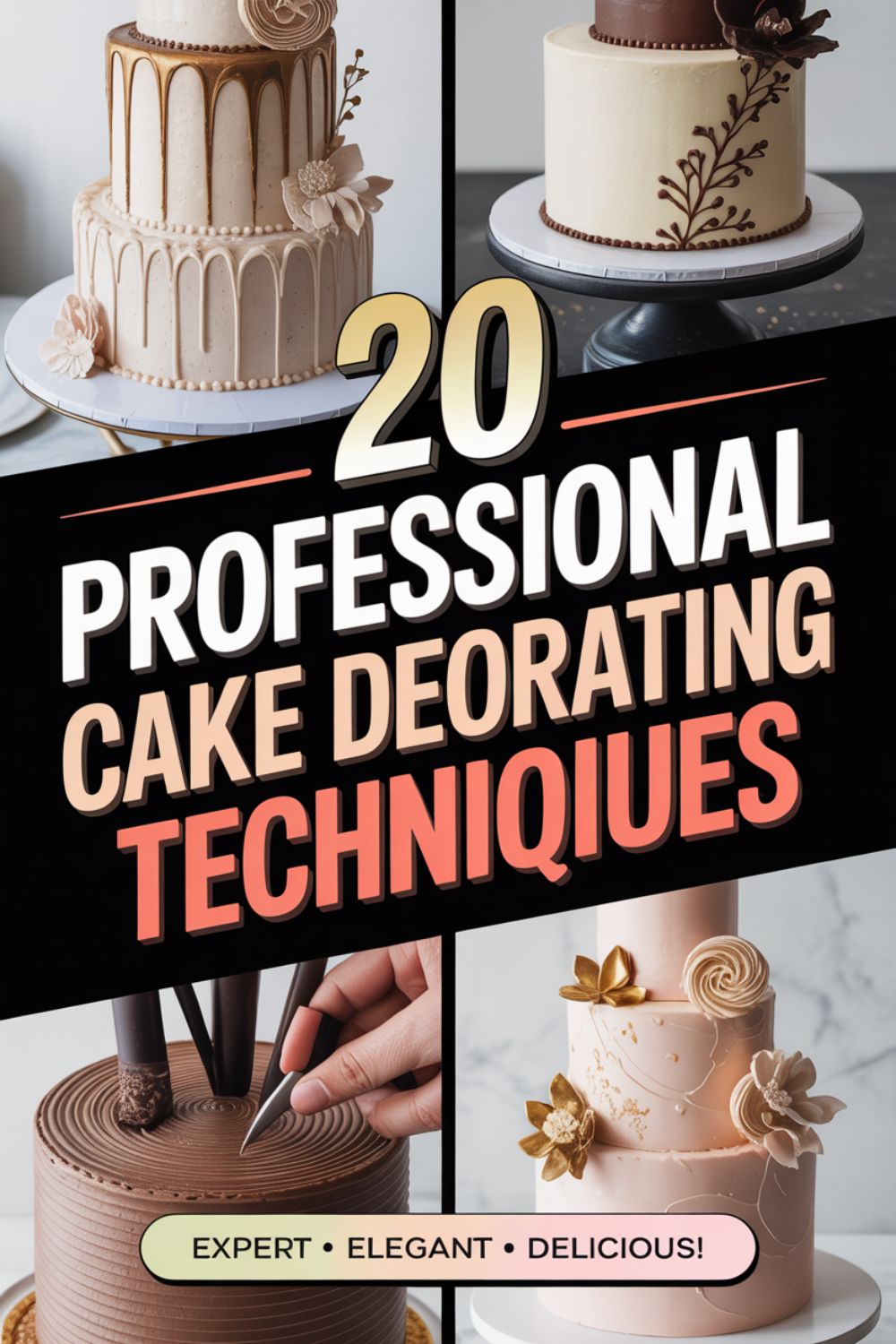
20 Professional Cake Decorating Techniques
Look, I’ve ruined enough cakes to know that decorating them isn’t just about slapping on some frosting and calling it a day. You’ve probably stood in your kitchen staring at a perfectly baked cake, wondering how on earth those Instagram bakers make their creations look like edible art while yours looks like it survived a toddler attack.
I spent years figuring out what actually works—not the overly complicated stuff that requires seventeen specialty tools you’ll use once. These are the techniques that transformed my cakes from “nice try” to “wait, you made that?” And honestly? Most of them are way easier than they look.
Whether you’re prepping for a kid’s birthday party or just want your weekend baking to look less homemade and more bakery-worthy, these 20 techniques will get you there without the drama.
The Foundation: Getting Your Cake Ready
Before you even think about fancy decorations, your cake needs to be level and crumb-coated. I know, I know—it sounds tedious. But trying to decorate a domed, crumb-covered cake is like trying to paint a masterpiece on sandpaper.
Grab a serrated cake leveler and slice off that dome. Yes, you can eat the scraps. No judgment here—baker’s privilege. Then apply a thin layer of frosting (your crumb coat) and refrigerate for 15-20 minutes. This locks in all those pesky crumbs so your final layer looks clean.
Once your crumb coat sets, you’re ready for the smooth final layer. I use an offset spatula for this—it gives you way more control than a regular butter knife, and honestly, I wonder how I ever lived without one.
1. The Smooth Buttercream Finish
This is your gateway technique. Master this, and people will think you went to pastry school. The secret? A bench scraper and a turntable. Seriously, get yourself a turntable if you don’t have one—trying to smooth frosting while manually rotating the cake is the culinary equivalent of patting your head and rubbing your belly.
Apply your buttercream generously. Don’t be stingy here. Hold your bench scraper at a slight angle against the side of the cake, then slowly rotate your turntable. Keep the scraper steady—let the cake do the moving. For the top, hold your spatula flat and spin the turntable, working from the outside in.
The first time I nailed this technique, I literally texted a photo to my sister at 11 PM. That’s how satisfying it is.
Temperature Matters More Than You Think
Here’s something they don’t tell you enough: room temperature buttercream is your best friend. Too cold, and it’ll tear your cake. Too warm, and it’ll slide right off. According to Serious Eats’ comprehensive guide on frosting techniques, the ideal buttercream temperature is between 72-75°F for optimal spreadability.
If your frosting starts looking weird or separating, it’s probably a temperature issue. Stick it in the fridge for a few minutes if it’s too soft, or microwave it for 5-second intervals if it’s too stiff.
2. Classic Piping Borders
Piping borders instantly elevates any cake from basic to fancy. Start with a star tip—it’s the most forgiving. Fill your piping bag about halfway (trust me on this; overfilling leads to frosting explosions), and practice on parchment paper first.
For a shell border, hold your bag at a 45-degree angle, squeeze while slightly lifting, then release pressure as you pull down. It creates these beautiful scalloped edges that look way more complicated than they are.
I use disposable piping bags for everything because washing reusable ones ranks somewhere between doing taxes and assembling IKEA furniture on my list of life’s joys.
Looking for more inspiration? Check out these frosting recipes that pair perfectly with piped decorations, or try your hand at DIY wedding cake designs that rely heavily on piping techniques.
3. Textured Finishes with a Spatula
Sometimes smooth isn’t what you’re after. Creating texture with your offset spatula gives your cake that rustic, artisanal vibe that’s huge right now. After applying your final buttercream layer, simply press the spatula against the frosting and pull away in random spots.
You can create swoops, peaks, or even a rough stucco look. The beauty here? There’s no wrong way to do it. Imperfection is literally the goal. I’ve found this technique particularly useful when I’m short on time or when my smooth finish didn’t turn out as planned—instant save.
Cake Decorating Essentials I Actually Use
After years of buying tools that collect dust, here’s what actually earns its counter space in my kitchen:
- Rotating cake turntable – Game-changing for any frosting technique
- Professional piping tip set – The variety pack pays for itself
- Offset spatula set – Small, medium, and large for every cake size
- Digital Cake Decorating Masterclass – Video tutorials that show exactly what to do
- Printable Piping Practice Sheets – Templates that actually help you improve
- Buttercream Recipe & Ratio Guide – Fixes texture issues before they happen
4. Naked and Semi-Naked Cakes
This technique is perfect for people who love the “I woke up like this” aesthetic. You barely frost the outside, letting the cake layers show through. Apply a thin layer of frosting between layers and around the sides, then use your bench scraper to remove most of it.
The key is using a moist cake recipe since you’re not hiding anything under thick frosting. My go-to bases include carrot cake variations or almond cakes with rich flavor—they stay beautiful and moist even when exposed.
5. Fondant Covering
Okay, controversial opinion time: fondant isn’t evil. I know the internet loves to hate on it, but when done right, fondant creates that perfectly smooth, professional finish you see in fancy bakeries. The trick is using marshmallow fondant instead of the store-bought stuff that tastes like sweetened Play-Doh.
Roll your fondant to about 1/8 inch thickness on a surface dusted with powdered sugar. Drape it over your crumb-coated cake (cold from the fridge), and smooth from top to sides using a fondant smoother. Trim the excess with a pizza cutter.
FYI, fondant-covered cakes need to be stored at room temperature—refrigeration makes the fondant sweat and look weird.
6. Royal Icing Details
Royal icing is that hard, glossy stuff you see on wedding cakes and fancy cookies. It dries completely solid, which means your decorations stay put and can even be made ahead. I make mine with meringue powder because raw egg whites freak me out, even though traditional recipes call for them.
The consistency matters big time. Thick royal icing for piping details and flowers, thin royal icing for flooding larger areas. Need a flower that won’t droop? Royal icing is your answer. Working on celebration cakes for major milestones? This technique delivers that professional polish.
7. Ombre Effect
The ombre technique looks incredibly complex but follows a simple principle: gradual color transition. Start with your darkest shade at the bottom and work toward white or a lighter shade at the top. Mix several bowls of buttercream in progressively lighter shades—I usually do four to five variations.
Apply your darkest shade at the base, then work your way up with lighter shades, blending where they meet. Use your bench scraper to smooth everything together, and boom—professional-looking gradient. This works beautifully on rainbow party cakes too.
Color Theory Basics
Understanding how colors work together will save you from making cakes that look like they belong in a child’s crayon box. Complementary colors (opposite on the color wheel) create dramatic contrast, while analogous colors (next to each other) give you sophisticated, harmonious designs.
Pro bakers typically stick to three colors max per cake. More than that, and you risk visual chaos. Unless you’re specifically going for a rainbow theme, in which case all bets are off and the more color the better.
8. Stenciling Patterns
Stenciling is basically foolproof decoration. Hold a food-safe stencil against your frosted cake and dust powdered sugar, cocoa powder, or edible luster dust over it. Carefully lift the stencil, and you’ve got a precise, beautiful pattern.
This technique works especially well on cakes where you want elegant detail without the pressure of freehand piping. I’ve used it on everything from simple birthday cakes to more elaborate designs for special occasions.
9. Fresh Flower Decoration
Real flowers on cakes look stunning but require some safety awareness. Not all flowers are food-safe, and some are downright toxic. Stick to confirmed edible varieties or use flowers that never touch the cake directly—insert them in small plastic picks or wrap stems in floral tape.
Roses, pansies, violas, and lavender are generally safe bets. Avoid lilies, daffodils, and hydrangeas. When in doubt, check with your florist and specifically mention you’re using them on food. According to USDA food safety guidelines, it’s crucial to verify that any flowers touching food are specifically grown without pesticides for culinary use.
This technique shines on anniversary cakes and other romantic celebrations.
10. Chocolate Ganache Drip
The drip effect is everywhere right now, and it’s shockingly easy. Make a simple ganache (equal parts heavy cream and chocolate, heated and stirred until smooth), let it cool to the right consistency—thick enough to cling but thin enough to drip—and pour it over the edge of your chilled cake.
Test your consistency on a chilled plate first. Too thin, and it’ll run all the way down. Too thick, and it won’t drip at all. The sweet spot is when it slowly oozes down the side about an inch or two before stopping.
I keep a squeeze bottle specifically for drip cakes—gives you way more control than pouring from a bowl.
Want more ways to use chocolate? These lava cake recipes showcase chocolate in all its glory, and these marble cake swirl techniques add visual interest to any chocolate creation.
11. Buttercream Flowers
Piping buttercream flowers intimidated me for years until I realized it’s just repetitive motions. Start with simple rosettes using a star tip—squeeze, twist, release. That’s literally it. Practice on parchment paper until you can do it in your sleep.
For more advanced flowers like roses, you’ll need a flower nail and a petal tip. Build your rose one petal at a time, working in layers. The center petals should be tight, outer petals more loose and open. Freeze your finished flowers on parchment paper, then transfer them to your cake.
IMO, Russian piping tips make flower piping so much easier. These specialty tips create elaborate flowers with a single squeeze—they’re a bit pricey but worth every penny if you decorate cakes regularly.
Tools & Resources That Actually Help
Beyond the basics, these make the difference between struggling and enjoying the process:
- Russian piping tips set – Creates flowers with one squeeze
- Flower nail and bags – Essential for making transfer flowers
- Digital kitchen scale – Precision matters in baking
- Advanced Piping Techniques eBook – Step-by-step photo guide
- Color Mixing Chart for Buttercream – Get the exact shade every time
- Cake Troubleshooting Guide – Fixes common decorating disasters
Join our WhatsApp baking community for real-time tips and inspiration from fellow cake decorators!
12. Brush Embroidery
This technique creates delicate, painterly designs that look hand-painted. Pipe your design outline with royal icing, then immediately use a damp brush to pull the icing inward, creating a brushstroke effect. It mimics embroidered fabric and looks incredibly elegant on wedding cakes.
The timing matters here—work on small sections because royal icing dries fast. Keep your brush damp but not soaking wet. This technique takes patience, but the results are worth it.
13. Watercolor Painting
You can literally paint on cakes, and it’s as fun as it sounds. Mix gel food coloring with clear alcohol (vodka or lemon extract) to create edible paint. The alcohol evaporates, leaving just the color behind. Use food-safe brushes and paint directly onto fondant or buttercream.
This technique works beautifully for abstract designs, florals, or even recreating famous paintings. I’ve seen people paint everything from watercolor flowers to full landscapes on cakes. The creative possibilities are endless.
14. Ruffled Edges
Creating ruffles adds romance and movement to your cake. Use a petal tip held at an angle against your cake and pipe while moving the tip up and down in a wave motion. Work in rows, slightly overlapping each previous ruffle.
This technique works best with American buttercream or Swiss meringue buttercream—something that holds its shape well. You can create subtle ruffles for elegance or dramatic, large ruffles for impact.
15. Geometric Modern Designs
Clean lines and geometric patterns give cakes a contemporary, architectural feel. Use a ruler and toothpick to mark your design lightly on the cake first. Then pipe your lines with royal icing or buttercream using a small round tip.
Gold and silver metallic accents work particularly well with geometric designs. Brush edible gold leaf or metallic dust onto sections of your pattern for that modern luxury vibe.
16. Sprinkle Techniques
Sprinkles aren’t just for kids’ cakes anymore. Strategic sprinkle placement can create sophisticated designs. Try the bottom-border technique—press sprinkles around just the base of your cake for a clean, modern look. Or go full maximalist with a complete sprinkle coating.
To get sprinkles to stick on the sides, frost your cake and immediately roll it in a tray of sprinkles before the frosting sets. Hold the cake over the tray and use your hand to press sprinkles onto any bare spots. It’s messy but effective.
17. Fault Line Cakes
The fault line technique creates a horizontal “crack” around your cake, revealing a different color or texture inside. Frost your cake smooth in your base color, then use a bench scraper to remove a horizontal stripe of frosting around the middle.
Fill that bare stripe with contrasting frosting, sprinkles, edible flowers, or metallic accents. It’s like giving your cake a decorative belt and looks way more impressive than the effort required.
18. Buttercream Painting
Different from watercolor painting, buttercream painting uses actual buttercream as paint. Thin your buttercream with a tiny bit of milk or cream, add gel coloring, and apply with brushes. This creates texture and dimension that flat painting can’t achieve.
You can create impressionist-style florals, abstract art, or even portrait work if you’re feeling ambitious. The buttercream adds a sculptural quality that makes designs pop off the cake.
19. Quilted Pattern
The quilted look adds instant elegance and is surprisingly easy to achieve on fondant-covered cakes. Use a quilting tool or ruler to press diagonal lines into your fondant, creating diamond shapes. Add a small edible pearl or silver dragée where the lines intersect.
This classic technique never goes out of style and works particularly well on formal cakes. Just make sure you work quickly before the fondant develops a skin and becomes harder to impress.
20. Mirror Glaze
Mirror glaze creates that impossibly shiny, reflective finish you see all over Instagram. It requires precision—your glaze needs to be exactly 90-95°F when you pour it over a frozen cake. Too hot, and it’ll be too thin. Too cold, and it won’t flow smoothly.
Make sure your cake is frozen solid and sitting on a wire rack over a baking sheet (to catch the excess glaze). Pour the glaze over the center and let it flow down the sides naturally. Don’t touch it or try to smooth it—just let gravity do its thing.
The glaze will look streaky at first, but it smooths itself out as it settles. Use a digital thermometer to nail that temperature—guessing won’t cut it here. This technique works beautifully for summer ice cream cakes where that glossy finish really shines.
Practice Makes Progress (Not Perfection)
Here’s what nobody tells you when you’re learning cake decorating: your first attempts will probably look rough. My first smooth buttercream finish looked like I frosted it while wearing oven mitts. My first piped roses resembled sad cabbage leaves. That’s completely normal.
The difference between a beginner and a pro isn’t talent—it’s repetition. Every cake you decorate builds muscle memory. Your hands learn the right pressure, the right angle, the right speed. What feels impossible on cake number one becomes second nature by cake number twenty.
Start with techniques that are forgiving—textured finishes hide mistakes, naked cakes don’t require perfect frosting, and sprinkles cover a multitude of sins. Build your confidence before tackling mirror glaze or royal icing details.
Related Cakes You’ll Love
Frequently Asked Questions
What’s the easiest cake decorating technique for complete beginners?
Textured finishes using an offset spatula are the most beginner-friendly. You literally can’t mess them up because imperfection is the goal. Just apply buttercream and create swoops and peaks randomly—it looks intentionally rustic and hides any frosting mistakes underneath.
Do I really need a turntable for cake decorating?
Technically no, but practically yes. A turntable makes smoothing frosting and creating even designs about ten times easier. You can find decent ones for under $20, and the difference in your results will be immediately noticeable. Think of it as the one tool that pays for itself on your very first cake.
How do I keep my buttercream from melting while decorating?
Temperature control is everything. Work in a cool kitchen (ideally under 72°F), and refrigerate your cake between major decorating steps. If your buttercream gets too soft while you’re working, pop it in the fridge for 10-15 minutes. Some decorators even keep a bowl of ice water nearby to chill their hands periodically.
Can I mix different decorating techniques on one cake?
Absolutely, and it often looks more interesting than using just one technique. Try smooth sides with a textured top, or combine piped borders with fresh flowers. Just stick to a cohesive color palette so the different techniques feel intentional rather than chaotic. Three techniques max per cake is a good rule of thumb.
How far in advance can I decorate a cake?
It depends on your technique. Buttercream-decorated cakes can be finished 1-2 days ahead if stored properly (room temperature for American buttercream, refrigerated for Swiss meringue). Fondant cakes can be decorated several days in advance. Fresh flowers should be added the day of serving, and mirror glaze needs to be applied right before serving for the best shine.
Final Thoughts
Cake decorating isn’t about perfection—it’s about creating something that makes people smile when you bring it to the table. Every professional cake decorator started exactly where you are now, probably with equally questionable first attempts.
Pick one or two techniques that excite you and practice those until you feel confident. Then add another technique to your repertoire. Before you know it, you’ll have a whole toolkit of skills that transform basic cakes into memorable centerpieces.
The best part? Even your “practice cakes” still taste delicious. So grab your spatula, fill that piping bag, and start decorating. Your next celebration deserves a cake that looks as good as it tastes.