25 Bakery-Style Layer Cake Recipes That’ll Make You Quit Buying Cakes
You know that moment when you walk past a bakery window and spot a towering layer cake that costs more than your weekly coffee budget? Yeah, I’ve been there. But here’s the thing—those bakery-style layer cakes aren’t some mystical creation that only culinary school grads can pull off. I’ve spent the last few years perfecting layer cakes in my own kitchen, and honestly, once you crack the code, there’s no going back to boxed mixes or overpriced bakery runs.
Layer cakes have this reputation for being intimidating, but they’re really just about understanding a few key techniques and having the patience to let things cool properly. Trust me, I’ve made every mistake in the book—from layers sliding off like they’re on a ski slope to frosting that looked more like spackling paste. But those disasters taught me what actually works.
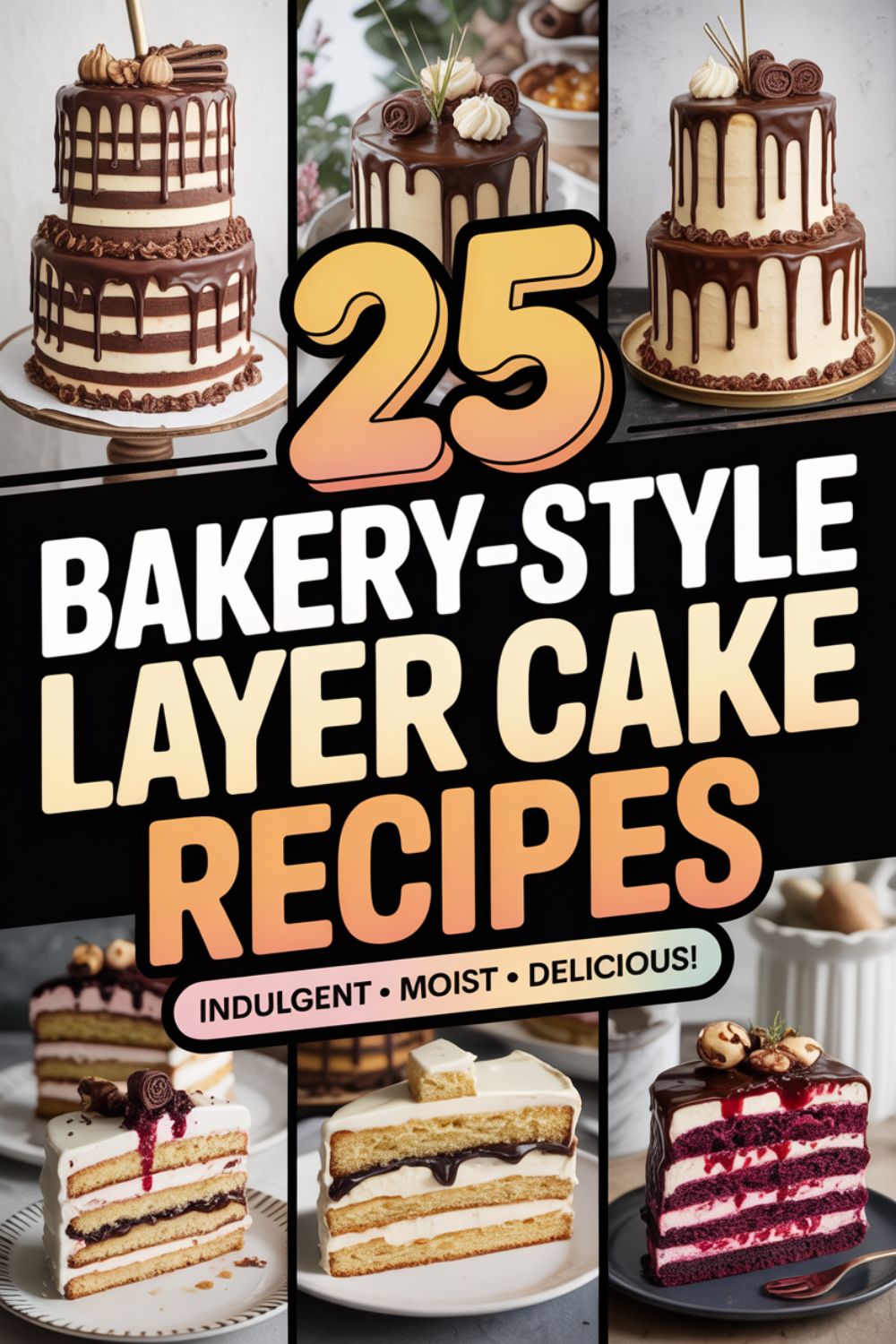
What I’m sharing here are 25 recipes that genuinely deliver that bakery-quality result. We’re talking moist crumb, stable layers, frostings that don’t melt into oblivion, and flavors that make people ask if you secretly went to pastry school. Some use shortcuts, some take the long route, but all of them work.
Why Bakery-Style Layer Cakes Hit Different
Let’s get real about what makes a layer cake actually feel “bakery-style.” It’s not just about stacking three rounds and calling it a day. Professional layer cakes have consistent moisture throughout, structurally sound layers that don’t compress into pancakes, and frosting that’s smooth enough to photograph but sturdy enough to hold up at room temperature.
The secret most bakeries won’t tell you? They’re using simple syrup between layers. Game changer. It keeps everything moist for days and adds an extra dimension of flavor if you infuse it with vanilla, citrus, or even coffee. I learned this trick from a pastry chef friend, and now I can’t make a layer cake without it.
Another thing—cake flour versus all-purpose flour makes a massive difference. Cake flour has less protein, which means more tender crumb. But if you’re like me and forget to buy it half the time, you can totally make your own by replacing 2 tablespoons of all-purpose flour per cup with cornstarch. Works like a charm.
Speaking of perfecting your technique, if you’re looking to master other baking fundamentals alongside these layer cakes, you might want to check out some frosting recipes to elevate any cake or explore moist cake recipes that never turn dry for foolproof base techniques.
The Classic Vanilla Layer Cake That Started It All
Every baker needs a solid vanilla layer cake in their repertoire. This isn’t your average birthday cake—this is the three-layer masterpiece with real vanilla bean paste, buttermilk for tang, and a crumb so tender it practically melts on your tongue.
I use this offset spatula for getting the frosting perfectly smooth, and honestly, it changed my entire cake decorating game. No more jagged edges or frosting that looks like I applied it with a paint roller.
The trick with vanilla cakes is not over-mixing your batter. Once your dry ingredients hit that wet mixture, you’ve got maybe 20 seconds of gentle stirring before you start developing too much gluten. Over-mixed = dense, chewy cake. Nobody wants that. Get Full Recipe
Level Up Your Vanilla Game
Once you’ve mastered the basic vanilla, try adding a vanilla bean simple syrup between layers. Split a vanilla bean, simmer it with equal parts sugar and water for five minutes, and brush it onto each layer before frosting. Your cake will stay moist for up to five days, which never happens in my house because it’s gone by day two.
For frosting, I’m partial to Swiss meringue buttercream—it’s silkier than American buttercream and not cloyingly sweet. You do need to use a stand mixer with a whisk attachment because hand-mixing egg whites and hot sugar syrup is basically asking for a kitchen disaster. According to Food Network’s guide to Swiss meringue buttercream, this method creates the most stable and smooth frosting for layer cakes.
Chocolate Layer Cakes That Actually Taste Like Chocolate
Can we talk about how many “chocolate” cakes out there taste more like brown vanilla? Yeah, that drives me nuts. A proper chocolate layer cake needs Dutch-process cocoa, real chocolate, and often a hit of espresso powder to amplify that chocolate flavor.
My go-to chocolate layer cake uses both cocoa powder and melted dark chocolate. The cocoa gives you depth, the chocolate gives you intensity, and the espresso powder (even if you hate coffee) makes the whole thing taste more chocolatey without adding coffee flavor. Weird science, but it works.
I bake these in these 8-inch round cake pans because 9-inch layers always seem too short and wimpy to me. You want height, you want drama, you want people to gasp a little when you bring it to the table.
If chocolate is your thing, you’ll also love these chocolate lava cake recipes that’ll make you forget store-bought desserts. Different format, same chocolate obsession. Get Full Recipe
Baking Essentials That Actually Matter
Look, I’m not here to sell you stuff you don’t need, but these are the tools that legitimately improved my layer cake game:
- Digital kitchen scale — Measuring by weight instead of volume makes your cakes consistent every single time
- Cake turntable — Frosting cakes without this is like trying to cut your own hair without a mirror. Possible, but why make it harder?
- Bench scraper — For getting those perfectly smooth sides. Metal works better than plastic, FYI
Digital Resources:
- Layer Cake Masterclass PDF — Step-by-step photo guide for perfect layers every time
- Frosting Troubleshooting Cheat Sheet — Because we’ve all had frosting melt into a puddle mid-decoration
- Cake Flavor Pairing Guide — 50+ tested combinations so you never have to wonder what works
Want to join other bakers figuring this out together? Our WhatsApp Baking Community shares tips, troubleshooting help, and way too many cake photos. It’s free and judgment-free.
Red Velvet Done Right
Red velvet gets a bad rap because most recipes are just chocolate cake with red food coloring. Real red velvet has a subtle cocoa flavor, a tender crumb from buttermilk and vinegar reacting with baking soda, and that signature tang that balances the sweetness.
The classic pairing is cream cheese frosting, but here’s where people mess up—they don’t beat the cream cheese long enough before adding butter. You need to whip that cream cheese until it’s completely smooth and fluffy, at least 3 minutes. Otherwise, you get lumpy frosting with little chunks of cream cheese. Not cute.
I use gel food coloring instead of liquid because it doesn’t mess with your batter consistency. Liquid food coloring adds moisture, which throws off your ratios. Gel gives you that deep red without watering down anything. You’ll find tons of variations in our collection of red velvet cake recipes you’ll love.
Fun fact: The red color originally came from a reaction between cocoa powder and acidic ingredients like buttermilk and vinegar. Modern cocoa is processed differently, so we need food coloring to get that signature look. But the flavor? That comes from technique, not color. Get Full Recipe
The Frosting-to-Cake Ratio That Actually Works
Here’s something nobody tells you—most bakery layer cakes have way less frosting than you think. Too much frosting is cloying, makes the cake slide around, and honestly just overpowers the cake flavor. You want about 1 cup of frosting between each layer and 2-3 cups for the outside.
I learned this the hard way after making a cake with what I can only describe as a “frosting to cake ratio of shame.” It was basically frosting with cake flavoring. My friend took one bite and politely asked for a glass of milk. Lesson learned.
Fruit-Flavored Layer Cakes That Don’t Taste Artificial
Getting real fruit flavor into a layer cake is trickier than it sounds. You can’t just dump a bunch of strawberry puree into cake batter—too much moisture, and your cake will be dense and gummy. Instead, you need to use a combination of fruit reduction, extracts, and sometimes freeze-dried fruit powder.
Lemon layer cake is probably the easiest fruit flavor to nail. Fresh lemon zest in both the cake and the frosting, a bit of lemon extract for extra oomph, and lemon simple syrup between layers. The result? Bright, tangy, actually-tastes-like-lemons cake that doesn’t need artificial flavoring.
For strawberry, I swear by freeze-dried strawberries ground into powder. Mix it into your dry ingredients, and you get concentrated strawberry flavor without the moisture issues. If you’re exploring fruit-based cakes, definitely try these lemon cake recipes that are bright and fresh or dive into strawberry cake recipes for spring. Get Full Recipe
Carrot Cake Without the Controversy
Some people have strong feelings about nuts and raisins in carrot cake. IMO, the nuts add necessary texture, but raisins are negotiable. What’s non-negotiable? Freshly grated carrots and warming spices like cinnamon, ginger, and nutmeg.
I use this box grater for the carrots because pre-shredded carrots from the bag are too dry and don’t incorporate well. Fresh carrots add moisture and natural sweetness. Plus, grating them yourself takes like five minutes. Not a big ask for cake that stays moist for nearly a week.
The cream cheese frosting here needs to be a bit thicker than what you’d use on red velvet. More powdered sugar, less cream cheese. Otherwise, it’ll slide right off those carrot-studded layers. Trust me on this. For more carrot cake inspiration, check out these carrot cake recipes that stay moist.
Coffee and Spice Cakes for Grown-Up Palates
Not every layer cake needs to be kid-friendly sweet. Coffee-flavored layer cakes are having a moment, and for good reason—they’re sophisticated, not overly sweet, and pair beautifully with vanilla or mocha buttercream.
For coffee flavor, I dissolve instant espresso powder in the wet ingredients. Brewed coffee works too, but you need to reduce your other liquids, which gets fussy. Instant espresso is foolproof—just whisk it into your eggs and milk, and you’re done.
The layers come out deeply flavored without being bitter. Top it with coffee buttercream (same instant espresso trick in your frosting), and you’ve got yourself a cake that adults will fight over. No joke, I brought this to a dinner party, and two people asked for the recipe before we even cut into it. These coffee-flavored cake recipes will become your new obsession. Get Full Recipe
Spice Cakes That Hit Every Note
Spice cake is criminally underrated. When made right, it’s warm, complex, and works for any season. The key is using fresh spices—that jar of cinnamon from 2019 isn’t doing you any favors.
I use a mix of cinnamon, ginger, nutmeg, allspice, and a tiny pinch of black pepper. The pepper adds a subtle warmth that makes people ask “what’s in this?” in the best way possible. Pair it with caramel buttercream or cream cheese frosting, and you’ve got a cake that feels like a hug.
Showstopper Cakes for Special Occasions
Sometimes you need a cake that makes people stop mid-conversation. Rainbow layer cakes, ombre cakes, or anything with multiple flavors stacked together—these are the cakes that get photographed 47 times before anyone takes a bite.
Rainbow cakes seem complicated, but they’re just vanilla batter divided into six bowls with gel food coloring. Each layer bakes separately, and you stack them with vanilla buttercream between each one. The trick is making sure each layer is the exact same height, which is where adjustable cake pans come in super handy.
Want to really go for it? Try these rainbow cake recipes for parties or explore celebration cake ideas for milestones. They’re designed to wow, and they actually deliver.
Ombre cakes use the same technique but with graduated shades of one color. I’ve done pink ombre with raspberry filling, blue ombre with lemon, and brown ombre with chocolate. According to research from the Journal of Food Science, color significantly impacts our perception of flavor, which explains why these visually stunning cakes taste even better than they look. Get Full Recipe
Tools & Resources That Make Layer Cakes Less Scary
Real talk—the right tools don’t make you a better baker, but they do make the process way less frustrating:
- Cake leveler — Those domed tops aren’t charming, they’re annoying. This fixes that in three seconds
- Piping bag set with tips — Even if you’re not doing fancy decorating, these make frosting cleaner and faster
- Cake strips — Wrap these around your pans before baking for perfectly flat layers. Less trimming, less waste
Digital Resources Worth Having:
- Cake Assembly Video Tutorial — Visual learners, this one’s for you. Shows exactly how to stack and frost without disaster
- Flavor Combination Calculator — Input your base flavor, get complementary frosting and filling suggestions
- Emergency Cake Fixes Guide — For when things go sideways and you need a solution in under 10 minutes
Our Baking Troubleshooting Community on WhatsApp is where I post most of my cake wins and failures. Join us if you want honest feedback and zero gatekeeping.
Coconut and Tropical Layer Cakes
Coconut cake is one of those divisive flavors—you either love it or you’re wrong. Just kidding. Kind of. A good coconut layer cake uses both coconut milk in the batter and shredded coconut in the frosting. The result is moist, flavorful, and unmistakably tropical.
I make mine with three layers of white cake soaked in coconut simple syrup, filled with coconut buttercream, and covered in more coconut buttercream before getting coated in sweetened shredded coconut. It’s coconut-forward without tasting like sunscreen, which is a delicate balance.
Pineapple layer cake is another tropical winner, especially in summer. Use crushed pineapple (well-drained) in the batter and between layers. The natural acidity of pineapple keeps the cake tender and adds brightness that cuts through rich buttercream. You’ll find more inspiration in these coconut cake recipes for tropical vibes and pineapple cake recipes for summer. Get Full Recipe
Almond Layer Cake That Converts People
Almond extract can be overpowering if you’re heavy-handed with it, but used correctly, it creates a sophisticated flavor that’s perfect for weddings and fancy occasions. Start with half the amount you think you need—you can always add more, but you can’t take it back once it’s in there.
I combine almond extract with vanilla for a more complex flavor profile, and I often add almond flour to replace about 25% of the all-purpose flour. This gives you a slightly denser, more European-style cake with a tender crumb that holds up beautifully under heavy frosting or fondant. Check out these almond cake recipes with rich flavor for more variations.
Chocolate Variations Beyond Basic
Basic chocolate layer cake is great, but once you’ve mastered it, the variations are endless. German chocolate cake with coconut-pecan filling between layers. Devil’s food cake with dark chocolate ganache. Marble cake that’s actually half-and-half vanilla and chocolate, not just chocolate with vanilla swirls.
My personal favorite is a salted caramel chocolate layer cake. Chocolate cake layers, salted caramel filling, chocolate buttercream, and a drizzle of caramel on top. The salt cuts the sweetness and makes every component taste more intense. You need a candy thermometer for the caramel, though—guessing the temperature is how you end up with burnt sugar or caramel soup.
For more chocolate inspiration, explore these marble cake recipes with swirls. The visual appeal alone makes them worth trying.
Tres Leches Layer Cake
Okay, technically tres leches is a soak cake, not a traditional layer cake, but hear me out. You can absolutely make a tres leches layer cake by soaking each layer separately, filling with stabilized whipped cream, and topping with more whipped cream and fresh fruit.
The three milks—evaporated milk, sweetened condensed milk, and heavy cream—create this ridiculously moist texture that’s somehow still light. I poke holes in each baked layer with a skewer before adding the milk mixture, and I let it sit in the fridge for at least four hours before assembling. Patience pays off here. These tres leches cake variations will seriously change your life.
Quick Shortcuts That Don’t Sacrifice Quality
Look, I’m all for from-scratch baking, but sometimes you need a gorgeous layer cake and you don’t have six hours to spare. That’s where smart shortcuts come in. Using a quality boxed cake mix as your base and doctoring it up is a totally legitimate strategy.
Replace the water with milk, add an extra egg, use melted butter instead of oil, and throw in a tablespoon of vanilla extract or other flavoring. These simple swaps turn a basic box mix into something that honestly rivals many from-scratch recipes. I’ve done this for last-minute birthday cakes, and nobody’s ever called me out on it.
Want to know all the tricks? Check out these cake recipes using boxed cake mix and cake mix hacks for bakery-style cakes. Zero judgment, maximum results.
For frosting shortcuts, I keep a batch of Swiss meringue buttercream in my freezer at all times. It freezes beautifully for up to three months, and you just need to re-whip it when you’re ready to use it. Frosting a layer cake when your buttercream is already made? Game changer. Cuts your active work time in half. Get Full Recipe
Assembly and Decoration Tips That Save Your Sanity
Even the best-baked layers can turn into a leaning tower of cake disaster if you don’t assemble them properly. Here’s what actually matters: completely cooled layers, a turntable, and patience.
I put my layers in the fridge for at least an hour before assembling. Cold cake is easier to handle, doesn’t compress as easily, and takes frosting better. Some people freeze their layers, which works great if you’re working ahead, but chilled is usually enough.
For stacking, I use cake boards and dowel rods for any cake taller than three layers. The dowels support the weight and prevent the bottom layers from compressing into dense pucks. Insert them through the assembled cake, mark where they meet the top, cut them to size, and push them back in. Invisible support system.
The Crumb Coat Isn’t Optional
I resisted crumb coating for years because it seemed like extra work. Then I tried it once, and I’ll never go back. A thin layer of frosting applied first, chilled for 20 minutes, then covered with your final frosting layer—this is how you get those smooth, professional-looking cakes.
The crumb coat traps all the loose crumbs, so your final layer of frosting goes on clean. No more chocolate crumbs in your white buttercream or spending 20 minutes trying to smooth out lumpy frosting. It’s the difference between “I made a cake” and “I made a CAKE.”
Unique Flavor Combinations Worth Trying
Once you’re comfortable with the basics, it’s time to get weird. In a good way. Brown butter cake with maple buttercream. Chai-spiced cake with honey frosting. Earl Grey cake with lavender buttercream. These aren’t your standard bakery flavors, but they’re exactly the kind of thing that makes people remember your cakes.
Brown butter adds this nutty, almost caramel-like flavor that elevates vanilla cake to something entirely different. You brown the butter, let it cool completely, then use it where the recipe calls for regular butter. The browning process cooks out some of the water, so you might need to add a tablespoon or two of milk to compensate.
Feeling adventurous? Explore these unique cake flavors you need to try. Some work better than others, but all of them are interesting.
Seasonal Flavors That Actually Make Sense
Apple spice layer cake in fall, strawberry shortcake layer cake in summer, peppermint chocolate in winter—matching your flavors to the season makes your cakes feel more intentional and special.
For apple cake, I use a mix of diced apples in the batter and apple butter between layers. The apple butter intensifies the flavor without adding too much moisture, and it pairs beautifully with cinnamon buttercream or cream cheese frosting. You’ll find tons of inspiration in these apple cake recipes for fall baking. Get Full Recipe
Your Layer Cake Questions, Answered
How do I keep my cake layers from doming in the middle?
Use cake strips soaked in water and wrapped around your pans before baking, or reduce your oven temperature by 25 degrees and bake slightly longer. The slower, more even heat prevents the edges from setting faster than the center, which causes doming. If your layers still dome, just level them with a serrated knife or cake leveler—it’s not the end of the world.
Can I make layer cake ahead of time?
Absolutely. Unfrosted cake layers freeze beautifully for up to three months wrapped tightly in plastic wrap and foil. Thaw them in the fridge overnight before assembling. Frosted cakes can sit at room temperature for a day or in the fridge for up to five days, depending on your frosting type. Swiss meringue buttercream holds up better at room temp than cream cheese frosting, FYI.
Why does my buttercream keep separating or looking curdled?
Temperature issues, almost always. If your butter is too cold, it won’t emulsify properly. If your meringue base is too warm when you add butter, the butter melts and breaks. The fix? Keep beating it. Seriously, just let your mixer run for another 5-10 minutes, and it usually comes together. If it’s too warm, chill the bowl for 10 minutes and beat again.
How much frosting do I actually need for a three-layer 8-inch cake?
Plan on about 4-5 cups total—roughly 1 cup between each layer and 2-3 cups for the outside. This gives you a nice, balanced cake-to-frosting ratio without going overboard. If you’re doing any piping or decorative work, add another cup to be safe.
What’s the best way to transport a layer cake without destroying it?
Chill it completely first so the frosting sets firm. Use a cake carrier if you have one, or place it on a flat board in a large box with non-slip shelf liner underneath. Drive like you’re transporting nitroglycerin—no sudden stops, gentle turns, and maybe avoid that bumpy back road. I’ve also been known to buckle cake boxes into the passenger seat like a precious cargo child.
Final Thoughts on Layer Cake Success
Here’s the truth about layer cakes—they’re more forgiving than you think. Yeah, there are techniques to learn and some trial and error involved, but the actual baking part isn’t rocket science. Room temperature ingredients, don’t over-mix, cool completely before frosting. Master those three things, and you’re 90% of the way there.
The other 10%? That’s the fun part. Experimenting with flavors, trying different frostings, figuring out what works in your kitchen with your oven. My oven runs hot, so I always reduce temperatures by 25 degrees. Yours might be different. The recipes are guidelines, not laws.
Start with a simple vanilla or chocolate layer cake. Get comfortable with the process. Then branch out into the weirder flavors, the showstopper designs, the complicated fillings. Every cake you make teaches you something, even if it’s just “don’t try to frost a warm cake” or “Swiss meringue buttercream needs more beating time than you think.”
The bakery-style layer cakes that cost a small fortune? You can make those. You really can. And once you do, you’ll wonder why you ever paid someone else to do it. Except for wedding cakes—those I still outsource because I’m not trying to give myself a stress-induced medical incident.