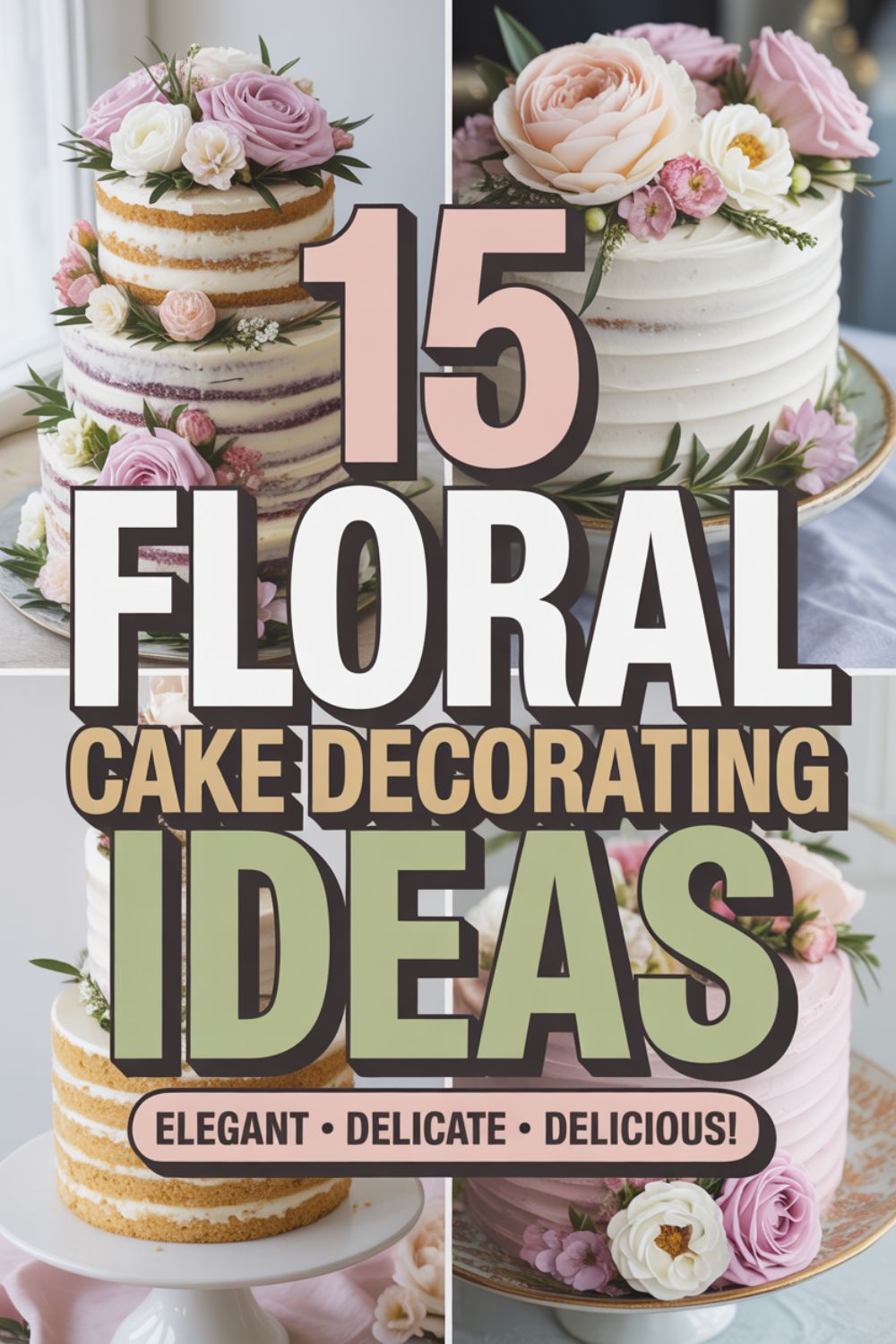
15 Floral Cake Decorating Ideas That’ll Make You Look Like a Pro
Look, I’ll be honest with you. The first time I tried to pipe a buttercream rose, it looked like a sad blob that had given up on life. But here’s the thing—floral cake decorating isn’t some mystical skill reserved for people who went to fancy pastry school. You just need the right techniques, a bit of patience, and maybe a willingness to scrape off your first few attempts without crying into your mixing bowl.
Floral designs transform ordinary cakes into showstoppers that make people say “You made THAT?” in that tone that’s half disbelief, half jealousy. Whether you’re decorating a birthday cake, planning something special for an anniversary celebration, or just want to level up your baking game, these 15 ideas will get you there. No art degree required.
Why Floral Cake Designs Never Go Out of Style
There’s something about flowers on a cake that just works. They’re elegant without being stuffy, pretty without being overly fussy, and honestly, they’re way more forgiving than you’d think. Mess up a petal? Call it “rustic charm.” Your rose looks more like a cabbage? Vintage-inspired, obviously.
The beauty of floral cake decorating is that it suits literally any occasion. Birthday parties, weddings, baby showers, or that random Tuesday when you need to impress your mother-in-law. Plus, you can go full-on fancy with intricate piped flowers or keep it simple with fresh blooms. The choice is yours, and both look equally impressive on Instagram.
According to Wilton’s cake decorating research, floral designs remain the most requested cake decoration style across all age groups and occasions. They’re timeless, adaptable, and—here’s the kicker—they actually hide imperfections better than smooth fondant ever could.
1. Classic Buttercream Roses
Let’s start with the queen of cake flowers—the buttercream rose. Yes, they look intimidating, but they’re actually pretty forgiving once you get the hang of the swirl motion. I use a Wilton 1M or 2D piping tip for mine, and honestly, those tips do about 80% of the work for you.
The trick is to pipe from the center outward in a circular motion, building layers as you go. Think of it like you’re creating a flower bed, not a perfect museum piece. Start with a small mound in the center, then pipe overlapping petals around it. The motion should feel natural—you’re not trying to win a precision contest here.
I typically practice on parchment paper first, then freeze those practice roses and stick them on the cake later. Nobody needs to know they weren’t piped directly onto the cake. Work smarter, not harder, right?
2. Fresh Flower Cascade
Want to look like you spent hours on your cake when you actually spent about ten minutes? Fresh flowers are your secret weapon. Just grab some pesticide-free blooms from your local florist or grocery store, give them a quick rinse, and arrange them on your frosted cake.
I love using roses, peonies, and ranunculus for this because they’re sturdy and won’t wilt immediately. Place a piece of parchment paper or a small plastic wrap barrier between the flowers and the frosting if you’re paranoid about stems touching the cake. Pro move: create a cascading effect from one corner down the side for maximum drama.
This technique pairs beautifully with simple buttercream frosting recipes that provide a clean canvas for your floral arrangement. Keep the frosting smooth and neutral, then let the flowers do all the talking.
3. Piped Wildflower Garden
This is where you get to channel your inner free spirit. Wildflower designs are intentionally imperfect, which means you literally cannot mess this up. Use different piping tips to create various flower shapes—stars, dots, small ruffled flowers—and scatter them across your cake like they grew there naturally.
I use a combination of small round tips, leaf tips, and a petal tip to create different textures. Mix colors like you’re painting a meadow—lavenders, yellows, pinks, and whites all work together. Don’t overthink the placement; wildflowers don’t grow in neat rows, and yours shouldn’t either.
Add some green buttercream leaves and stems between the flowers to fill any gaps. This technique works especially well on brunch cakes and spring celebrations.
4. Pressed Edible Flowers
Here’s a technique that looks way fancier than the effort involved. Buy edible flowers—pansies, violets, or nasturtiums work great—and press them onto the sides of a buttercream cake. The flowers stick right to the frosting and create this gorgeous, almost watercolor-like effect.
You can also freeze flowers in ice cubes and place them on the cake right before serving for a dramatic reveal as they slowly melt. Just make sure whatever flowers you’re using are actually edible and haven’t been sprayed with pesticides. Your guests will thank you for not poisoning them.
Looking for more creative cake ideas? Check out these unique cake flavor combinations that pair beautifully with floral decorating styles.
Tools & Essentials That Actually Make a Difference
Cake Decorating Essentials I Actually Use
After ruining several cakes with subpar tools, here’s what actually works:
- Wilton Deluxe Cake Decorating Set — Comes with everything you need to start piping flowers without buying 47 individual tips
- Ateco Revolving Cake Stand — Turns smoothly, doesn’t wobble, saves your sanity when piping borders
- Offset Spatula Set — For spreading frosting evenly; the angled blade is a game-changer
- Ultimate Buttercream Guide (Digital PDF) — Step-by-step ratios and troubleshooting tips
- Piping Techniques Video Course — Visual tutorials beat written instructions every time
- Seasonal Cake Design Templates — Downloadable designs you can trace and recreate
5. Ruffled Petal Cake
This one looks incredibly professional but is actually easier than individual flowers. You pipe continuous ruffles around the entire cake using a petal tip, creating layers that look like flower petals. Start at the bottom and work your way up, overlapping each row slightly.
The key is keeping your hand steady and maintaining consistent pressure on the piping bag. I practice the motion in the air first—yes, I look ridiculous, but it helps. Use a large petal decorating tip for faster coverage and switch up colors for an ombre effect.
This technique works beautifully on wedding cakes and fancy celebration cakes where you want that wow factor without piping 500 individual roses.
6. Sugar Flower Toppers
Okay, so sugar flowers take more time than buttercream, but they’re worth it for special occasions. You can make them weeks ahead and store them in an airtight container, which is perfect for planners like me who panic-prep everything.
Use gum paste or fondant with gum tragacanth added for strength. You’ll need flower cutters, a foam pad, and a ball tool to shape the petals. The flowers dry hard and can be positioned on the cake just before serving. They’re basically cake jewelry.
IMO, sugar flowers are best reserved for cakes you’re not eating immediately—like graduation cakes that need to survive a few hours at a party.
7. Naked Cake with Floral Accents
The naked cake trend is perfect for people who hate frosting smooth cakes (hi, it’s me). You barely frost the sides, leaving the cake layers visible, then cover up any imperfections with fresh flowers. Genius, right?
This style works particularly well with rustic or outdoor-themed events. Cluster flowers at the top or create a floral crown effect around the upper edge. I usually use a mix of fresh blooms and some trailing greenery like eucalyptus or ivy for a natural, garden-party vibe.
Pair this with recipes from our collection of super moist cake recipes since the layers are on display and dryness will be immediately obvious. No pressure or anything.
8. Hand-Painted Watercolor Florals
If piping isn’t your thing but you can hold a brush, watercolor florals might be your calling. Cover your cake in white or pale fondant, then use edible food coloring diluted with vodka or clear vanilla extract to paint flowers directly onto the cake surface.
You don’t need to be Picasso. Loose, impressionistic flowers actually look better than trying to paint botanical illustrations. Use a food-safe brush set and gel food colors for the best vibrancy. The alcohol evaporates quickly, leaving just the color behind.
According to American Cake Decorating Magazine, watercolor techniques have seen a 300% increase in popularity for wedding cakes over the past five years because they offer a soft, romantic aesthetic that photographs beautifully.
9. Buttercream Chrysanthemums
These are my go-to when I want impact without the fussiness of roses. Chrysanthemums are basically piped with a multi-opening tip in a circular pattern, and they’re wildly forgiving. Uneven petals? That’s how real chrysanthemums look. One flower bigger than the others? Variety is beautiful.
Use a mum or multi-opening tip and pipe from the center outward in tight circles. Layer the rows slightly as you expand, and you’ll have a full, dimensional flower in about 30 seconds. Cluster several together on top of your cake or create a border around the base.
Speaking of creative presentations, if you’re looking for more ways to elevate your cake game, these crowd-pleasing party cake recipes offer great base options for practicing your floral decorating.
10. Ombre Petal Design
This technique creates a gradient effect using different shades of the same color. Start with dark petals at the bottom and gradually lighten the color as you work toward the top. It’s like a sunset made of frosting, and people lose their minds over it every time.
Prepare three or four shades of your chosen color by gradually adding white buttercream to your base color. Pipe petals in horizontal rows, switching colors every few rows. The transition doesn’t have to be perfect—slight blending between shades actually adds to the effect.
I love this on colorful celebration cakes where the ombre exterior hints at the surprise layers inside. Get Full Recipe for a matching rainbow layer cake that pairs perfectly with this decorating style.
Resources That’ll Level Up Your Decorating Game
Digital Tools & Community Support
Because sometimes you need more than just a piping tip:
- Cake Decorating Masterclass (Video Series) — Over 40 tutorials covering every flower technique imaginable
- Seasonal Cake Design Planner — Monthly themes, color palettes, and design inspiration
- Buttercream Recipe Calculator — Input your cake size, get exact frosting amounts needed
- Join Our Baking Community on WhatsApp — Share your wins, troubleshoot disasters, swap recipes
11. Succulent Buttercream Garden
Succulents are having a moment, and buttercream versions are shockingly easy to pipe. You use a small leaf tip to create overlapping petals in a rosette pattern, and suddenly you have a trendy, modern cake that looks like it belongs in a design magazine.
Mix various shades of green, teal, and even purple to mimic real succulent varieties. The best part? Succulents are supposed to look thick and chunky, so you can be generous with your frosting without worrying about delicate, paper-thin petals.
Position them on top of simple one-bowl cakes for a contrast between rustic baking and sophisticated decorating. Trust me, the juxtaposition works.
12. Five-Petal Drop Flowers
These little guys are the definition of “looks impressive, actually simple.” You use a drop flower tip to pipe perfect five-petal flowers in one squeeze. Seriously, one squeeze. You can cover an entire cake in these in the time it takes to pipe three roses.
I scatter them all over the cake like confetti, varying the colors for a cheerful, celebration-ready look. Add a tiny dot of contrasting color in the center of each flower for a polished finish. A drop flower tip set usually comes with multiple sizes, so you can mix small and large flowers for depth.
This technique is perfect for mini celebration cakes where you want full coverage without spending all afternoon piping.
13. Fondant Flower Cutouts
Not everyone loves working with fondant, but I’ll admit it makes creating uniform flowers ridiculously easy. Roll out fondant, cut shapes with flower plunger cutters, and attach them to your cake with a dab of water or edible glue.
You can create dimension by layering different-sized flowers on top of each other or by shaping the petals with a ball tool before they dry. Dust them with edible luster dust or paint them with food coloring for extra detail. They store well, so you can make them days in advance.
FYI, fondant flowers work great on cakes that need to travel since they’re more stable than buttercream in warm temperatures. Perfect for milestone celebration cakes that might sit out during a party.
14. Textured Buttercream with Single Flower Focal Point
Sometimes less is more. Cover your cake in textured buttercream—use a cake comb or offset spatula to create horizontal lines, swirls, or a rustic scraped effect—then add one large, stunning flower as the focal point.
This approach puts all your energy into making one perfect flower instead of trying to create fifty mediocre ones. It’s sophisticated, modern, and honestly just easier on your hands after all that piping.
The textured background adds visual interest without competing with your showcase flower. I usually place the flower slightly off-center on top or cascading down one side for an artistic, asymmetrical look. Pairs beautifully with elegant bundt cakes where the shape is already doing half the work.
15. Piped Greenery and Herb Accents
Here’s a trend I’m fully behind—using piped greenery and fresh herbs as “flowers.” Pipe leaves, ferns, and foliage in various shades of green, then tuck in sprigs of fresh rosemary, thyme, or sage for a natural, garden-inspired look.
This works especially well for savory celebration cakes or when you want a more understated, elegant design. The herbs add a subtle fragrance that’s way better than artificial vanilla extract smell, and you can actually eat them (unlike half the decorative flowers out there).
Use a leaf tip set to create different leaf shapes and sizes. Mix in some piped berries or small white flowers for pops of color. This style particularly shines on coffee cakes and brunch-appropriate desserts where you want elegance without excessive sweetness.
Common Mistakes and How to Actually Fix Them
Let’s talk about what goes wrong because pretending decorating is always perfect is doing nobody any favors. Your frosting will split. Your roses will collapse. Your carefully piped garden will look like a toddler’s finger painting. It happens to everyone.
The most common issue? Temperature. If your buttercream is too warm, flowers won’t hold their shape. Too cold, and you’ll fight the piping bag like you’re arm-wrestling it. Room temperature with a slightly cool cake underneath is the sweet spot. When in doubt, pop everything in the fridge for 15 minutes.
Another mistake: trying to pipe directly onto a freshly frosted cake. Always let your base coat set first—30 minutes in the fridge does wonders. Otherwise, your piping tip drags through the frosting, and you’re creating abstract art instead of flowers.
Quick Wins That Make You Look Like a Pro
Want the appearance of skill without the actual years of practice? Here are my shortcuts: Use a flower nail to pipe roses separately, freeze them, then transfer to the cake. Nobody knows the difference, and you can practice without ruining the whole cake.
Buy pre-made gum paste flowers from cake supply stores. Seriously, they’re like five bucks, and they look professional. Arrange them on your cake with some piped leaves, and suddenly you’re a “decorator.”
Mix fresh flowers with piped ones. The real flowers do most of the heavy lifting while your buttercream accents fill in gaps. It’s like having a really talented friend help you with a project—you still get credit, but they did the hard parts.
Your Floral Cake Decorating Questions, Answered
Can I make buttercream flowers ahead of time?
Absolutely. Pipe them on parchment paper, freeze them on a baking sheet until solid, then transfer to an airtight container. They’ll keep for months in the freezer. Just place them on your cake while still frozen—they thaw in about 10 minutes and look freshly piped.
What’s the best frosting consistency for piping flowers?
You want what’s called “stiff peak” consistency—the frosting should hold its shape when you pull the spatula up, creating a peak that doesn’t collapse. If it’s too soft, add more powdered sugar. Too stiff and your hand will cramp; add a teaspoon of milk at a time until it’s pipeable but still holds shape.
How do I prevent my flowers from looking flat?
Build dimension by piping in layers and varying your pressure. Start with a base, add middle petals, finish with outer petals. Also, make sure you’re holding your piping bag at the correct angle—usually 90 degrees for flowers like roses. Practice the motion without frosting first so your muscle memory kicks in.
Are fresh flowers safe to put directly on a cake?
Only if they’re specifically grown for consumption and haven’t been treated with pesticides. Most florist flowers are NOT food-safe. Either buy from the produce section, get certified edible flowers, or use a barrier like parchment paper or plastic wrap between the flower stems and your cake.
What if my buttercream keeps melting while I pipe?
Your kitchen is too warm, or you’re holding the piping bag too long. Work in a cool room (around 68-70°F is ideal), chill your cake between piping sessions, and consider using a piping bag coupler so you can quickly swap bags when one gets too warm from your hands. Also, try shortening in your buttercream for better stability in warm conditions.
Final Thoughts
Here’s what I want you to remember: floral cake decorating isn’t about perfection. It’s about creating something beautiful that makes people happy when they see it. Your first attempts might look rough, and that’s completely fine. Every baker you admire on Instagram started with wonky roses and lopsided leaves.
Start with the easier techniques—fresh flowers, drop flowers, simple ruffles—and work your way up to the more complex piping as your confidence builds. Use the tools that make your life easier, practice on parchment paper instead of ruining whole cakes, and remember that most people are just impressed you baked a cake at all, let alone decorated it.
The beauty of floral designs is their versatility. You can adapt them to any skill level, any occasion, and any flavor combination you’re working with. Whether you’re piping elaborate buttercream gardens or simply arranging a few fresh blooms, you’re creating something that brings joy. And honestly, that’s what baking should be about anyway.
Now grab your piping bags, pick a technique that doesn’t terrify you, and start decorating. Your flowers might not be perfect, but they’ll be yours—and that makes them exactly right.