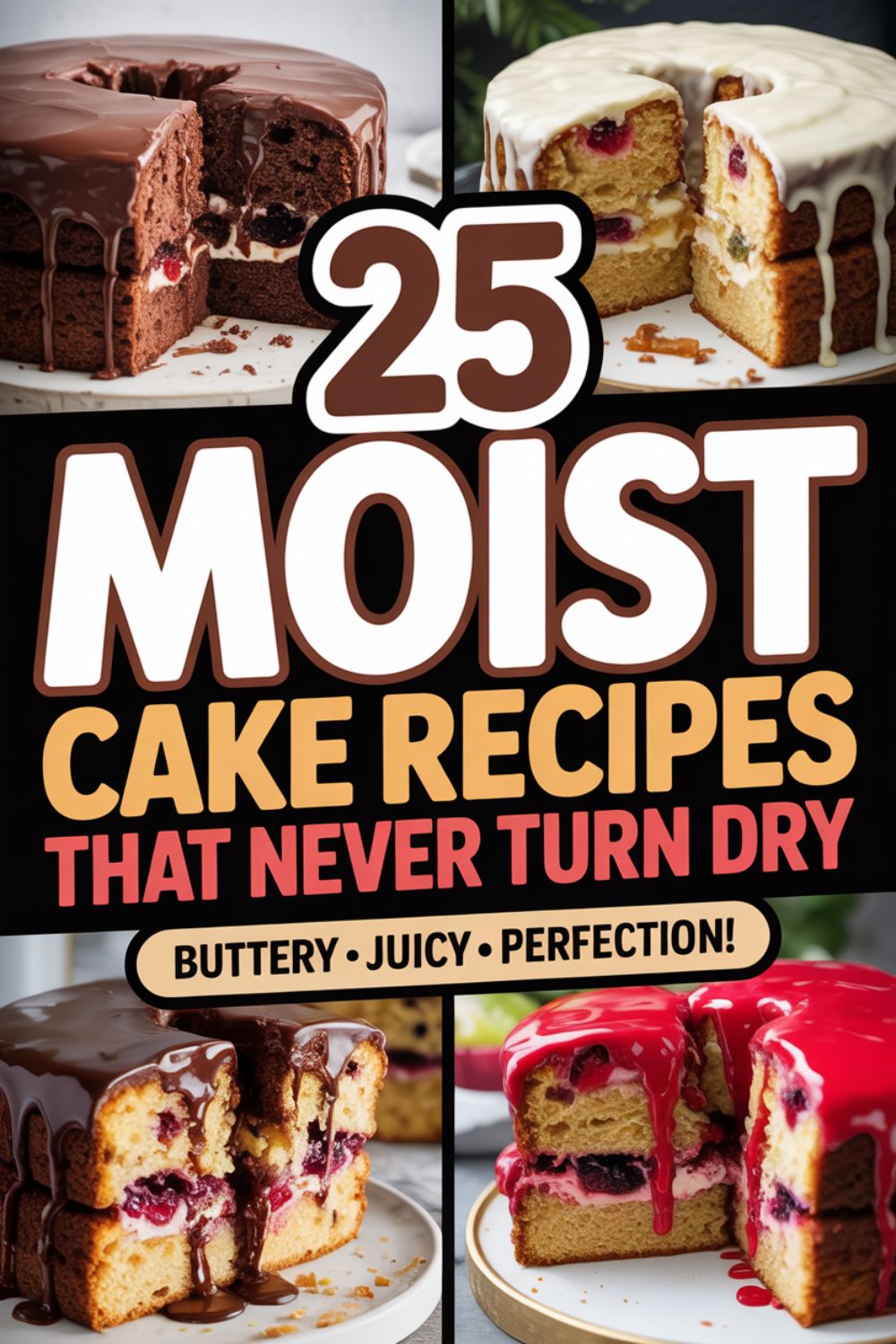
25 Moist Cake Recipes That Never Turn Dry
You know that sinking feeling when you slice into a homemade cake and it crumbles like sawdust? Yeah, we’ve all been there. But here’s the thing—moist cakes aren’t some mystical baking unicorn that only professional pastry chefs can pull off. They’re totally achievable, and I’m about to walk you through 25 recipes that basically refuse to dry out.
I’ve spent more Saturday afternoons than I’d like to admit rescuing dry cakes with emergency buttercream applications. But once I figured out the science behind moisture retention and stopped treating my oven like a guessing game, everything changed. These recipes aren’t just random throws at the dartboard—they’re built on solid techniques that lock in moisture like Fort Knox.
Whether you’re baking for a birthday party, meal prepping desserts for the week, or just craving something sweet that won’t turn into a hockey puck by tomorrow, these cakes have your back. No more apologizing for texture or drowning slices in milk just to get them down. Let’s get into it.
Why Most Cakes Turn Out Dry (And How to Avoid It)
Let’s be real—dry cakes are usually the result of one or more baking crimes. Overbaking is the biggest culprit. When you leave a cake in the oven even five minutes too long, you’re basically evaporating all the moisture you worked so hard to incorporate. According to KitchenAid’s baking experts, lowering your oven temperature slightly to around 300-325°F helps preserve moisture throughout the baking process.
The other issue? Ingredient ratios. Too much flour or not enough fat creates a dry, dense texture that no amount of frosting can save. Using this digital kitchen scale changed my baking game completely—accuracy matters way more than you’d think. IMO, volumetric measurements (cups and spoons) are just asking for trouble when precision actually counts.
Room temperature ingredients also make a massive difference. Cold eggs and butter don’t emulsify properly, which means your batter won’t trap air bubbles or distribute moisture evenly. I usually pull my eggs and butter out of the fridge about an hour before I start baking, and if I forget, I’ll set the eggs in warm water for ten minutes. Works every time.
💡 Pro Tip
Always check your cake five minutes before the recipe’s suggested time. Ovens vary wildly, and that extra cushion can save you from an overbaked disaster.
The Science Behind Seriously Moist Cakes
Here’s where things get interesting. Moisture in cakes isn’t just about adding liquid—it’s about creating a structure that traps and holds that liquid throughout the baking process and beyond. Chemistry World explains that the goal is transforming a liquid batter into a light, solid foam when baked, and every ingredient plays a specific role in making that happen.
Fats like butter and oil coat the flour proteins, which prevents them from forming too much gluten. Less gluten development means a more tender, moist crumb. That’s why oil-based cakes tend to stay moist longer than butter-based ones—oil remains liquid at room temperature, while butter solidifies. If you’re meal prepping cakes or making something ahead of time, oil is your best friend.
Sugar isn’t just there for sweetness, either. It’s hygroscopic, meaning it attracts and holds onto water molecules. The sugar in your cake literally prevents moisture from escaping. Adding ingredients like sour cream, buttermilk, or even mayonnaise (trust me on this one) increases both the fat and moisture content while adding a slight tang that balances sweetness beautifully.
Speaking of buttermilk—if you’re not using it regularly in your cake recipes, you’re missing out. The acidity breaks down gluten, resulting in a softer, more tender texture. I keep buttermilk powder on hand for this exact reason. Just mix it with water when you need it, and boom—no more emergency grocery runs.
Essential Ingredients That Keep Cakes Moist
Fat Sources: Butter, Oil, and Beyond
The fat debate in cake baking is real. Butter gives you flavor, but oil gives you moisture that lasts. For cakes you’re serving the same day, butter is fine. For anything you’re making ahead, I always lean toward vegetable oil or even melted coconut oil. Some recipes call for a combination of both, which honestly gives you the best of both worlds.
Mayonnaise might sound weird, but it’s basically emulsified eggs and oil—two things you’d add to a cake anyway. A few tablespoons mixed into chocolate cake batter? Game changer. Nobody will taste it, but everyone will comment on how moist the cake is.
Dairy and Acidic Ingredients
Buttermilk, sour cream, yogurt, and even cream cheese add moisture and tang while tenderizing the crumb. The acid reacts with baking soda to create lift, which gives you that soft, fluffy texture everyone loves. I use full-fat Greek yogurt in a lot of my recipes because it’s thick, creamy, and always in my fridge.
For super decadent cakes, I’ll add a dollop of sour cream. It makes chocolate cakes ridiculously rich without adding any sour flavor—the baking process mellows it out completely. If you want to get fancy, try mascarpone or ricotta. They’re mild, creamy, and amp up moisture without changing the flavor profile too much.
Meal Prep Essentials Used in These Recipes
- Physical Products:
- 9-inch round cake pans with removable bottoms – Makes releasing cakes so much easier and prevents sticking
- Silicone baking mats – Zero sticking, zero cleanup, and they last forever
- Offset spatula set – Perfect for frosting and spreading batter evenly
- Digital Products:
- Ultimate Cake Recipe eBook – 50+ tested recipes with troubleshooting tips
- Baking Conversion Chart PDF – Never mess up measurements again
- Cake Decorating Video Course – Learn professional techniques from home
- Join our baking community on WhatsApp for daily tips, recipe swaps, and troubleshooting help from fellow home bakers
25 Moist Cake Recipes You Need to Try
1. Classic Chocolate Fudge Cake
This is the cake I make when I need to impress someone. It uses both oil and sour cream, which creates this insanely moist, fudgy texture that stays perfect for days. The secret? Adding a cup of hot coffee to the batter. It intensifies the chocolate flavor without making the cake taste like coffee. Get Full Recipe.
I bake this in these 9-inch round pans because the removable bottoms make my life so much easier. No more mangled cake edges or layers that stick and tear.
2. Lemon Buttermilk Pound Cake
Pound cakes get a bad rap for being dry, but this one is the exception. The buttermilk keeps it tender, and I brush the warm cake with a lemon simple syrup right after it comes out of the oven. The syrup soaks in and adds this bright, zesty moisture that lasts for days. Get Full Recipe.
If you’re into citrus flavors, this pairs beautifully with these easy lemon drop cookies for a complete dessert spread.
3. Vanilla Bean Buttercream Cake
Sometimes you just want a simple, classic vanilla cake that doesn’t mess around. This recipe uses the reverse creaming method, which coats the flour in fat before adding the liquids. The result? A super tender crumb that practically melts in your mouth. Get Full Recipe.
💡 Quick Win
Invest in real vanilla bean paste instead of extract. The flavor difference is night and day, and you get those gorgeous vanilla specks throughout the cake.
4. Carrot Cake with Cream Cheese Frosting
Carrot cake is basically designed to be moist—between the shredded carrots, crushed pineapple, and oil, you’d have to try really hard to make this one dry. I add chopped walnuts and a pinch of cinnamon for extra depth. Spread it thick with cream cheese frosting and you’ve got dessert perfection. Get Full Recipe.
5. Red Velvet Cake
Red velvet has this unique, velvety texture (hence the name) that comes from the combination of buttermilk, vinegar, and cocoa powder. It’s tangy, slightly chocolatey, and ridiculously moist. I use this gel food coloring because it doesn’t thin out the batter like liquid food coloring does. Get Full Recipe.
6. Coconut Cream Cake
If you’re a coconut fan, this cake will ruin you for all other cakes. It uses coconut milk in the batter and coconut cream in the frosting, creating layers of tropical flavor that stay moist thanks to all that fat content. Get Full Recipe.
Looking for more tropical-inspired treats? Check out these vegan coconut macaroons that pair perfectly with this cake.
7. Chocolate Mayonnaise Cake
I know, I know—mayonnaise in cake sounds insane. But this recipe has been around since the Depression era because it works. The mayo adds moisture and fat without any weird flavor. It’s one of those things you’d never guess was in there, but the texture speaks for itself. Get Full Recipe.
8. Banana Foster Cake
Overripe bananas are liquid gold in cake baking. They add natural sweetness, moisture, and a flavor that’s impossible to replicate with anything else. This cake takes it up a notch with a rum-caramel glaze that soaks into the layers. Absolutely divine. Get Full Recipe.
“I’ve made this banana cake three times in the last month. My family keeps requesting it, and it stays moist for almost a week when I wrap it properly. Game changer!”
9. Pumpkin Spice Cake
Pumpkin puree is another moisture MVP. It’s basically the same concept as banana—tons of moisture, natural sweetness, and it keeps cakes tender for days. I make this cake year-round because why limit pumpkin to fall? Get Full Recipe.
10. Almond Cream Cake
This cake uses almond paste in the batter, which adds moisture, density, and a subtle nutty flavor that’s absolutely addictive. It’s perfect with a light whipped cream frosting or just dusted with powdered sugar. Get Full Recipe.
11. Strawberry Shortcake
Real strawberry shortcake—not the stuff from the grocery store freezer aisle. This version uses fresh strawberries macerated in sugar, which creates this syrupy juice that soaks into the cake layers. I use this berry huller to prep strawberries quickly without wasting any fruit. Get Full Recipe.
If strawberries are your thing, you’ll also love these strawberry sugar cookies for a complete berry-themed dessert table.
12. Salted Caramel Cake
Caramel sauce isn’t just for topping—when you add it to the batter and between the layers, it creates pockets of gooey sweetness that keep the cake incredibly moist. The salt balances the sweetness and makes the caramel flavor pop. Get Full Recipe.
13. Coffee Walnut Cake
Coffee and walnuts are an underrated combination. The espresso in this cake intensifies all the other flavors without being overtly coffee-flavored, and the toasted walnuts add texture and richness. Get Full Recipe.
14. Marble Cake
Why choose between vanilla and chocolate when you can have both? This marble cake swirls the two batters together for a stunning visual and the best of both worlds flavor-wise. The trick is not overmixing—you want distinct swirls, not a muddy mess. Get Full Recipe.
15. Pistachio Cake
Ground pistachios give this cake a beautiful green hue and a delicate, nutty flavor. I buy shelled pistachios in bulk and grind them myself in a food processor. Way cheaper than buying pistachio flour, and it tastes fresher. Get Full Recipe.
Tools & Resources That Make Baking Easier
- Physical Products:
- Digital kitchen scale – Accuracy is everything in baking
- Instant-read thermometer – Check your oven’s actual temperature
- Cake leveler – Creates perfectly flat layers for stacking
- Digital Products:
- Troubleshooting Guide PDF – Solutions for common baking problems
- Ingredient Substitution Chart – Never get stuck without an ingredient again
- Frosting Masterclass – Video tutorials for professional-looking cakes
- Connect with other bakers in our WhatsApp group for recipe inspiration and real-time baking advice
16. Orange Olive Oil Cake
Olive oil cakes are having a moment, and for good reason. The oil keeps them incredibly moist, and the olive oil flavor (use a mild one, not extra virgin) adds a subtle fruity note that pairs beautifully with citrus. Get Full Recipe.
17. Black Forest Cake
Chocolate cake soaked in cherry liqueur, layered with whipped cream and cherries. It’s decadent, boozy, and stays moist because of all that liquid soaking into the layers. Get Full Recipe.
18. Honey Lavender Cake
This cake is elegant and unexpected. The honey keeps it moist while adding floral sweetness, and dried lavender brings this sophisticated, aromatic quality. Just don’t overdo the lavender—a little goes a long way or it starts tasting like soap. Get Full Recipe.
19. Funfetti Birthday Cake
Sometimes you just need a fun, festive cake loaded with sprinkles. This version uses oil and sour cream to stay moist, and I mix in jimmies sprinkles instead of round nonpareils—they hold up better in the batter and don’t bleed color. Get Full Recipe.
If you’re planning a birthday spread, pair this with these easy cookie bars for a dessert table that’ll feed a crowd.
20. Tres Leches Cake
This Central American classic is literally soaked in three types of milk—evaporated, condensed, and heavy cream. It’s impossible for this cake to be dry. The sponge cake soaks up all that milky goodness and becomes this custardy, incredibly moist dessert. Get Full Recipe.
💡 Pro Tip
Poke holes all over the cake with a fork before pouring the milk mixture. This helps it absorb evenly and prevents pooling at the bottom.
21. Rum Cake
Rum cake is another one of those soaked cakes that stays moist for days. The rum syrup gets brushed on while the cake is still warm, and it soaks in completely. I use dark rum for a richer flavor, but light rum works if that’s what you have on hand. Get Full Recipe.
22. Chai Spice Cake
All those warm chai spices—cinnamon, cardamom, ginger, cloves—make this cake smell incredible while it’s baking. I steep chai tea bags in the milk before adding it to the batter for extra flavor. Get Full Recipe.
23. Tiramisu Cake
Tiramisu turned into cake form. Coffee-soaked layers with mascarpone frosting and a dusting of cocoa powder on top. It’s rich, boozy, and stays moist thanks to all that coffee soaking into the sponge. Get Full Recipe.
24. Dulce de Leche Cake
Dulce de leche adds this caramelized sweetness and tons of moisture to both the batter and the frosting. You can buy it pre-made or make your own by simmering sweetened condensed milk. Either way, this cake is dangerously good. Get Full Recipe.
“I brought this dulce de leche cake to a potluck and people were asking for the recipe all night. Three days later, the leftovers were still perfectly moist!”
25. German Chocolate Cake
German chocolate cake isn’t actually German—it’s named after a guy named Sam German who created the chocolate used in the original recipe. But regardless of its origins, this cake is phenomenal. The coconut-pecan frosting is what really makes it, and the chocolate cake underneath stays moist for days. Get Full Recipe.
For even more chocolate inspiration, browse through these classic chocolate chip cookie recipes to round out your chocolate dessert repertoire.
Pro Tips for Keeping Cakes Moist After Baking
Even the most perfectly baked cake can dry out if you don’t store it properly. Once your cake is completely cool, wrap it tightly in plastic wrap. I mean really tight—you want to seal in all that moisture. Then wrap it again in aluminum foil for extra protection.
If you’re frosting the cake, do it as soon as possible. Frosting acts as a moisture barrier and prevents the cake from drying out. For unfrosted cakes, you can also brush them with a simple syrup (equal parts sugar and water, heated until the sugar dissolves). This adds moisture and a touch of sweetness.
FYI, you can also freeze cake layers for up to three months. Just wrap them well and thaw them in the fridge overnight before frosting. The texture holds up surprisingly well, and sometimes I think they’re even more moist after freezing.
Room temperature matters too. Cakes stored at room temperature will stay moist for a few days, but if you need them to last longer, refrigerate them. Just bring them back to room temperature before serving—cold cake doesn’t taste as good and the texture seems drier even if it’s not.
Frequently Asked Questions
How do you keep a cake moist for several days?
The key is proper storage. Wrap your cake tightly in plastic wrap as soon as it cools completely, then wrap it again in aluminum foil. This double layer traps moisture and prevents the cake from drying out. If the cake is frosted, the frosting acts as an additional barrier. Store at room temperature for 2-3 days, or refrigerate for up to a week.
What ingredient makes cakes more moist?
Several ingredients contribute to moisture: oil (which stays liquid at room temperature), sour cream or yogurt (which add fat and acidity), and buttermilk (which tenderizes the crumb). Adding a simple syrup soak after baking also helps. Basically, anything that increases fat content or adds liquid while maintaining structure will keep your cake moist.
Can you fix a dry cake after it’s baked?
Yes! Brush the cake layers with simple syrup, fruit juice, or even liqueur while they’re still slightly warm. The liquid will soak in and add moisture throughout. You can also split the cake into layers and add more filling or frosting between them, which adds moisture and masks any dryness.
Why did my cake turn out dry even though I followed the recipe?
Common culprits include overbaking (even by a few minutes), oven temperature running too hot, or measuring ingredients inaccurately. Using a kitchen scale instead of measuring cups helps tremendously. Also, overmixing the batter develops too much gluten, which creates a tough, dry texture.
Should I use butter or oil for a moister cake?
Oil creates a moister cake that stays fresh longer because it remains liquid at room temperature. Butter adds flavor but can make cakes seem drier as they cool since butter solidifies. For the best of both worlds, use half butter and half oil, or make an oil-based cake and add a butter-based frosting for flavor.
Final Thoughts
Moist cakes aren’t some mysterious achievement—they’re the result of understanding how ingredients work together and treating your batter with respect. Use the right ratios, don’t overbake, and store your cakes properly. These 25 recipes give you plenty of options whether you’re craving chocolate, fruit, spice, or something completely unexpected.
The best part? Once you nail these techniques, you can apply them to pretty much any cake recipe. Adjust the fat, add some sour cream, brush on a simple syrup—these small tweaks make a massive difference in the final texture. So grab your mixing bowls and get baking. Your family and friends will definitely notice the difference.