15 Elegant Wedding Cake Ideas You Can DIY
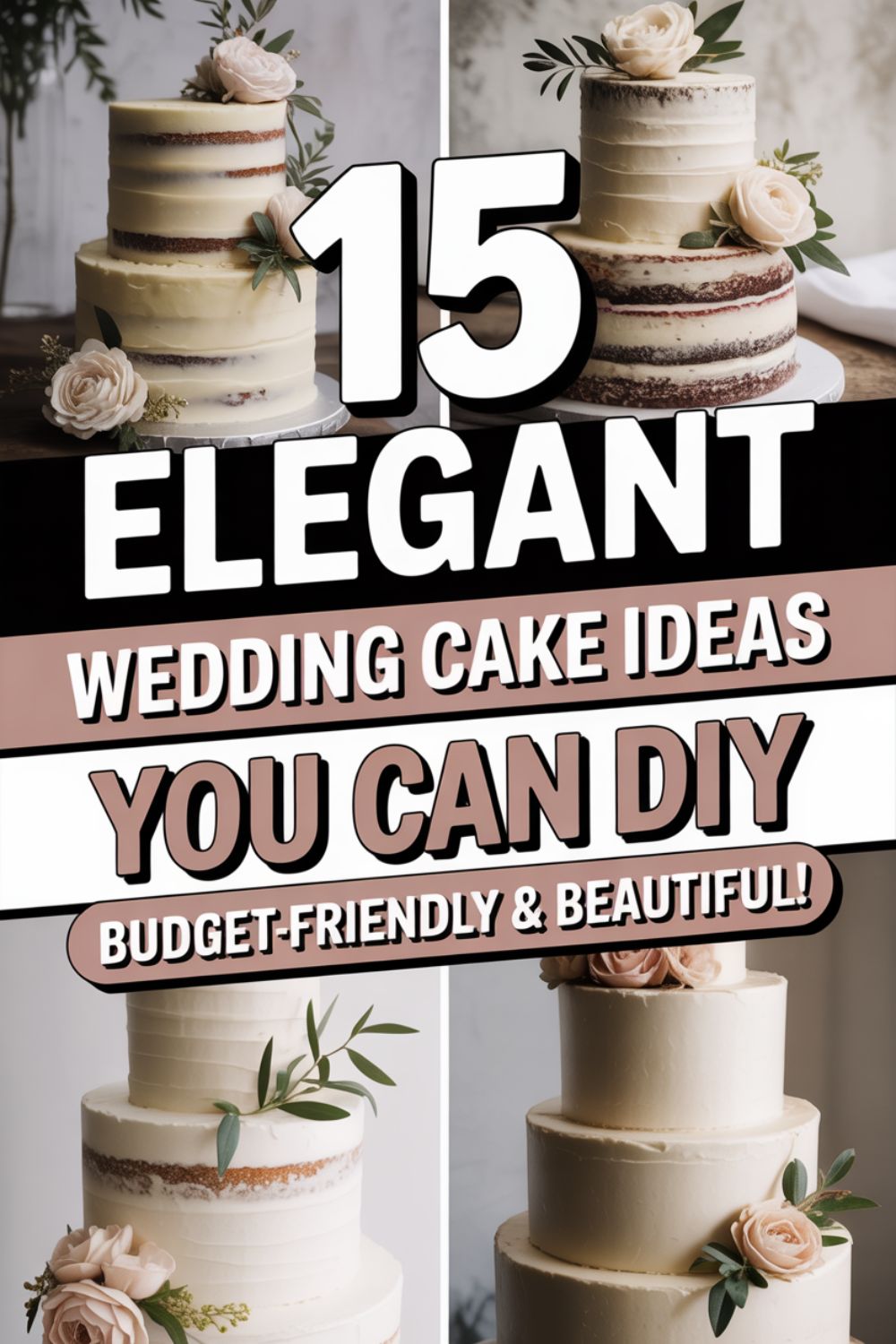
The best part about making your own wedding cake? You’re in complete control. Want a funfetti explosion inside a pristine white exterior? Go for it. Dreaming of salted caramel layers that your great-aunt’s commercial bakery would never offer? Done. Plus, there’s something genuinely special about serving cake you made with your own hands to the people you love most.
Now, before we dive into these 15 elegant ideas, let me be real with you: this isn’t a weekend-before project. You’ll want to practice at least once, maybe twice if you’re trying something intricate. Freeze your cake layers ahead of time (seriously, King Arthur Baking swears by this method for locking in moisture), get your frosting game down, and accept that imperfections add character. Ready? Let’s get into it.
The Classic Semi-Naked Buttercream
If you want elegant without overthinking it, the semi-naked look is your best friend. This technique shows off those beautiful cake layers peeking through a thin coat of buttercream frosting, giving you that trendy rustic-meets-refined vibe that works for barn weddings and ballrooms alike.
The beauty here is in the imperfection. You’re not going for a perfectly smooth finish—instead, you want just enough frosting to hold everything together while letting the cake layers tell their own story. I use this offset spatula for the job because the angle makes it stupid easy to control how much frosting you’re applying.
Top it with fresh flowers (make sure they’re pesticide-free and food-safe), maybe some edible gold leaf, and you’ve got yourself an Instagram-worthy creation. According to The Knot, naked and semi-naked cakes have become increasingly popular for their natural, effortless aesthetic.
Buttercream Rosettes All Over
Want to look like you spent weeks on intricate details? Buttercream rosettes are shockingly easy once you get the hang of them. Seriously, I was piping decent rosettes after like 20 minutes of practice. You’ll need a 1M piping tip and some patience, but the payoff is massive.
Start at the bottom tier and work your way up, offsetting each row so they nestle together like actual flower petals. The repetitive motion is actually kind of meditative—until your hand cramps up, but that’s what breaks are for. You can stick with classic white or go ombre by gradually lightening your buttercream color as you move up the tiers.
The technique involves piping in a circular motion, starting from the center and working outward. Food52 notes that this creates a dimensional, textured look that photographs beautifully from every angle.
Fresh Fruit Cascade
Nothing says “we’re fancy but also down-to-earth” quite like fresh fruit tumbling down your cake tiers. Berries, figs, citrus slices, edible flowers—go wild. The key is abundance. Don’t be shy about piling it on.
I prefer to frost the cake in a simple buttercream first, then strategically place larger fruits as anchors before filling in with smaller berries. Use floral wire and tape if you need to secure anything gravity-defying. Just make sure you’re inserting food-safe materials only.
Pro move: brush your berries with simple syrup right before the event for that just-picked glossy look. And definitely buy more fruit than you think you need—things always look sparse until they’re absolutely loaded.
Textured Buttercream Swirls
Forget smooth and perfect—textured buttercream is having a moment, and for good reason. Using a spatula or bench scraper, you create these organic swoops and swirls that catch light beautifully and hide any rookie mistakes. Win-win.
I literally just load up my offset spatula with frosting and go to town in random directions. There’s no wrong way to do this, which makes it perfect for stressed-out DIYers who are worried about perfection. The dimensional quality adds visual interest without requiring any fancy piping skills.
You can keep it monochromatic or add subtle color variations by mixing in tiny amounts of gel food coloring to different batches of frosting. The effect is ethereal and modern, especially when paired with minimal floral accents.
Essential Tools for DIY Wedding Cakes
After making cakes for friends’ weddings (and my own), these are the tools I actually use and recommend:
- Rotating Cake Turntable – This changed everything for me. Smoothing frosting while the cake spins? Game changer.
- Offset Spatula Set – Get various sizes. The small one is perfect for detail work, the large one handles big surfaces.
- Wilton Piping Tip Set – Comprehensive set that covers every technique you might want to try.
- Ultimate Wedding Cake Planning Guide (Digital) – Step-by-step timeline, ingredient calculators, and emergency fixes
- Buttercream Mastery Video Course – Learn five professional frosting techniques from an actual pastry chef
- Cake Decorating Templates Pack – Printable guides for tier sizing, dowel placement, and portion calculations
Want more tips and real-time support? Our WhatsApp Baking Community has over 500 DIY cake decorators sharing advice, troubleshooting disasters, and cheering each other on.
Watercolor Buttercream Effect
This technique looks ridiculously complicated but is actually pretty forgiving. You’re essentially painting with edible food coloring on a buttercream canvas. The blended, watercolor effect works beautifully for spring and summer weddings.
Start with a crumb-coated cake (that initial thin layer that traps crumbs). Once that’s set, apply a smooth final coat of white or ivory buttercream. Then, using gel food coloring and a food-safe paintbrush, dab and blend colors directly onto the frosting. Soft pinks, peaches, and lavenders work gorgeously.
The trick is working quickly before the frosting sets. Don’t overthink it—the randomness is part of the charm. According to Elegant Wedding Invites, watercolor cakes pair beautifully with bohemian and romantic wedding themes.
Metallic Accents and Gold Leaf
Want instant luxury? Gold leaf is your answer. A little goes a long way, and applying it is way easier than you’d think. Just grab edible gold leaf sheets, use a dry brush to pick up pieces, and press them gently onto your frosted cake.
You can go full opulent with gold-covered tiers or keep it minimal with just strategic touches at the base of each tier and cascading down one side. I’ve also seen gorgeous cakes with luster dust brushed over buttercream rosettes for a subtle shimmer.
Mix metallics if you’re feeling bold—rose gold with champagne gold looks unbelievably sophisticated. Just make sure everything you’re using is clearly labeled as food-safe and edible.
Geometric Patterns with Fondant Accents
Okay, I know fondant gets hate, but hear me out: you don’t have to cover the entire cake in it. Using small fondant pieces for geometric shapes—hexagons, triangles, abstract polygons—against a buttercream background gives you that modern, architectural look without the fondant-overload taste issue.
Roll out your fondant thin, cut shapes with cutters or a sharp knife and ruler, then attach them to your buttercream cake with a tiny dab of water or piping gel. The contrast between smooth fondant shapes and textured buttercream is visually striking.
You can paint the fondant pieces with edible gold paint or leave them stark white for a clean, minimalist aesthetic. This technique is perfect if you want something decidedly contemporary.
Classic Piped Borders and Swags
Sometimes traditional is exactly what you want. Classic piped borders—think pearl beading, shell borders, cornelli lace—give you that timeless wedding cake look that never goes out of style. Plus, borders are perfect for hiding where your tiers meet, which is honestly half the battle.
You’ll want round piping tips in various sizes for this. The technique requires steady hands but not artistic genius. It’s repetitive and methodical, which I actually find less stressful than freestyle decorating. Chelsweets recommends practicing piping techniques extensively before the actual event.
Swags—those draped, garland-like decorations—add movement and romance. Pipe them freehand with a star tip, or use a template to keep them uniform. Either way works.
Fresh Flowers Only
If piping isn’t your thing, let flowers do the heavy lifting. A simple, smoothly frosted cake becomes absolutely stunning with the right floral arrangement. Talk to your florist about which flowers are safe for direct cake contact (or use floral picks as barriers).
Cascading florals down one side is classic. Clustered arrangements at the base of each tier is elegant. Minimalist single blooms placed strategically gives you that Scandinavian chic vibe. The possibilities are endless, and honestly, flowers hide a multitude of frosting sins.
Research from Taste of Home emphasizes coordinating your cake flowers with your overall wedding bouquet for visual cohesion.
Ombre Tiers
Ombre never gets old, and it’s surprisingly straightforward if you’re organized. Start with your darkest shade at the bottom tier and gradually lighten as you move up. You’ll need to mix several batches of buttercream in varying shades of your chosen color.
The secret is blending where the shades meet. Load your offset spatula with both shades and blend them together right on the cake. It doesn’t have to be perfect—the gradual transition is what catches the eye.
Popular color choices include blush to white, sage to cream, or even dramatic navy to soft blue. According to The Knot, ombre cakes remain a top choice for couples wanting color without overwhelming their color scheme.
Buttercream Ruffles
Ruffles are surprisingly easy with the right piping tip (specifically, a petal tip). The technique involves holding the wide end of the tip against the cake and the narrow end slightly away, then piping while moving in a back-and-forth motion.
You can cover entire tiers in ruffles for a romantic, vintage-inspired look, or just add ruffled accents at the base of each tier. The dimensional quality photographs beautifully and adds instant elegance.
IMO, ruffles are best in softer colors—white, ivory, blush, lavender. Bold colors can overwhelm the delicate nature of the design. Keep your buttercream slightly stiff for this technique so the ruffles hold their shape.
Marble Effect with Ganache
If you want to veer away from buttercream, a marble ganache effect is stunning and modern. Pour white chocolate ganache over your cake, then drizzle dark chocolate ganache in lines. Use a skewer or toothpick to swirl them together, creating that marble stone effect.
The randomness is crucial—planned swirls look forced. Just drag your tool through the ganache in loose patterns and let physics do its thing. The result is unique every single time, which means no two cakes will ever look identical.
Ganache has the added benefit of being more stable than buttercream in warm weather, which is clutch for outdoor weddings. Just make sure it’s set properly before adding any additional decorations.
Storage & Transport Solutions That Actually Work
You’ve made this beautiful cake—now you need to get it to the venue in one piece:
- Heavy-Duty Cake Boxes – Get ones sized for each tier. Non-negotiable for safe transport.
- Non-Slip Shelf Liner – Line your car’s trunk or floor with this to prevent sliding during transport.
- Cake Lifter – Makes moving tiers so much less terrifying than using your bare hands.
- Wedding Cake Assembly Checklist (Digital) – Printable guide for on-site setup with troubleshooting tips
- Temperature & Timing Calculator – Know exactly when to remove each tier from the fridge for perfect serving texture
- Emergency Repair Kit Guide (Digital) – What to pack for quick fixes: extra frosting, toothpicks, offset spatula, food-safe gloves
Stenciled Designs
Stencils are like having artistic ability without actually needing artistic ability. Secure a food-safe stencil against your frosted cake, then dust with powdered sugar, cocoa powder, or luster dust using a soft brush.
Damask patterns, lace designs, and geometric motifs all work beautifully. You can stencil just one tier as a focal point or create a repeating pattern across all tiers. The precision of stenciled designs contrasts nicely with more organic decorating elements like fresh flowers.
Just work with a super-smooth buttercream surface for best results. Any texture will show through and muddy your design.
Drip Effect with Ganache
The drip cake trend isn’t going anywhere, and it’s actually one of the more forgiving techniques out there. Make a slightly thin chocolate ganache, let it cool to just warm (not hot), then spoon it around the top edge of each tier.
Some drips will be longer, some shorter—that’s the charm. You can keep drips natural chocolate color, tint white chocolate ganache with gel coloring, or even use caramel for a completely different vibe.
According to professionals at Sugar Geek Show, getting the temperature right is crucial—too hot and it runs everywhere, too cool and it doesn’t drip at all.
Pressed Edible Flowers
This technique is drop-dead gorgeous and easier than it sounds. Get edible flowers (pansies, violas, rose petals), gently press them into your buttercream while it’s still slightly soft, then carefully brush over them with a thin layer of clear piping gel or simple syrup to seal them in place.
The effect is like botanical specimens preserved in time. It’s ethereal, delicate, and perfect for garden weddings or spring celebrations. You can scatter flowers randomly or create deliberate patterns—both approaches work.
Just make absolutely sure your flowers are actually edible and haven’t been treated with pesticides. When in doubt, buy from reputable suppliers who specifically sell flowers for culinary use.
Making It All Come Together: The Game Plan
Alright, you’ve picked your design (or honestly, maybe you’re combining several of these ideas because why not). Now let’s talk logistics because timing is everything with DIY wedding cakes.
Start baking your layers three to five days before the wedding and freeze them. Seriously, this is non-negotiable. Frozen cake layers are easier to handle, frost more smoothly, and stay moist. Wrap them tightly in plastic wrap and then again in aluminum foil.
Make your buttercream two days before. It stores beautifully in the fridge and actually improves as flavors meld. Just bring it back to room temperature and re-whip before using. Cake by Courtney emphasizes that proper whipping technique can make or break your buttercream consistency.
Assemble and do your crumb coat the day before. This initial thin layer of frosting seals in crumbs and gives you a smooth base to work with. Chill it overnight. On the morning of the wedding (or day before if you’re smart), apply your final frosting coat and decorations.
Transport is its own beast. Drive like you’re transporting nitroglycerin. Take corners slowly. Have a friend in the passenger seat whose sole job is watching the cake. Set up at the venue with plenty of time to spare and bring emergency supplies—extra frosting, a spatula, toothpicks for quick repairs.
Frequently Asked Questions
Can I really make a wedding cake without professional training?
Absolutely. The key is choosing a design that matches your skill level and practicing beforehand. Start with simpler techniques like semi-naked cakes or fresh flower decorations before attempting intricate piping work. Most importantly, do at least one full practice run so you know what to expect on the actual day.
How far in advance can I bake the cake layers?
You can bake cake layers up to a week in advance if you freeze them properly. Wrap each layer tightly in plastic wrap, then aluminum foil, and freeze. Thaw them in the fridge overnight before assembling. This actually makes for moister, more stable cakes that are easier to work with.
What’s the best frosting for hot weather or outdoor weddings?
Swiss meringue buttercream or Italian buttercream hold up better in heat than American buttercream. Ganache is also more heat-stable. If using American buttercream, add a bit of shortening to stabilize it, keep the cake refrigerated until the last possible moment, and set it up in a shaded area away from direct sunlight.
Do I need special equipment to stack a tiered cake?
Yes, you’ll need dowel rods or thick straws to support the upper tiers and prevent them from sinking into lower tiers. You’ll also need cake boards for each tier and a sturdy base for the bottom tier. These aren’t optional—they’re essential for structural integrity. Budget about $20-30 for basic support supplies.
What if something goes wrong on the day of the wedding?
Always bring an emergency kit: extra frosting in your chosen colors, offset spatula, piping bags and tips, toothpicks, and paper towels. Most mistakes can be fixed with strategic placement of flowers or decorative elements. Remember, guests will be photographing the beautiful parts, and imperfections add character to handmade items.
Final Thoughts
Here’s what I want you to take away from all this: making your own wedding cake is ambitious, yes, but it’s also completely doable. You’re not trying to compete with professional bakeries that do this every single day. You’re creating something personal, made with love, that’ll taste incredible and look beautiful in its own unique way.
The techniques I’ve shared work because they’re forgiving. They allow for your personal style to shine through. They don’t require you to be a professional pastry chef with decades of experience. They just require planning, practice, and the willingness to embrace the handmade aesthetic.
Will everything go exactly as planned? Probably not. I’ve seen wonky layers, lopsided tiers, frosting that refused to cooperate, and last-minute flower crises. But I’ve also seen couples light up when they see their DIY cake come together, guests rave about the flavor (because you used real butter and quality ingredients, not commercial cake mix), and significant savings that could be redirected to the honeymoon fund.
The imperfections tell a story. They show that someone cared enough to spend hours creating something by hand. That’s worth way more than perfection, in my opinion. So pick your design, gather your supplies, do your practice run, and give yourself grace when things don’t go exactly as envisioned.
And hey, if you completely panic and decide to order from a bakery at the last minute? No judgment. But I have a feeling you’re going to surprise yourself with what you can create. Just remember to take photos of your finished masterpiece before everyone devours it—because trust me, a good wedding cake disappears fast.