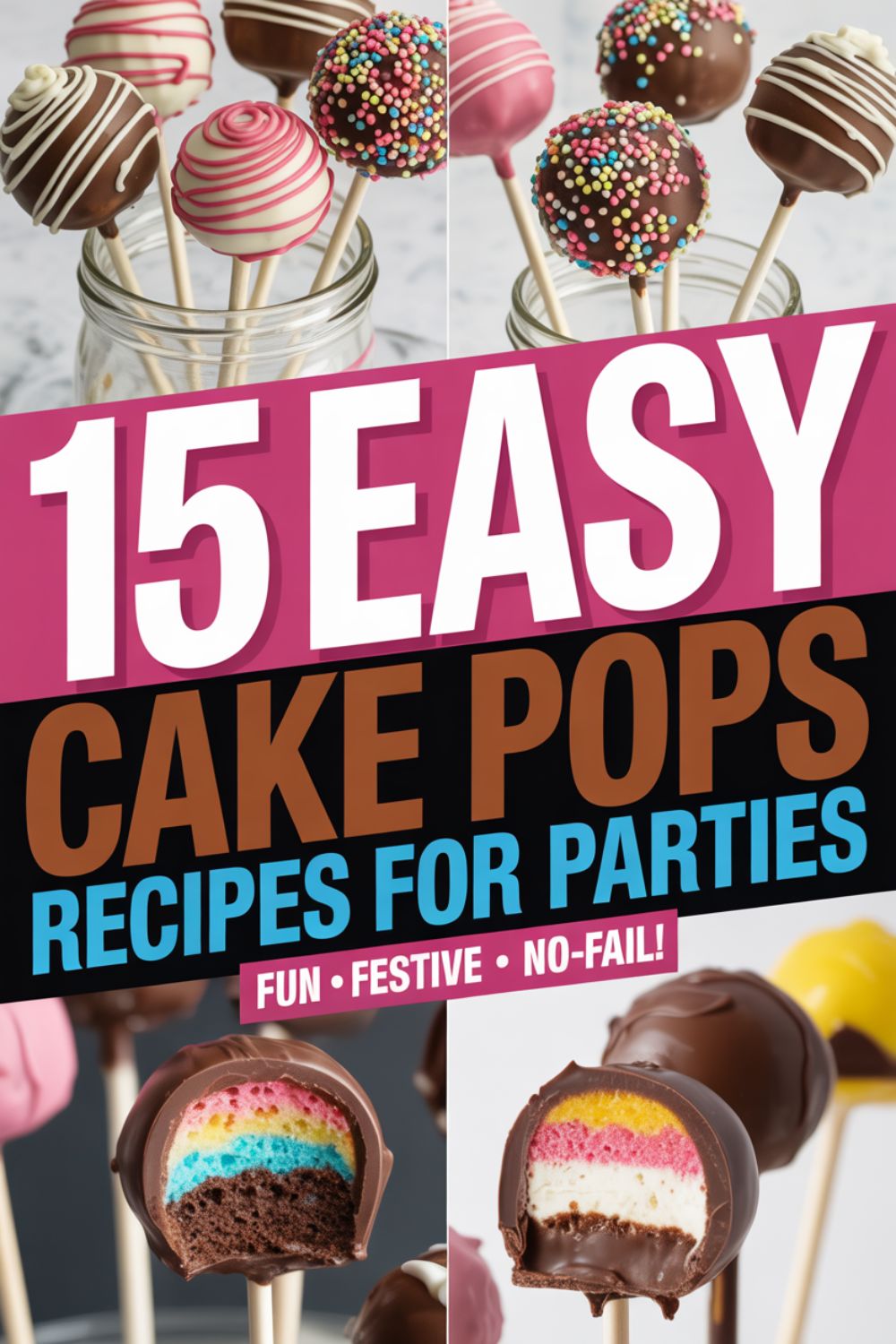
15 Easy Cake Pops Recipes for Parties
Here’s the thing about cake pops: they look fancy and complicated, but once you nail the basics, you’ll be cranking these out like a seasoned pro. I’ve been making them for years now, and I can honestly say they’ve saved me from more last-minute party panic attacks than I care to admit.
Whether you’re team chocolate, vanilla enthusiast, or somewhere in the wild flavor spectrum between, I’ve got you covered with 15 easy recipes that’ll make your next gathering absolutely legendary. No molds required, no fancy equipment—just good cake, better frosting, and a willingness to get a little messy.
Why Cake Pops Are Perfect for Every Party
Let me tell you why these little spheres of joy have become my go-to party trick. First off, portion control is built right in—no more awkward “is this slice too big?” moments. Everyone gets an equal amount of deliciousness, and there’s zero cake-cutting drama.
They’re also insanely customizable. Got a themed party? Cake pops can match literally any color scheme or design you throw at them. I once made superhero-themed cake pops for my nephew’s birthday, and the kids went absolutely bonkers. The parents weren’t mad either since the mess was contained to a stick instead of smeared across plates and faces.
Another bonus? They’re way easier to transport than traditional cakes. I’ve driven across town with a box of cake pops sitting on my passenger seat, and they arrived looking exactly how they did when I packed them. Try that with a frosted layer cake and let me know how that goes.
The Secret to Perfect Cake Pop Texture
Alright, real talk—the texture is everything when it comes to cake pops. You want them moist but not mushy, firm but not dry. It’s a delicate balance, and honestly, it took me a few batches to really get it right.
The biggest mistake people make is adding too much frosting. I get it—you think more frosting equals more flavor. But what you actually get is a gloppy mess that refuses to stay on the stick. Start with just a tablespoon or two of frosting and mix it into your crumbled cake. You can always add more, but you can’t take it away once it’s mixed in.
When I’m working with this handheld mixer, I pulse it gently to break down the cake into fine crumbs before adding any frosting. It makes the whole process cleaner and gives you better control over the final texture.
According to King Arthur Baking’s guide on chocolate techniques, the science behind getting that perfect coating consistency involves proper temperature control—something that applies beautifully to cake pop coatings as well.
Essential Tools You Actually Need
Let’s cut through the marketing BS real quick. You don’t need a fancy cake pop maker machine. You know what you do need? Your hands, some patience, and maybe a simple melon baller or small cookie scoop to keep your portions consistent.
I personally love using these lollipop sticks—they’re sturdy enough to hold even my chunkier cake pops without bending. And before anyone asks, yes, you can use paper straws, but they tend to get soggy if you’re making them more than a few hours in advance.
For dipping, skip the fancy equipment and grab a tall glass or mug. I use this two-cup measuring cup because the depth is perfect for coating the entire cake ball in one smooth motion. Shallow bowls are your enemy here—you’ll end up with half-dipped disasters.
The Styrofoam Block Hack
Here’s a game-changer that nobody tells you about. You need somewhere to stick your freshly dipped cake pops while they dry, right? A styrofoam block is cheap, reusable, and works perfectly. I picked mine up at the craft store for like three bucks, and I’ve used it for hundreds of cake pops.
Can’t find styrofoam? Grab a cardboard box, flip it upside down, and poke holes in it with your lollipop sticks. Works just as well and costs literally nothing. I’ve also seen people use colanders, which is pretty genius if you ask me.
Meal Prep Essentials Used in These Recipes
15 Easy Cake Pop Recipes That’ll Steal the Show
1. Classic Vanilla Birthday Cake Pops
You can’t go wrong with the OG. These vanilla cake pops are exactly what you’d get at that overpriced coffee chain, except way better because you made them yourself. I use a simple vanilla cake—boxed mix works perfectly fine here, by the way—and cream it with vanilla buttercream frosting. Get Full Recipe
The trick is using real vanilla extract, not the imitation stuff. I know it’s more expensive, but you can actually taste the difference. Once they’re coated in white chocolate and topped with rainbow sprinkles, these become instant party favorites.
2. Red Velvet Cream Cheese Cake Pops
If you want to impress people without actually doing that much work, red velvet is your answer. The deep red color looks stunning, and when you pair it with cream cheese frosting, it’s basically impossible to mess up. Get Full Recipe
I coat mine in white chocolate because I love the color contrast, but dark chocolate works beautifully too. Add some red velvet cake crumbs on top while the chocolate is still wet for that extra fancy touch.
For those who love cream cheese frosting as much as I do, you’ll probably also enjoy these soft and chewy cookies that use similar frosting techniques.
3. Triple Chocolate Fudge Cake Pops
Calling all chocolate addicts—this one’s for you. We’re talking chocolate cake, chocolate frosting, and a chocolate coating. It’s basically a chocolate bomb, and I mean that in the best possible way. Get Full Recipe
The key here is using dark cocoa powder in your cake for that deep, rich flavor. I mix it with chocolate buttercream and dip everything in melted dark chocolate. Then I drizzle white chocolate on top because I’m extra like that.
4. Lemon Poppy Seed Cake Pops
These are perfect for spring parties or whenever you need something that’s not overwhelmingly sweet. The lemon adds a nice bright flavor, and those little poppy seeds give it texture and visual interest. Get Full Recipe
I coat these in white chocolate and add yellow food coloring to the coating. A tiny sprinkle of lemon zest on top before the chocolate sets, and boom—you’ve got something that looks like it came from a fancy bakery.
5. Cookies and Cream Cake Pops
Kids go absolutely wild for these, but let’s be honest—so do adults. Crushed Oreos mixed into vanilla cake, coated in white chocolate, and topped with more Oreo crumbs. It’s basically cookies and cream ice cream in cake pop form. Get Full Recipe
The beauty of this recipe is you can adjust the Oreo intensity based on your preference. Want more cookies? Throw in extra. Prefer a subtle hint? Go lighter. There’s no wrong answer here.
6. Funfetti Celebration Cake Pops
Nothing says “party” quite like rainbow sprinkles baked right into the cake. These funfetti cake pops are my go-to for kids’ birthdays because they’re colorful, fun, and taste like pure celebration. Get Full Recipe
I use a white cake base with vanilla frosting and add sprinkles to both the cake mixture and the coating. The more sprinkles, the better, honestly. Nobody’s ever complained about too many sprinkles in their life.
If you’re into sprinkle-loaded treats, check out these drop cookie recipes that share the same festive energy.
7. Peanut Butter Cup Cake Pops
For the peanut butter lovers in your life, this recipe hits different. Chocolate cake mixed with peanut butter frosting, dipped in chocolate, and topped with chopped peanut butter cups. Yeah, it’s as good as it sounds. Get Full Recipe
I like using natural peanut butter for a more intense flavor, but regular creamy peanut butter works perfectly fine too. Just make sure it’s well-stirred before mixing it into your frosting.
8. Salted Caramel Cake Pops
Sweet and salty is having a moment, and these cake pops are proof of why. Vanilla cake with caramel frosting, coated in milk chocolate, and finished with a sprinkle of flaky sea salt. Get Full Recipe
The sea salt is crucial here—don’t skip it. It balances out the sweetness and makes these taste way more sophisticated than your average cake pop. I use Maldon sea salt flakes because they look pretty and have the perfect crunch.
9. Strawberry Shortcake Cake Pops
These taste like summer in a bite. Strawberry cake with fresh strawberry frosting, dipped in white chocolate and rolled in graham cracker crumbs. It’s basically strawberry shortcake reimagined, and it works beautifully. Get Full Recipe
I use freeze-dried strawberries ground into powder for the frosting because they give you incredible flavor without adding moisture that would make the cake pops too soft. You can find them at most grocery stores now, or just grab some online.
10. Mocha Espresso Cake Pops
Coffee and chocolate together is basically the definition of perfection. These mocha cake pops use coffee-infused chocolate cake with espresso buttercream frosting. Get Full Recipe
I coat them in dark chocolate and top them with a chocolate-covered espresso bean for presentation. They’re sophisticated enough for adult parties but not so fancy that you feel weird eating three in a row.
Looking for more chocolate-based treats? You’ll love these classic chocolate chip cookie recipes.
11. Mint Chocolate Chip Cake Pops
These remind me of that ice cream flavor everyone either loves or hates—there’s no in-between. Chocolate cake with mint frosting, coated in dark chocolate and finished with crushed Andes mints or mint chips. Get Full Recipe
The key is not going overboard with the mint extract. A little goes a long way, and too much will make them taste like toothpaste, which is decidedly not the vibe we’re going for here.
12. Coconut Cream Cake Pops
If you’re a coconut person, these will become your new obsession. Vanilla cake with coconut cream frosting, rolled in shredded coconut before dipping, then coated in white chocolate. Get Full Recipe
I use sweetened shredded coconut and toast it lightly before rolling the cake balls in it. The toasting adds this nutty depth that makes them taste way more complex than they actually are.
13. Carrot Cake Cake Pops
Don’t sleep on these just because they have vegetables in the name. Carrot cake pops with cream cheese frosting are legitimately addictive. I add tiny chopped walnuts to mine for texture. Get Full Recipe
The coating here is crucial—I use white chocolate tinted with a touch of orange food coloring, then drizzle them with more cream cheese frosting after they’ve set. They look fancy with minimal effort, which is basically my entire cooking philosophy.
14. S’mores Cake Pops
Campfire vibes without the actual campfire. Graham cracker cake base with marshmallow frosting, dipped in milk chocolate, and topped with toasted marshmallow bits and graham cracker crumbs. Get Full Recipe
For that authentic toasted marshmallow taste, I actually torch the marshmallow bits before adding them on top. You can use a kitchen torch or just stick them under the broiler for a few seconds. Watch them carefully though—they go from perfect to burnt in about two seconds flat.
15. Pumpkin Spice Cake Pops
Yes, I’m that person who gets excited about pumpkin spice season. These fall-flavored cake pops use pumpkin cake with cream cheese frosting, coated in white chocolate tinted orange, and topped with cinnamon sugar. Get Full Recipe
The pumpkin puree makes these naturally more moist, so you’ll need less frosting than usual. I add a generous amount of pumpkin pie spice to the cake batter because I believe in living my best cozy autumn life. For dietary considerations, research shows that proper ingredient ratios significantly affect baking outcomes, which is especially important when working with moisture-rich ingredients like pumpkin.
Tools & Resources That Make Everything Easier
Troubleshooting Common Cake Pop Disasters
Let me share some hard-won wisdom from my many cake pop failures over the years. First disaster: cake balls that won’t stay on the stick. This usually means your cake mixture is too dry. Add a bit more frosting, one teaspoon at a time, until the mixture holds together when you squeeze it.
Second common issue: cracked coating. This happens when your cake balls are too cold and the chocolate is too hot. Let your chilled cake balls sit at room temperature for about 5 minutes before dipping, and let your melted chocolate cool slightly before using it.
Third problem that haunts beginners: the cake pop slides down the stick while drying. The fix is simple but crucial—dip your stick in melted chocolate before inserting it into the cake ball. This creates an adhesive that keeps everything secure.
The Chocolate Consistency Crisis
Getting your coating chocolate to the right consistency can be tricky. Too thick, and it’ll be clumpy and hard to work with. Too thin, and it’ll drip everywhere and never set properly.
I add a tiny bit of coconut oil or vegetable shortening to my melted chocolate to thin it out. We’re talking maybe a teaspoon per cup of chocolate. Mix it in thoroughly, and you’ll get that smooth, dippable consistency that makes coating a breeze.
If you’re curious about the science behind chocolate behavior, Ghirardelli’s guide on chocolate tempering explains why temperature and fat content matter so much when working with melted chocolate.
Storage and Make-Ahead Tips
Here’s some good news: cake pops actually store really well. Once they’re completely set, you can keep them at room temperature in an airtight container for up to three days. Just make sure they’re not touching each other or they might stick together.
For longer storage, stick them in the fridge for up to a week. Let them come to room temperature before serving though, because cold cake pops are way less delicious than room temp ones.
You can even freeze them for up to two months. Wrap each one individually in plastic wrap, then store them all in a freezer bag. Thaw them in the fridge overnight before serving. I do this all the time when I’m making a huge batch for an event.
When it comes to batch preparation, techniques from no-bake recipes can really inform your make-ahead strategy for cake pops too.
Decorating Beyond Basic Sprinkles
Sprinkles are great and all, but let’s talk about next-level decoration. I’ve experimented with everything from edible gold dust to hand-painted designs, and honestly, most of it is way easier than it looks.
Drizzling is probably the easiest way to make your cake pops look professional. Just melt a contrasting color of chocolate, pour it into a sandwich bag, snip off a tiny corner, and drizzle away. White drizzle on chocolate cake pops? Classic. Gold drizzle on red velvet? Fancy as hell.
You can also use edible markers to draw designs directly on your cake pops after the coating has set. I’ve done everything from simple dots to actual faces. Are they perfect? No. Are they charming? Absolutely.
Theme-Specific Decorations
For holiday parties, shape your cake balls slightly to match the theme. I’ve made Easter egg-shaped cake pops, Christmas ornament pops, and even heart-shaped ones for Valentine’s Day. The trick is chilling them really well so they hold their shape during dipping.
For kids’ parties, character cake pops are always a hit. You don’t need fancy molds—just use candy melts and basic piping to create faces or designs on top of your coated cake pops. I’ve made everything from monsters to superheroes using nothing but colored chocolate and creativity.
If you’re into themed baking, you might also enjoy these simple cookie recipes that are equally customizable.
Dietary Modifications That Actually Work
Good news for anyone with dietary restrictions—cake pops are surprisingly adaptable. I’ve made gluten-free versions using almond flour or gluten-free cake mix, and honestly, nobody could tell the difference.
For vegan cake pops, use plant-based butter and egg replacer in your cake, then opt for vegan frosting and dairy-free chocolate for coating. The texture is slightly different, but the taste is still fantastic. I actually prefer the flavor of some vegan chocolate coatings over regular ones.
Cutting back on sugar? Use sugar-free cake mix and sugar-free frosting, then coat with sugar-free chocolate. Fair warning: the texture will be a bit different because sugar provides structure, but they’re still delicious. Just manage expectations if you’re serving them to people who are used to regular cake pops.
For those exploring alternative ingredients, these gluten-free cookies use similar substitution principles that translate well to cake pops.
Pricing Your Cake Pops for Sales
If you’re thinking about selling these at bake sales or taking orders, let me drop some real numbers. Factor in your ingredient costs, time, and overhead. I typically charge between two to four dollars per cake pop, depending on complexity.
Basic designs with simple sprinkles? Two dollars is fair. Elaborate decorations with multiple colors and hand-painted details? Four dollars minimum. Don’t undersell yourself just because you made them at home—your time and skill have value.
Package them nicely in clear cellophane bags with ribbons, and suddenly they look like they came from a fancy bakery. Presentation is half the battle when you’re selling homemade goods.
Frequently Asked Questions
You can make cake pops up to two days before your event if you’re storing them at room temperature, or up to a week in the fridge. I actually prefer making them at least a day ahead because it gives the flavors time to meld together, and honestly, it just takes the pressure off when you’re not doing everything the day of the party.
Pretty much, yeah. The key is making sure your cake isn’t too moist or too dry. Dense cakes like pound cake work better than super fluffy cakes like angel food, which tend to fall apart when you try to form them into balls. Box mixes work great because they’re consistent and usually have the right texture right out of the gate.
Temperature shock is usually the culprit here. When your cake balls are too cold and your chocolate coating is too hot, the rapid temperature change causes cracking. Let your chilled cake balls sit at room temperature for about five minutes before dipping, and make sure your chocolate isn’t scalding hot—it should be just barely warm enough to stay liquid.
Honestly, it depends on what you’re going for. Real chocolate tastes better hands-down, but candy melts are way more forgiving for beginners. They melt smoother, set faster, and don’t need tempering. I use candy melts for large batches or when I’m working with kids, but I go with real chocolate when I want that premium taste and snap.
The safest method is a cake pop stand if you have one, secured in a box so it doesn’t slide around. If you don’t have a stand, lay them flat in a single layer in a shallow container, making sure they’re not touching each other. I line the container with parchment paper and sometimes add little pieces of bubble wrap between layers if I’m stacking them. Keep them in a cool car—not hot—and drive carefully around turns.
Final Thoughts on Cake Pop Success
Look, cake pops aren’t rocket science, but they do require a bit of practice to master. Your first batch might not be perfect, and that’s completely okay. Mine definitely weren’t. I had cake balls falling into chocolate, cracked coatings, and decorations that looked like a toddler did them.
But here’s what I learned: nobody at your party is going to scrutinize your cake pops like you do. They’re going to see adorable little desserts on sticks, taste how delicious they are, and probably ask if you’ll make them again for their next event.
The recipes I’ve shared here are all tested and beginner-friendly. Start with the classic vanilla if you’re new to this, then work your way up to the more complex flavors. Once you get the hang of the basic technique, you can honestly make any flavor combination you can dream up.
And remember—even the “ugly” cake pops taste just as good as the pretty ones. I’ve served many misshapen, weirdly decorated cake pops at parties, and they disappear just as fast as the perfect ones. Taste trumps appearance every single time.
So grab your ingredients, put on some music, and start making some magic happen in your kitchen. Your next party deserves better than store-bought sheet cake, and you’ve got this.