20 Mirror Glaze Cake Recipes That’ll Make Your Kitchen Look Like a Pastry Shop
You know that moment when you scroll past a mirror glaze cake on Instagram and think, “There’s no way I could make that”? Yeah, I used to think the same thing. Then I tried one recipe, messed it up spectacularly (think tie-dye disaster meets science experiment), learned what I did wrong, and suddenly realized these glossy showstoppers aren’t nearly as intimidating as they look.
Mirror glaze cakes have this wild ability to make you look like a professional pastry chef even if you still burn toast regularly. The secret? Temperature control and a little patience. That’s pretty much it. Sure, your first attempt might look more “abstract art” than “Instagram perfection,” but who cares? It’ll still taste amazing, and you’ll get better with each pour.
I’m sharing 20 mirror glaze cake recipes that range from stupidly simple to “okay, let’s get fancy” levels. Some use boxed cake mix (no shame in that game), others go full homemade, and a few require exactly zero baking because icebox cakes exist and they’re glorious. Whether you’re making a birthday cake that needs to impress or just want to mess around with food coloring on a lazy Sunday, there’s something here for you.
Why Mirror Glaze Makes Everything Better (Even Mediocre Cakes)
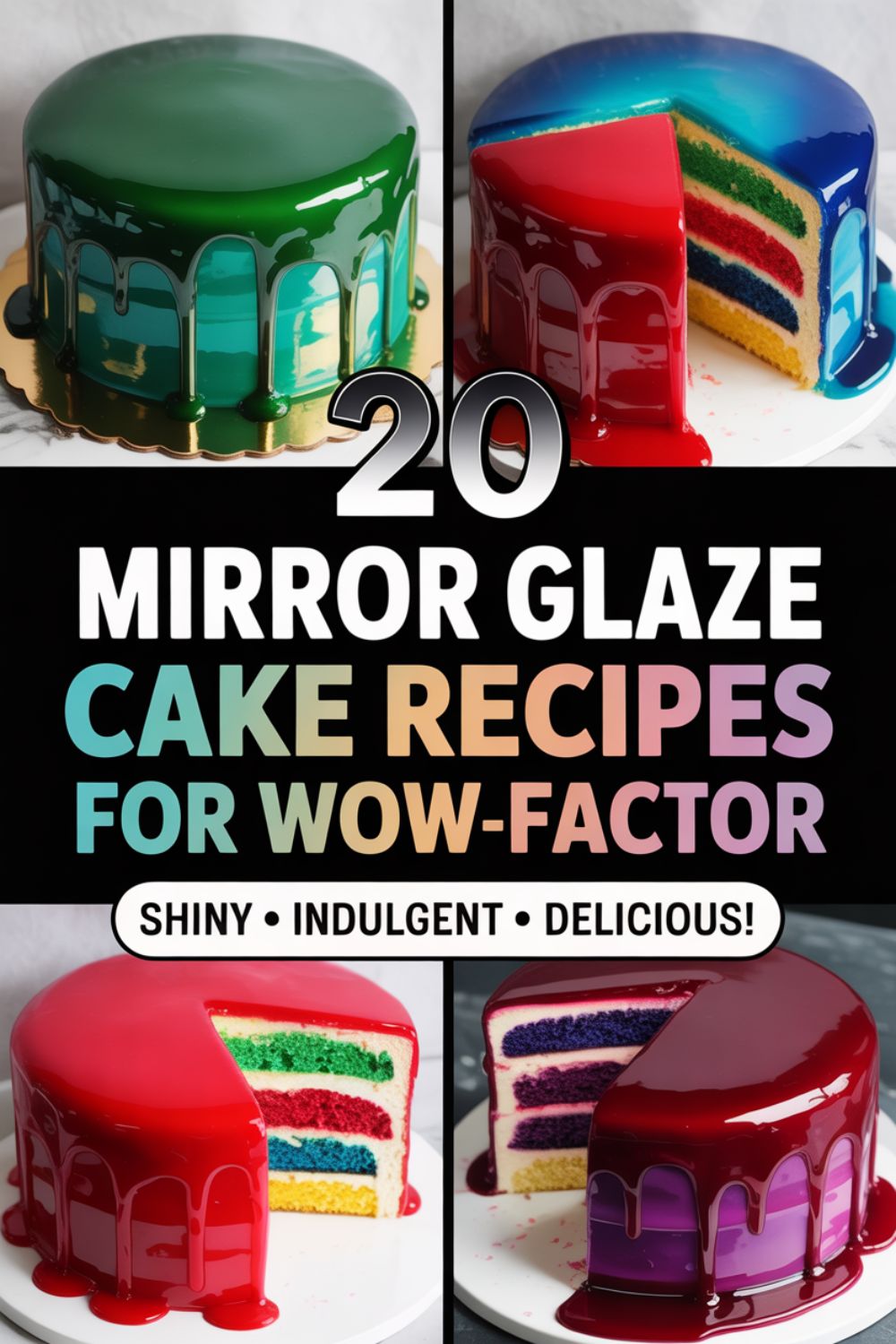
Let me be real with you: mirror glaze is basically makeup for cakes. Got a cake that came out a little lopsided? Mirror glaze. Frosting job looking rough? Mirror glaze. Want to hide the fact that you maybe overbaked it just a touch? You guessed it.
The glaze itself is made from gelatin, sugar, sweetened condensed milk, and white chocolate, which sounds fancy but takes maybe 15 minutes to throw together. The magic happens when you get it to exactly the right temperature—usually around 90-95°F. Too hot and it slides right off your cake like water. Too cold and you get a goopy, uneven mess. This is where a digital kitchen thermometer becomes your best friend, and honestly, I don’t know how I baked without one before.
What I love most about mirror glaze is how forgiving it actually is once you nail the temperature thing. You can swirl colors together, create galaxy effects, go full unicorn mode, or keep it elegant with a single glossy shade. The gelatin creates that signature shine while the white chocolate adds richness and helps the glaze set properly without cracking.
The Base Cakes That Work Best
Frozen Works Better Than Fresh (I Know, Weird)
Here’s something nobody tells you until you’ve ruined a cake or two: you need to freeze your cake before glazing. Room temperature cakes? Disaster. Even chilled cakes can be problematic. The glaze needs to hit a cold, firm surface to set properly and create that perfect glossy finish.
I freeze my cakes for at least 4-6 hours, sometimes overnight if I’m being extra careful. You want them rock solid. This also makes crumb coating way easier if you’re doing a buttercream base first. And yeah, you can absolutely use a boxed cake mix for this—I do it all the time. The glaze is the star here, not necessarily the cake itself.
Shape Matters More Than You Think
Domed cakes work beautifully with mirror glaze because the curve helps the glaze flow naturally. Flat-topped cakes can work too, but you might get some pooling on top. I use a rotating cake stand when I’m pouring—makes it way easier to get an even coat and catch all the drips without contorting yourself into weird positions.
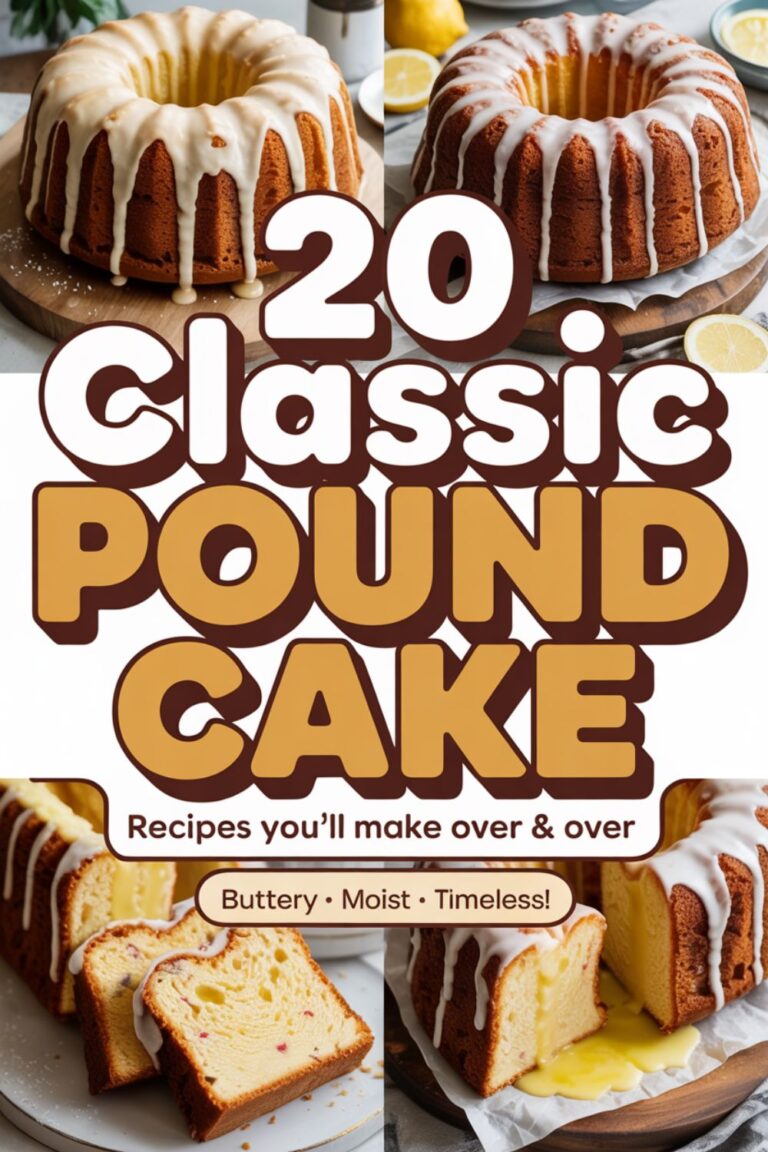
Bundt cakes, pound cakes, and those trendy entremet-style cakes (the ones with the mousse layers) all take mirror glaze like champs. If you’re feeling ambitious, check out some unique cake flavors to pair with your glaze. The contrast between a tangy lemon cake and a sweet, glossy glaze? Chef’s kiss.
Speaking of flavor combinations, you might also love these frosting recipes if you want to add a buttercream layer under your glaze, or these classic pound cake recipes that serve as perfect canvases for mirror glaze.
Classic Mirror Glaze Recipes
1. Basic Chocolate Mirror Glaze
This is your starter recipe. Simple, foolproof, and works on literally any cake. The dark chocolate version gives you that sleek, sophisticated look that makes people assume you went to pastry school. Mix dark chocolate with your basic glaze ingredients, and you’ve got something that looks like it cost $80 at a fancy bakery.
I use this on everything from simple vanilla cakes to more complex layered creations. The chocolate flavor is subtle enough that it doesn’t overpower your cake but strong enough to add that extra richness. Get Full Recipe
2. White Chocolate Vanilla Bean Mirror Glaze
This one’s elegant without trying too hard. The vanilla bean specks give it visual interest, and the white chocolate base means you can easily tint it any color you want. I’ve made this in pale pink for baby showers, mint green for spring parties, and kept it pure white for winter celebrations.
The key with white chocolate glazes is using good quality chocolate. The cheap stuff can get grainy and weird. You don’t need to mortgage your house for it, but spending an extra couple bucks makes a real difference. Get Full Recipe
3. Galaxy Mirror Glaze Cake
Okay, this is where things get fun. Galaxy cakes exploded on social media for good reason—they’re genuinely stunning and surprisingly easy. You make a basic mirror glaze, divide it into portions, tint each section (deep purple, royal blue, black, and a touch of white), then pour them randomly over your frozen cake.
The colors swirl together naturally as they flow down the sides, creating that cosmic effect. I like to finish these with edible star glitter because subtlety is overrated. Every time I make one, someone asks if I bought it from a bakery. Get Full Recipe
Mirror Glaze Essentials I Actually Use
After making more mirror glaze cakes than I can count, these are the tools and resources that actually make a difference:
Physical Products:
- Digital Instant-Read Thermometer – Seriously, temperature is everything with mirror glaze. This takes the guessing game out completely.
- Silicone Spatula Set – You need flexible spatulas that can handle hot glaze without melting. These are my go-to.
- Gel Food Coloring Kit – Liquid food coloring waters down your glaze. Gel colors give you vibrant results without messing up the consistency.
Digital Resources:
- Mirror Glaze Temperature Chart (PDF) – A printable reference guide with troubleshooting tips
- Color Mixing Guide for Glazes – Takes the guesswork out of creating specific shades
- Video Tutorial Bundle – Step-by-step videos showing proper pouring techniques
Join the Community: Our WhatsApp group shares daily tips, troubleshooting help, and shows off everyone’s glaze experiments. It’s honestly the most supportive baking community I’ve found.
4. Rose Gold Mirror Glaze
This trendy finish refuses to go out of style, and I’m not mad about it. Achieving that perfect rose gold shimmer takes a combination of pink gel coloring and rose gold luster dust. You mix the dust into your glaze right before pouring for that metallic finish.
The effect is subtle and sophisticated—perfect for bridal showers, anniversaries, or when you just want something pretty on your Tuesday. Pair it with a champagne-flavored cake for full bougie vibes. Get Full Recipe
5. Red Velvet Mirror Glaze Cake
Taking a classic red velvet cake and topping it with a deep red mirror glaze feels almost too decadent, but that’s exactly why it works. The glaze intensifies the color and gives you that luxe, velvety appearance that matches the cake’s name.
I make this for Valentine’s Day every year now. It’s become my signature move, and honestly, it’s easier than trying to pipe perfect frosting roses. If you love red velvet cakes, you should also check out these red velvet cake recipes for more inspiration.
Fruit-Flavored Mirror Glaze Creations
6. Lemon Mirror Glaze Cake
Bright, cheerful, and perfect for spring or summer gatherings. The lemon flavor in the glaze comes from lemon extract and a touch of lemon zest mixed in right before you pour. The result is a glossy yellow finish with tiny flecks of zest that look intentional and fancy.
I pair this with white chocolate cake or vanilla pound cake. The tartness of the lemon cuts through the sweetness beautifully. It’s one of those flavor combinations that just works, you know? For more citrus inspiration, these lemon cake recipes are absolutely worth checking out.
7. Strawberry Pink Mirror Glaze
This pretty-in-pink glaze uses freeze-dried strawberry powder for natural color and real strawberry flavor. You can find the powder at most grocery stores now, or you can make your own by blitzing freeze-dried strawberries in a spice grinder.
The color is this gorgeous soft pink that photographs beautifully. I’ve made this for countless birthday parties, and it never fails to impress. Kids especially love it because it actually tastes like strawberries, not just pink food coloring. Combine this with some strawberry cake recipes for the ultimate berry experience.
8. Tropical Mango-Passionfruit Glaze
Now we’re getting into more adventurous territory. This glaze combines mango puree and passionfruit juice for a vibrant orange-yellow finish with serious tropical vibes. The fruit purees need to be strained really well to avoid chunks that’ll mess up your smooth finish.
I make this on coconut cakes or pineapple upside-down cakes for that full vacation-mode experience. It’s like eating sunshine, and during gray winter months, that’s worth its weight in gold. Get Full Recipe
9. Blueberry Lavender Mirror Glaze
This one’s for when you’re feeling a little fancy and want something different from the usual suspects. The blueberry gives you a deep purple-blue color, and the lavender adds this subtle floral note that’s sophisticated without being overpowering.
Fair warning: go easy on the lavender extract. A little goes a long way, and too much makes your cake taste like soap. Ask me how I know. (Don’t actually ask—it was traumatic.)
“I made the galaxy mirror glaze for my daughter’s birthday, and people literally gasped when I brought it out. Best part? The cake inside was just boxed mix. Nobody knew, and I’m not telling them.” – Jennifer M., Community Member
Chocolate Lovers’ Mirror Glaze Collection
10. Triple Chocolate Mirror Glaze Cake
For the chocolate obsessed among us (hi, it’s me), this combines a chocolate cake base, chocolate ganache filling, and a rich chocolate mirror glaze. It’s chocolate on chocolate on chocolate, and it’s absolutely not too much.
The deep brown glaze has this almost black appearance that looks incredibly dramatic. I use dark cocoa powder to intensify the color and flavor. Pair it with vanilla ice cream to balance out all that richness. Get Full Recipe
11. Salted Caramel Chocolate Glaze
This glaze hits that perfect sweet-salty balance that makes people take second slices even when they claim they’re full. You make a basic chocolate mirror glaze and swirl in some salted caramel sauce right before pouring.
The caramel creates these beautiful ribbons through the chocolate as it sets. It’s one of those happy accidents that turned into a signature technique. I sprinkle flaky sea salt on top right after glazing for extra texture and that gourmet touch.
12. Cookies and Cream Mirror Glaze
Who says mirror glaze has to be perfectly smooth? This version incorporates crushed Oreo cookies into a white chocolate glaze for that speckled, cookies-and-cream look. The cookie pieces are small enough that they don’t interfere with the pour but visible enough to make it interesting.
Kids go absolutely wild for this one. Adults too, honestly. There’s something about Oreos that transcends age groups. I use those mini food processor things to get the cookies to the right consistency—fine but not powdery.
If you’re into cookies and cream flavor combinations, you might also enjoy these easy cookie recipes or these classic chocolate chip cookies for serving alongside your cake.
13. Mocha Mirror Glaze
Coffee and chocolate belong together, and this glaze proves it. I add espresso powder to a chocolate mirror glaze base for that deep mocha flavor. The coffee enhances the chocolate rather than overpowering it, creating this grown-up dessert that’s perfect for dinner parties.
The glaze comes out a rich, dark brown with subtle coffee undertones. It pairs beautifully with vanilla cakes, chocolate cakes, or even those coffee-flavored cake recipes for serious coffee lovers.
Special Occasion Mirror Glaze Cakes
14. Rainbow Mirror Glaze Birthday Cake
Birthday cakes should be fun, and this delivers. You divide your mirror glaze into six portions, tint each one a different rainbow color, then pour them in stripes or swirls across your cake. The colors blend slightly at the edges, creating these beautiful gradients.
I’ve made this for kids’ parties and adult birthdays alike—everyone loves a rainbow cake. It’s impossible to be in a bad mood while eating something this cheerful. The technique is similar to the galaxy glaze but with brighter, more saturated colors. Looking for more party cake ideas? These party cake recipes and rainbow cake recipes have you covered.
15. Gold Leaf Mirror Glaze for Celebrations
When you really want to show off, add edible gold leaf to your mirror glaze. The glaze itself can be any color, but white or champagne-colored bases make the gold pop beautifully. You apply the gold leaf after the glaze has set but is still slightly tacky.
This is my go-to for milestone celebrations—anniversaries, graduations, big promotions. It’s elegant without being stuffy, and the gold adds just enough luxury to make it special. For more celebration cake ideas, check out these milestone celebration cakes and graduation cake ideas.
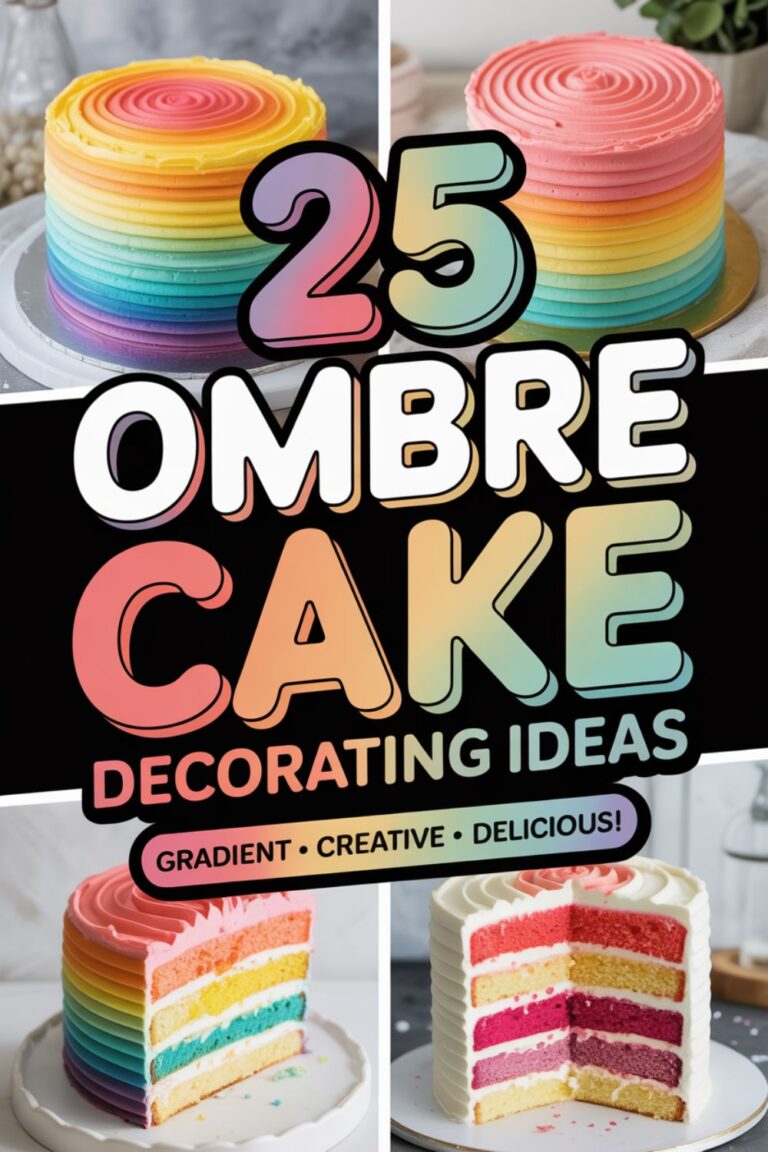
16. Ombre Mirror Glaze Wedding Cake
Creating an ombre effect with mirror glaze takes a little practice, but the results are absolutely worth it. You pour progressively lighter shades of the same color from bottom to top, creating that gradient effect that looks professionally done.
I’ve done this in blush pink, sage green, and lavender for weddings and bridal showers. The technique works best on tiered cakes where you can clearly see the color transition. It’s fancy enough for a wedding but surprisingly achievable for home bakers. Find more elegant options in these DIY wedding cake ideas.
Tools & Resources That Make Mirror Glaze Easier
These aren’t necessary, but they make the whole process smoother and less stressful:
Physical Products:
- Cake Decorating Turntable – Makes pouring and coating your cake infinitely easier. Mine gets used weekly.
- Pour Spout Mixing Bowls – These make pouring the glaze so much cleaner and more controlled. No more dribbles everywhere.
- Offset Spatula Set – Perfect for smoothing your base coat and fixing any glaze mishaps.
Digital Resources:
- Glaze Color Calculator – Figure out exactly how much gel coloring you need for specific shades
- Troubleshooting Guide PDF – Quick reference for when things go wrong (because they will, and that’s okay)
- Design Template Pack – Printable designs to help plan your color placements and patterns
17. Unicorn Mirror Glaze Cake
The unicorn cake trend might have peaked a few years ago, but IMO, it’s still adorable and kids still request it constantly. This involves pastel pink, purple, and blue glazes swirled together, topped with a horn, ears, and maybe some flowers if you’re feeling extra.
The mirror glaze makes the pastel colors pop way more than regular frosting does. Plus, it gives the whole cake this magical, ethereal quality that fits the unicorn theme perfectly. Get Full Recipe
No-Bake Mirror Glaze Options
18. Frozen Mousse Cake with Mirror Glaze
Plot twist: you don’t actually need to bake anything to make a mirror glaze cake. Frozen mousse cakes are perfect for this technique. You make a simple mousse (chocolate, vanilla, fruit-flavored, whatever), freeze it in a cake pan, then glaze it.
The frozen mousse stays firm during the glazing process, and since it’s meant to be eaten cold anyway, the glaze doesn’t affect the texture. This is my summer entertaining secret weapon. For more no-bake inspiration, these icebox cake recipes are game-changers.
19. Cheesecake with Mirror Glaze
Cheesecake and mirror glaze are actually perfect partners. The dense, smooth texture of cheesecake provides an ideal surface for the glaze to set on. Plus, cheesecakes are already chilled/frozen, so you’re halfway there.
I usually go with fruit-flavored glazes on cheesecake—the tanginess of the cheese pairs beautifully with berry or citrus glazes. The glossy finish makes even a simple cheesecake look bakery-level fancy. Explore more options with these cheesecake recipes for every occasion.
“I was terrified to try mirror glaze because it looked so complicated. Made the basic chocolate version following the temperature guidelines, and it worked perfectly on my first try. Now I won’t shut up about it to anyone who’ll listen.” – Marcus T., Community Member
20. Ice Cream Cake Mirror Glaze
This is probably the most fun entry on this list. Ice cream cakes are already frozen solid, making them perfect for mirror glaze. The glaze sets instantly on the frozen surface, creating this incredibly smooth, professional-looking finish.
The key is working quickly since ice cream melts fast. Have your glaze ready at the right temperature, your cake positioned on a rack over a pan, and pour confidently without overthinking it. The results are honestly stunning, and people always assume it came from an expensive ice cream shop. Get more ideas from these ice cream cake recipes perfect for summer.
Troubleshooting Common Mirror Glaze Problems
Let’s talk about what goes wrong because it will go wrong at some point, and that’s completely normal. Your first mirror glaze probably won’t be perfect, and that’s totally fine. Mine looked like a melted crayon situation, but it still tasted great.
Temperature issues are the most common problem. According to food science research on sugar syrups and glazes, temperature precision is critical for achieving the right consistency and finish. If your glaze is too hot (above 95°F), it’ll slide right off your cake and pool at the bottom. Too cold (below 85°F), and it gets thick and doesn’t flow smoothly, leaving you with an uneven coating.
Air bubbles are another common frustration. They usually come from over-mixing or not letting the glaze sit before pouring. After you make your glaze, let it sit for a few minutes, then strain it through a fine-mesh sieve. This removes most bubbles and any small lumps.
Color issues happen when you add gel coloring to glaze that’s too hot. The heat can change how the color develops. Add your coloring when the glaze is around 100°F, then let it cool to pouring temperature. This gives you more accurate, vibrant colors.
If your cake shows through the glaze, you probably didn’t start with a smooth enough base. I always do a crumb coat of buttercream first, freeze it until rock solid, then glaze. The buttercream fills in any imperfections and gives the glaze something to grip onto.
Making Mirror Glaze Ahead
One of the best things about mirror glaze is that you can make it ahead and store it. I usually make mine 2-3 days before I need it, which takes all the stress out of cake day. It keeps in an airtight container in the fridge for up to a week.
When you’re ready to use it, reheat it slowly. I do 10-second bursts in the microwave, stirring between each burst, until it reaches that magic 90-95°F temperature. Don’t rush this part—uneven heating creates hot spots that can mess up your glaze consistency.
You can also freeze mirror glaze for up to three months. Thaw it overnight in the fridge, then reheat as usual. The texture might be slightly different, but honestly, I can rarely tell the difference once it’s on the cake.
Flavor Variations and Add-Ins
Once you’ve mastered the basic technique, start playing with flavors. Extract oils work better than liquid extracts since they don’t thin out your glaze. I keep peppermint, orange, raspberry, and almond extract oils on hand for different flavor combinations.
Freeze-dried fruit powders add color and flavor without affecting consistency. You can find strawberry, blueberry, raspberry, and even more exotic options like dragon fruit or acai at most health food stores or online. Just make sure they’re finely ground with no chunks.
Spices work too, though you need to be conservative. A pinch of cinnamon in a chocolate glaze, a tiny bit of cardamom in a vanilla glaze, or some ginger in a lemon glaze can add complexity without being overwhelming. Start small—you can always add more next time.
Related Recipes You’ll Love
Frequently Asked Questions About Mirror Glaze
Do I need to freeze my cake before applying mirror glaze?
Yes, absolutely. Your cake needs to be frozen solid for the glaze to set properly. The cold temperature makes the glaze firm up quickly, creating that smooth, glossy finish. Room temperature or even just chilled cakes will cause the glaze to slide off or set unevenly.
Can I use mirror glaze on cupcakes?
You can, but it’s tricky. Cupcakes don’t have enough surface area for the glaze to really show off, and the curve can make pouring difficult. If you’re set on it, freeze your cupcakes solid and use a spoon to pour a small amount over each one. Individual mini cakes work better than traditional cupcakes for this technique.
How long does mirror glaze stay shiny?
In the fridge, mirror glaze stays glossy for about 2-3 days. After that, it can start to dull or develop condensation. At room temperature, it stays shiny for maybe 6-8 hours before the surface begins to lose that perfect mirror finish. For best results, glaze your cake the day you’re serving it.
Can I make mirror glaze without gelatin for vegetarian guests?
Yes, you can substitute agar-agar for gelatin, though the texture will be slightly different. Use about 2 teaspoons of agar-agar powder for every tablespoon of gelatin the recipe calls for. The setting properties are similar, but agar sets a bit firmer and at higher temperatures, so you might need to adjust your pouring technique slightly.
Why is my mirror glaze bumpy or uneven?
Usually this happens because of temperature problems or air bubbles. Make sure your glaze is exactly 90-95°F when you pour, and always strain it through a fine-mesh sieve before using. Also check that your base cake is smooth and frozen solid—any imperfections will show through the glaze.
Final Thoughts on Mirror Glaze Magic
Mirror glaze cakes look intimidating, but they’re honestly one of the easier fancy cake techniques once you understand the basics. Temperature control, a frozen cake, and decent quality ingredients are pretty much all you need. Everything else is just practice and experimentation.
Don’t stress if your first attempt doesn’t look Instagram-worthy. Mine didn’t, and I still ate the whole thing without shame. The beautiful thing about baking is that even the failures usually taste good. Each time you make mirror glaze, you’ll get better at reading the consistency, timing the pour, and creating the effects you want.
Start with something simple—a basic chocolate or vanilla glaze in a single color. Once you nail that, branch out into the galaxy effects, ombres, and more complex color combinations. The skills build on each other, and before you know it, you’ll be the person everyone asks to make their birthday cakes.
The most important thing is to have fun with it. Mirror glaze is meant to be playful and creative. Experiment with colors, try different flavor combinations, and don’t be afraid to mess around. Some of my best designs came from happy accidents or “let’s see what happens if I do this” moments.
Now go make something shiny and delicious. Your kitchen is about to look a lot more like a pastry shop, and honestly, that’s a good look on everyone.