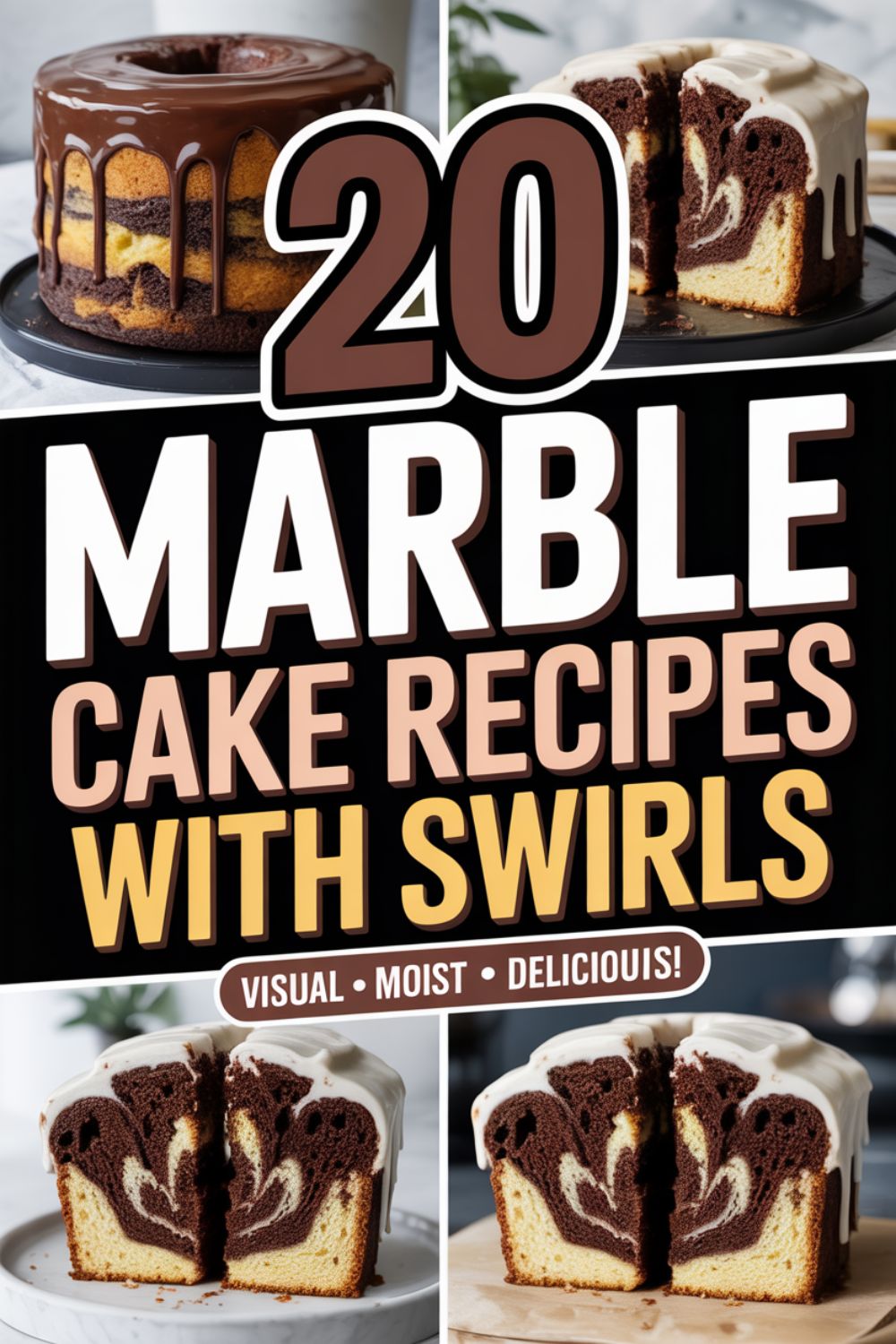
20 Marble Cake Recipes with Swirls
Classic chocolate-vanilla magic meets modern baking brilliance
Look, I’m just going to say it—marble cake doesn’t get the respect it deserves. While everyone’s out here obsessing over red velvet and salted caramel whatever, marble cake sits there quietly being absolutely gorgeous and delicious at the same time. That hypnotic swirl of chocolate and vanilla? It’s not just pretty. It’s the perfect answer to the age-old “chocolate or vanilla” debate.
I’ve spent way too many Saturday afternoons perfecting these swirls, and honestly, I’m not even mad about it. There’s something ridiculously satisfying about dragging that knife through two batters and watching them dance together. Sometimes you get it perfect. Sometimes it looks like a weird cow print. But hey, that’s the charm of marble cake—no two slices are ever the same.
Whether you’re craving that classic loaf your grandma used to make or wanting to show off with a fancy layered version, these 20 recipes have you covered. Some are dead simple, others are a bit extra, but they’re all worth the flour on your kitchen floor.
What Makes Marble Cake So Special Anyway?
Marble cake isn’t rocket science, but there’s definitely some baking chemistry happening in that oven. When you’re working with two different batters—one rich and chocolatey, one smooth and vanilla—you’re basically creating controlled chaos. The vanilla batter gives you that tender, buttery crumb while the chocolate adds depth and that gorgeous contrast.
Here’s the thing though: the swirl technique matters more than you’d think. Under-swirl and you’ve got a boring striped cake. Over-swirl and everything turns muddy brown. You want that Goldilocks zone where the two batters are distinct but beautifully intertwined. According to research on cake chemistry, the proteins in your batter need to stay separated enough to maintain those visual distinctions while baking together harmoniously.
The German immigrants who brought this recipe to America in the 1800s knew what they were doing. They understood that sometimes you don’t need to choose between flavors—you can have both in one gorgeous package.
The Classic Marble Loaf: Where It All Begins
This is your gateway marble cake. The one that started it all. You make one big batter, split it in half, add cocoa powder to one portion, and layer them in a loaf pan. Then comes the fun part—the swirl.
I use this 9×5 loaf pan for all my marble cakes because it’s got the perfect depth for those dramatic swirls. The darker finish also helps with even browning, which matters when you’re working with two different colored batters.
The key is to alternate your batters in dollops—don’t just layer them. Think checkerboard pattern, then drag your knife (or this offset spatula which I actually prefer) through in a figure-eight motion. One pass lengthwise, one pass widthwise. Stop there. I mean it. Get Full Recipe.
Why Your Marble Pattern Might Be Failing
I’ve made this mistake approximately a million times: adding too much cocoa powder to the chocolate portion. You want your chocolate batter to be slightly thinner than the vanilla, or it sinks to the bottom and you lose your swirl. Start with less cocoa than you think you need. You can always add more next time.
Also, if your batters are different temperatures, they won’t swirl well together. Both need to be the same consistency. This is why I always make my chocolate batter second—it has time to come to the same temperature as the vanilla while I’m prepping the pan.
Layered Marble Cake: The Show-Stopper
Okay, so you’ve mastered the loaf. Now let’s talk about the layer cake version that’ll make people think you went to pastry school. This one requires two 9-inch round cake pans and a bit more confidence, but the payoff is huge.
The technique is similar, but instead of making a loaf, you’re dividing your marbled batter between two round pans. The real magic happens when you frost it. I’m partial to a simple chocolate buttercream because it doesn’t compete with the marble pattern when you slice into it. Some folks like vanilla. Do whatever makes you happy.
For the frosting, I always use this stand mixer because hand mixing buttercream is honestly a workout I didn’t sign up for. Plus, the paddle attachment gets it super fluffy without incorporating too much air. Get Full Recipe.
Speaking of cakes that impress, if you’re into the whole “make it look professional” thing, you might want to check out some unique cake flavors or these bundt cake recipes that are basically foolproof.
Getting Those Perfect Cake Layers
Here’s what nobody tells you: you need to level your cakes. That dome on top? It’s gotta go. I use this cake leveler because it’s adjustable and way easier than trying to eyeball it with a serrated knife. Trust me, I’ve butchered enough cakes to know.
Also, freeze your layers for 20 minutes before frosting. It makes crumb coating so much easier, and you won’t end up with cake chunks in your buttercream.
Meal Prep Essentials Used in These Recipes
9×5 Non-Stick Loaf Pan
The foundation of every great marble loaf. Dark finish for even baking.
Digital Kitchen Scale
Because measuring flour by volume is a recipe for inconsistent cakes.
Silicone Spatula Set
For folding batter and scraping bowls clean. Heat resistant up to 600°F.
Ultimate Marble Cake eBook
50+ tested recipes with troubleshooting guides and swirl techniques.
Baking Chemistry Masterclass
Video course explaining the science behind perfect cakes every time.
Recipe Scaling Calculator
Digital tool for adjusting ingredient ratios for any pan size.
Join our WhatsApp Baking Community for daily tips, recipe swaps, and troubleshooting help from fellow marble cake enthusiasts.
Mini Marble Bundt Cakes: Individual Perfection
Sometimes you don’t want to share. I get it. That’s where mini bundt cakes come in. You get all the marble magic in a portion-controlled package that’s ridiculously cute.
I invested in this mini bundt pan last year and it’s probably my most-used baking tool now. Six individual cakes, each with their own swirl pattern. The trick is to fill each cavity about halfway with vanilla batter, add a spoonful of chocolate, then top with more vanilla. One quick swirl with a toothpick and you’re done.
These are perfect for gifting, by the way. Wrap them individually in parchment paper, tie with twine, and you’ve got a homemade present that actually looks homemade in the best way possible. Get Full Recipe.
Marble Sheet Cake: For When You Need to Feed a Crowd
Birthday party? Office potluck? Neighborhood gathering? Sheet cake is your friend. The marble version gives you all the elegance of a layer cake with about half the effort.
Use a 13×18 sheet pan (yes, the one with the slightly taller sides—it matters). Same technique as the loaf, but you’re working with a bigger canvas. I like to do diagonal swirls for sheet cakes because it creates a more dramatic pattern when you cut into it.
For large gatherings, I usually pair this with some amazing frosting recipes or keep it simple with a dusting of powdered sugar.
The Cream Cheese Frosting Debate
People have strong opinions about this. IMO, cream cheese frosting on marble cake is borderline perfect. The tang cuts through the sweetness and complements both the chocolate and vanilla. But some purists think it’s too much. You do you.
If you’re Team Cream Cheese, make sure to use full-fat cream cheese (not the spreadable kind) and beat it separately before adding the butter. Game changer. Get Full Recipe.
Marble Pound Cake: Dense, Rich, and Ridiculously Moist
This is not your light, fluffy situation. Pound cake is dense by design, and when you add the marble effect, you get something that’s almost fudgy in the chocolate sections. It’s intense in the best way.
The original pound cake recipe called for a pound each of butter, eggs, flour, and sugar. These days, we’ve adjusted the ratios a bit, but it’s still a heavy batter. That density is actually perfect for marbling because the batters don’t separate as easily during baking.
I bake this in a pullman loaf pan for that professional bakery look—straight sides, perfect slices every time. The lid is optional, but if you use it, you get a super even top that’s great for glazing.
For more dense and delicious options, these classic pound cakes are worth exploring too. Get Full Recipe.
Marble Cupcakes: Portion Control Never Looked This Good
Cupcakes are just small cakes, right? Wrong. The physics change when you’re working in a smaller space. The swirl technique needs to be more precise because you’re working with maybe two tablespoons of batter per cupcake.
Here’s my method: Use a cookie scoop to portion vanilla batter into lined cupcake tins—one scoop per cup. Add a smaller scoop of chocolate batter on top. One toothpick swirl in the center, and that’s it. Don’t overthink it.
These bake faster than full cakes—usually 18-20 minutes. Set a timer. Overbaked cupcakes are tragic, and I speak from experience. Get Full Recipe.
If you’re into the cupcake life, you might also dig these cake pops for parties, or go wild with some drop cookies that use similar techniques.
The Frosting Swirl Technique
Want to go full marble? Make two frostings—chocolate and vanilla—and load them side by side in a piping bag fitted with a large star tip. When you pipe, you get a marbled frosting swirl. It’s extra, but sometimes extra is exactly what you need.
Vegan Marble Cake: Plant-Based Perfection
You don’t need eggs and dairy to make a killer marble cake. I’ve tested this version about twenty times, and it’s honestly indistinguishable from the traditional recipe.
The secret is using aquafaba (that weird liquid from canned chickpeas—seriously) in place of eggs. It whips up just like egg whites and provides the same structure. For the butter, I use a high-quality vegan butter that’s at least 80% fat. The cheap stuff doesn’t cream properly.
The marbling technique is exactly the same. In fact, vegan batters sometimes swirl even better because they tend to be a bit thinner. Get Full Recipe.
For more plant-based baking inspiration, check out these vegan cookies that prove you don’t need animal products to make incredible desserts.
Gluten-Free Marble Cake: No Compromises
Gluten-free baking used to be a nightmare, but the flour blends available now are legitimately good. I use this gluten-free all-purpose flour that includes xanthan gum, so you don’t need to add it separately.
The one adjustment: gluten-free cakes need a bit more moisture. I add an extra egg yolk and a tablespoon of sour cream to the batter. The texture comes out tender and never crumbly. The marble pattern works exactly the same way as traditional recipes.
If you’re navigating the gluten-free world, these gluten-free cookies are also pretty fantastic. Get Full Recipe.
Marble Cheesecake: Because Why Not?
Okay, this one’s a bit different, but hear me out. A chocolate and vanilla swirled cheesecake with a graham cracker crust? Absolutely worth the effort.
The technique is similar—make your base cheesecake batter, divide it, flavor half with melted chocolate. Pour them into a springform pan and swirl. The difference is you’re working with a much thicker batter, so your swirls need to be more deliberate.
This bakes low and slow—325°F for about an hour. Use a water bath to prevent cracking. And yes, you absolutely need heavy-duty aluminum foil to wrap the pan, or you’ll end up with a soggy crust from water leaking in. Not that I’ve ever done that. Multiple times. Get Full Recipe.
For more cheesecake brilliance, explore these cheesecake recipes that cover everything from classic to creative.
No-Bake Marble Cake: Yes, It’s Possible
Sometimes it’s too hot to turn on the oven. Or your oven’s broken. Or you’re just feeling rebellious. Enter the no-bake marble cake.
This uses a combination of crushed cookies, cream cheese, and whipped cream to create a mousse-like texture. You make two mixtures—one with crushed chocolate cookies, one with vanilla wafers—layer them in a loaf pan, swirl, and refrigerate overnight.
It’s not traditional cake texture, obviously. It’s more like a semifreddo situation. But when you slice it and get that marble pattern without ever turning on the oven? Feels like magic. Get Full Recipe.
If you’re into the no-bake life, these no-bake cookies are equally genius for hot summer days.
Tools & Resources That Make Baking Easier
Adjustable Cake Leveler
For perfectly flat layers every single time. Works on cakes up to 10 inches.
Offset Spatula Set
Small, medium, and large for frosting and swirling. Dishwasher safe.
Oven Thermometer
Because your oven is probably lying to you about its actual temperature.
Marble Cake Troubleshooting Guide
Downloadable PDF covering the 15 most common marble cake fails and fixes.
Swirl Technique Video Library
15 different marbling techniques demonstrated in slow-motion detail.
Baking Conversion Charts
Printable charts for pan sizes, ingredient substitutions, and temperature conversions.
Get exclusive access to our WhatsApp Testing Kitchen where we share experimental recipes and early access to new techniques.
Marble Coffee Cake: Breakfast Goals
Coffee cake gets a bad rap for being too sweet or too dry, but when you add the marble element, something magical happens. The chocolate swirls keep it interesting, and the crumb topping adds texture that makes it actually worth eating for breakfast.
I make this in a 9×9 square pan because it’s the perfect size for a weekend brunch. The streusel topping is non-negotiable—cold butter, flour, brown sugar, and cinnamon. Mix it with your fingers until it’s clumpy, then scatter it over the swirled batter.
FYI, this freezes beautifully. Cut it into squares, wrap individually, and you’ve got grab-and-go breakfast for weeks. Get Full Recipe.
For more morning-appropriate cakes, these coffee cakes with crumb topping and breakfast cakes for brunch are total winners.
The Perfect Coffee Pairing
Real talk: this cake deserves good coffee. Not that office break room situation. Invest in freshly roasted beans and a decent burr grinder. The chocolate notes in the cake play beautifully with a medium roast.
Marble Cake Pops: Adorable and Addictive
Cake pops are tedious, I’m not gonna lie. But when you nail them, they’re absolutely worth the effort. The marble pattern shows up differently when you’re working with crumbled cake mixed with frosting—you get these random swirls that are impossible to predict.
Here’s the process: bake a basic marble sheet cake, let it cool completely, then crumble it into fine crumbs. Mix with just enough frosting to bind it together (usually about 1 cup of frosting per 9×13 cake). Roll into balls, insert lollipop sticks, freeze, then dip in melted chocolate.
The random marble pattern inside is the whole point. Every pop is unique. Get Full Recipe.
Upside-Down Marble Cake: A Twist on Tradition
This combines two classic concepts—upside-down cake and marble cake—into something totally new. You caramelize your topping (I like pears or plums) in butter and brown sugar at the bottom of the pan, then pour your marbled batter on top. When you flip it, you get fruit with those gorgeous chocolate-vanilla swirls underneath.
The fruit adds moisture and prevents the cake from being too sweet. Plus, it looks incredibly impressive with minimal effort. I use a 10-inch cast iron skillet for this because you can do the whole thing in one pan—caramelize the fruit on the stove, add the batter, transfer to the oven.
Serve it warm with vanilla ice cream and prepare for compliments. Get Full Recipe.
If you’re into fruit-topped cakes, definitely explore these upside-down cake recipes for more inspiration.
Marble Cake with Chocolate Ganache: Maximum Decadence
Sometimes you want to go full dessert mode. This is that time. A simple marble loaf, cooled completely, then topped with a glossy chocolate ganache that drips down the sides in the most satisfying way.
Ganache is stupid simple: equal parts cream and chocolate by weight. Heat the cream until it’s just simmering (don’t boil), pour over chopped chocolate, let sit for two minutes, then stir until smooth. That’s it.
Pour it over your cooled cake and let gravity do its thing. The ganache will set up shiny and gorgeous. For extra points, sprinkle flaky sea salt on top while it’s still wet. Get Full Recipe.
Ganache Troubleshooting
If your ganache breaks (looks grainy instead of smooth), you can save it. Add a tablespoon of cream and blend with an immersion blender. The emulsion will come back together. I’ve done this more times than I care to admit.
Marble Cake Donuts: Because Why Not?
Baked donuts are criminally underrated. They’re lighter than fried, still delicious, and the marble pattern works perfectly in a donut pan.
Same basic technique—make your batter, divide it, add cocoa to half. But instead of alternating dollops, you’re piping both batters simultaneously into the donut molds. I use a large piping bag with the two batters loaded side by side. When you pipe, you get natural swirls.
These bake in 12 minutes. Glaze them, eat them warm, regret nothing. Get Full Recipe.
Marble Angel Food Cake: Light and Dramatic
Angel food cake is all about the egg whites—you’re creating this incredibly light, airy structure through mechanical leavening (beating air into the whites). Adding a marble element is tricky because you can’t be too aggressive with your swirling or you’ll deflate the batter.
The solution: keep your chocolate portion minimal. I add just 2 tablespoons of cocoa powder to about a third of the batter, then very gently fold the two batters together in the tube pan. The result is subtle swirls rather than dramatic contrasts, but that’s kind of perfect for angel food.
You absolutely need a tube pan with removable bottom for this. Regular pans won’t work—the cake needs to climb the sides as it bakes, and you have to invert it to cool. Get Full Recipe.
For more light and airy options, these moist cake recipes cover the full spectrum from dense to delicate.
Marble Dump Cake: The Laziest Version Ever
Dump cake gets a bad rap from baking snobs, but I’m not here to judge. Sometimes you need dessert in 10 minutes with minimal dishes, and this delivers.
Layer chocolate cake mix and vanilla cake mix (dry, straight from the boxes) in a 9×13 pan. Pour melted butter over everything. Don’t stir—the magic happens in the oven as the butter activates the mixes and they bake into distinct but swirled layers.
Is it fancy? No. Does it taste like you spent 30 seconds throwing it together? Also no. It’s weirdly good, and I’m not sorry about it. Get Full Recipe.
For more convenience-based brilliance, these dump cake recipes and boxed cake mix hacks are total game changers.
Marble Cake Ice Cream Sandwiches: Next-Level Frozen Treats
Bake a marble sheet cake, cool it completely, then freeze it. Cut into squares, sandwich your favorite ice cream between two squares, wrap individually, and keep them in the freezer for emergency dessert situations.
The cake stays soft even when frozen (fat and sugar are magic), and you get this incredible texture combination. I like using coffee ice cream because it plays well with both the chocolate and vanilla cake.
Make a batch on a lazy Sunday, store them in a freezer-safe container, and you’ve got dessert ready to go for the next month. Get Full Recipe.
If you’re into frozen desserts, these ice cream cakes take it to another level.
Marble Tres Leches Cake: Absolutely Indulgent
Tres leches (three milks) cake is already ridiculously moist and rich. Adding a marble element just makes it even more interesting. You bake the cake normally, poke holes all over it, then pour the milk mixture over everything and let it soak.
The marble pattern stays visible even after soaking, which is kind of miraculous. The chocolate sections absorb slightly less milk than the vanilla, so you get this contrast in both flavor and texture.
This needs to sit overnight in the fridge before serving. I know that requires planning, but it’s worth it. Top with whipped cream and cinnamon before serving. Get Full Recipe.
The Milk Mixture Ratio
Traditional tres leches uses evaporated milk, sweetened condensed milk, and heavy cream. The ratio matters more than you’d think. I go 1:1:1, but some recipes use more condensed milk. Experiment and find what you like, but don’t oversoak—there’s a fine line between moist and soggy.
Marble Wedding Cake: For the Big Day
Look, if you’re actually making your own wedding cake, you’re braver than I am. But if you’re doing a small, intimate ceremony or just want a DIY element, a three-tier marble cake can absolutely work.
You’ll need three different pan sizes—typically 6-inch, 8-inch, and 10-inch rounds. Make three batches of batter (yes, really), marble each one, bake, cool, frost, stack. Use cake dowels to support the tiers, or the whole thing will collapse catastrophically.
The marble pattern makes it feel special without requiring advanced decorating skills. Keep the frosting simple—smooth buttercream with maybe some fresh flowers on top. Get Full Recipe.
For more wedding inspiration, these DIY wedding cake ideas cover a range of skill levels and styles.
Frequently Asked Questions
Why does my marble cake turn out muddy instead of distinct swirls?
Over-swirling is usually the culprit. You only need one or two passes with your knife through the batter—more than that and the chocolate and vanilla batters blend together too much. Also make sure your two batters are similar in consistency so they don’t bleed into each other during baking.
Can I make marble cake ahead of time?
Absolutely. Unfrosted marble cake actually gets better after a day as the flavors meld together. Wrap it tightly in plastic wrap and store at room temperature for up to three days, or freeze for up to three months. Just make sure it’s completely cool before wrapping to avoid condensation.
What’s the best cocoa powder to use for marble cake?
Dutch-process cocoa gives you a smoother, less acidic chocolate flavor that pairs beautifully with vanilla. Natural cocoa works too but has a sharper taste. I prefer Dutch-process for marble cakes because it creates a more elegant contrast rather than competing flavors.
Why did my chocolate batter sink to the bottom?
The chocolate batter was probably too heavy or too thin. Make sure you’re not adding too much cocoa powder—start with less than you think you need. The chocolate and vanilla batters should have nearly identical consistency. If the chocolate is thinner, it’ll sink during baking.
Can I use oil instead of butter in marble cake?
You can, but the texture will change. Oil produces a moister cake, but butter gives you better flavor and that classic tender crumb. If you want the best of both worlds, use half butter (for flavor) and half oil (for moisture). This works particularly well in pound cakes and bundt cakes.
Final Thoughts on Marble Cake Mastery
Here’s what I’ve learned after making literally hundreds of marble cakes: there’s no such thing as a perfect swirl. Every cake is different, and that’s entirely the point. Some days you’ll get these gorgeous, gallery-worthy ribbons of chocolate and vanilla. Other days it’ll look like abstract art created by a caffeinated squirrel. Both are delicious.
The beauty of marble cake is in its unpredictability. You can follow the exact same recipe, use the exact same technique, and get a completely different pattern every time. That randomness is what makes slicing into a marble cake so satisfying—you never quite know what you’re going to get.
Start with the basic loaf. Master that. Then branch out to the layer cakes, the bundts, the cheesecakes, whatever speaks to you. Use good ingredients. Don’t over-swirl. Keep your batters at the same temperature. And for the love of all that’s holy, let your cakes cool completely before you frost them.
Most importantly, stop stressing about making it perfect. Marble cake is supposed to be a little wild, a little unpredictable. That’s the whole point. Make it, share it, enjoy it, and don’t overthink the swirls.
Similar Posts
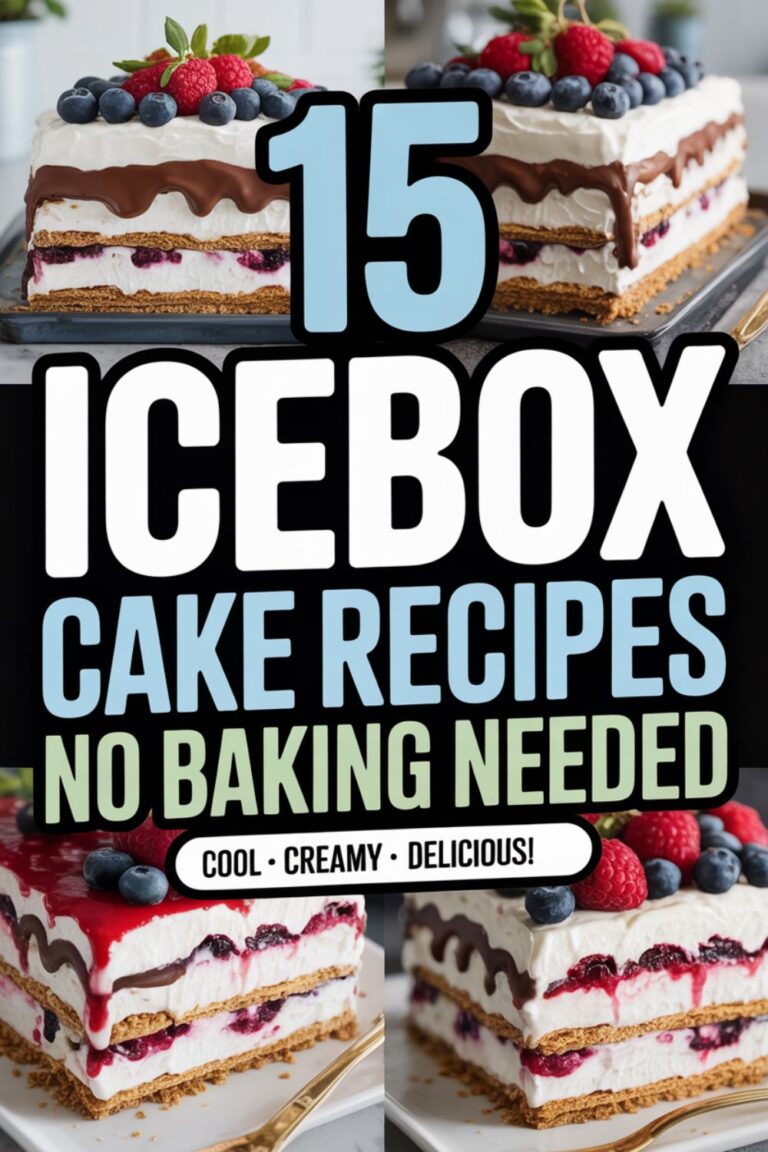
15 Icebox Cake Recipes (No Baking Needed)
15 Icebox Cake Recipes (No Baking Needed) – Purely Plateful 15 Icebox Cake Recipes (No Baking Needed) Look, I’ll be straight with you—there’s something borderline magical about a dessert that requires zero oven time yet somehow tastes like you slaved away all afternoon. Icebox cakes are that rare unicorn in the baking world where laziness…
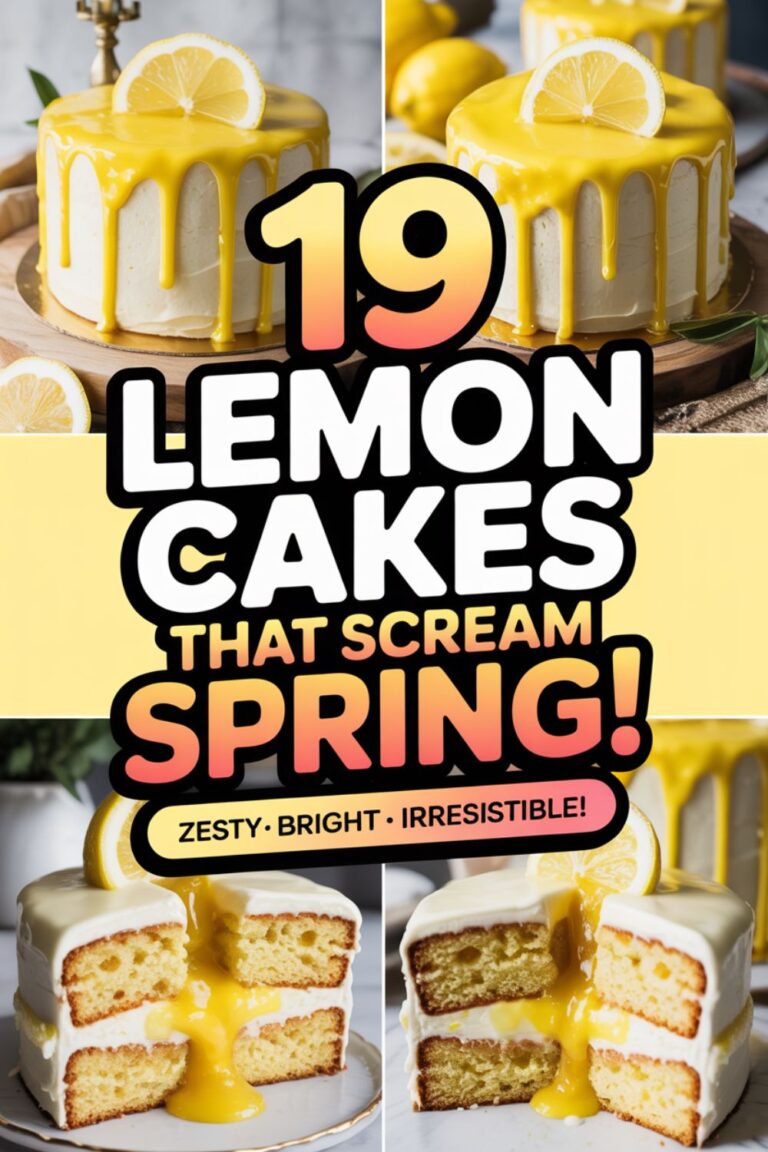
19 Lemon Cakes That Scream Spring
19 Lemon Cakes That Scream Spring 19 Lemon Cakes That Scream Spring Look, I know winter makes us all want to hibernate under blankets with hot chocolate, but spring hits different. The sun finally shows up, flowers start doing their thing, and suddenly you’re craving something bright, tangy, and unapologetically cheerful. That’s where lemon cakes…
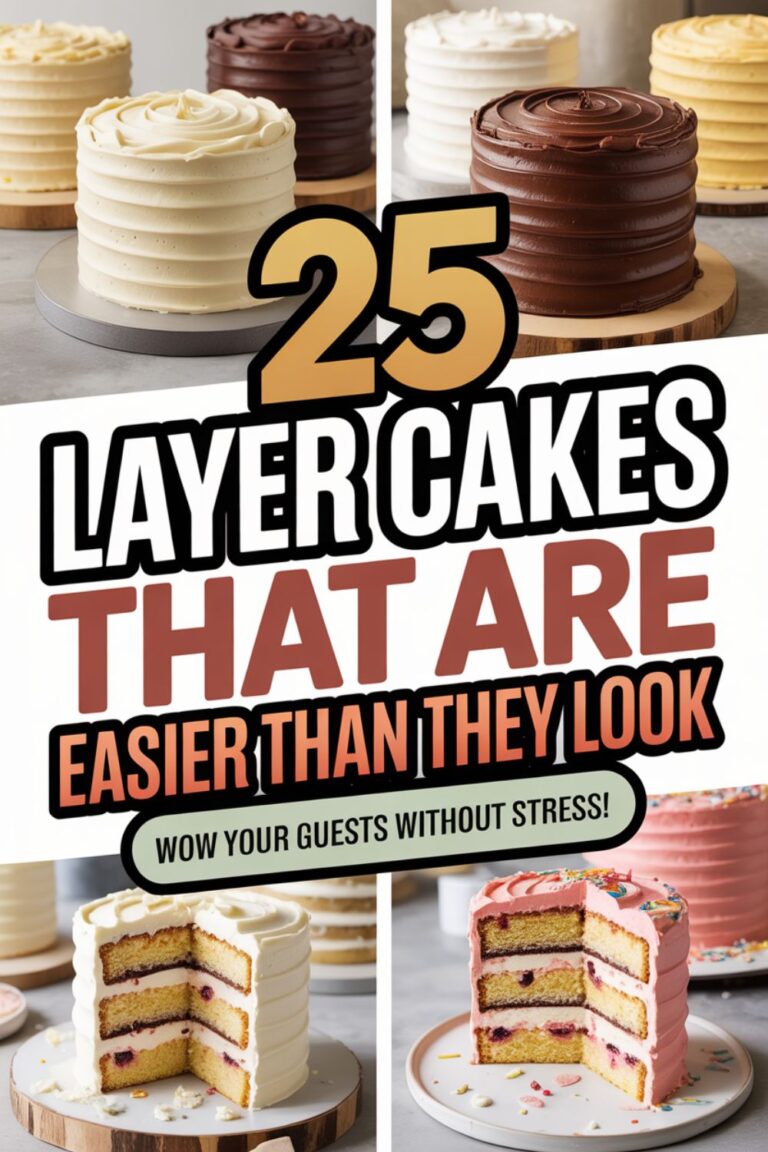
25 Layer Cakes That Are Easier Than They Look
25 Layer Cakes That Are Easier Than They Look 25 Layer Cakes That Are Easier Than They Look Look, I get it. Layer cakes have this intimidating reputation that makes most home bakers scroll right past them on Pinterest. But here’s the truth nobody tells you: most of these towering beauties are just basic cake…
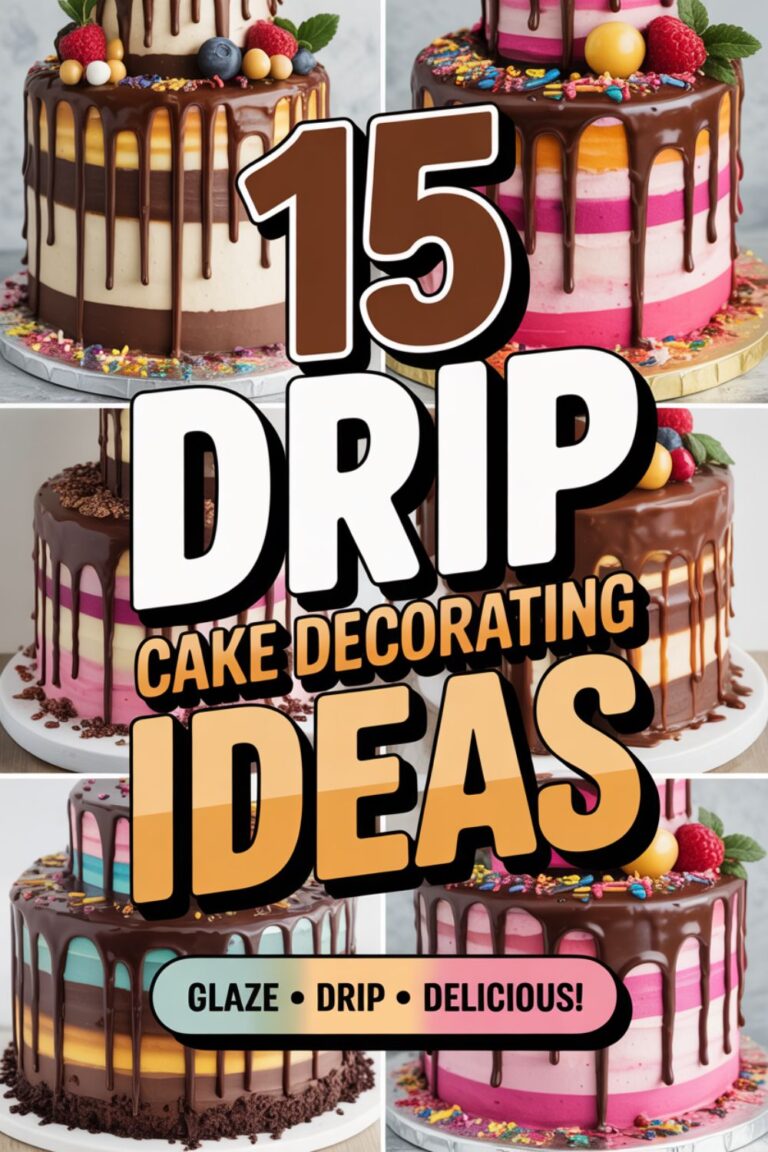
15 Drip Cake Decorating Ideas That’ll Make You Look Like a Pro
15 Drip Cake Decorating Ideas That’ll Make You Look Like a Pro 15 Drip Cake Decorating Ideas That’ll Make You Look Like a Pro So you want to make a drip cake that doesn’t look like your frosting had a meltdown? I get it. The first time I attempted a drip cake, I ended up…
21 Cottagecore Spring Bakes That Feel Cozy and Fresh
21 Cottagecore Spring Bakes That Feel Cozy and Fresh 21 Cottagecore Spring Bakes That Feel Cozy and Fresh Look, I’m not gonna lie—there’s something ridiculously satisfying about pulling a golden-crusted pastry out of the oven while the March wind rattles your windows. Spring baking hits different when you lean into that cottagecore vibe, you know?…
15 Tres Leches Cake Variations That’ll Change Your Life
15 Tres Leches Cake Variations That’ll Change Your Life 15 Tres Leches Cake Variations That’ll Change Your Life Look, I’ll be straight with you—I spent way too long thinking tres leches was just one cake. You know, that classic vanilla sponge drowning in three kinds of milk? Turns out, I was missing out on an…