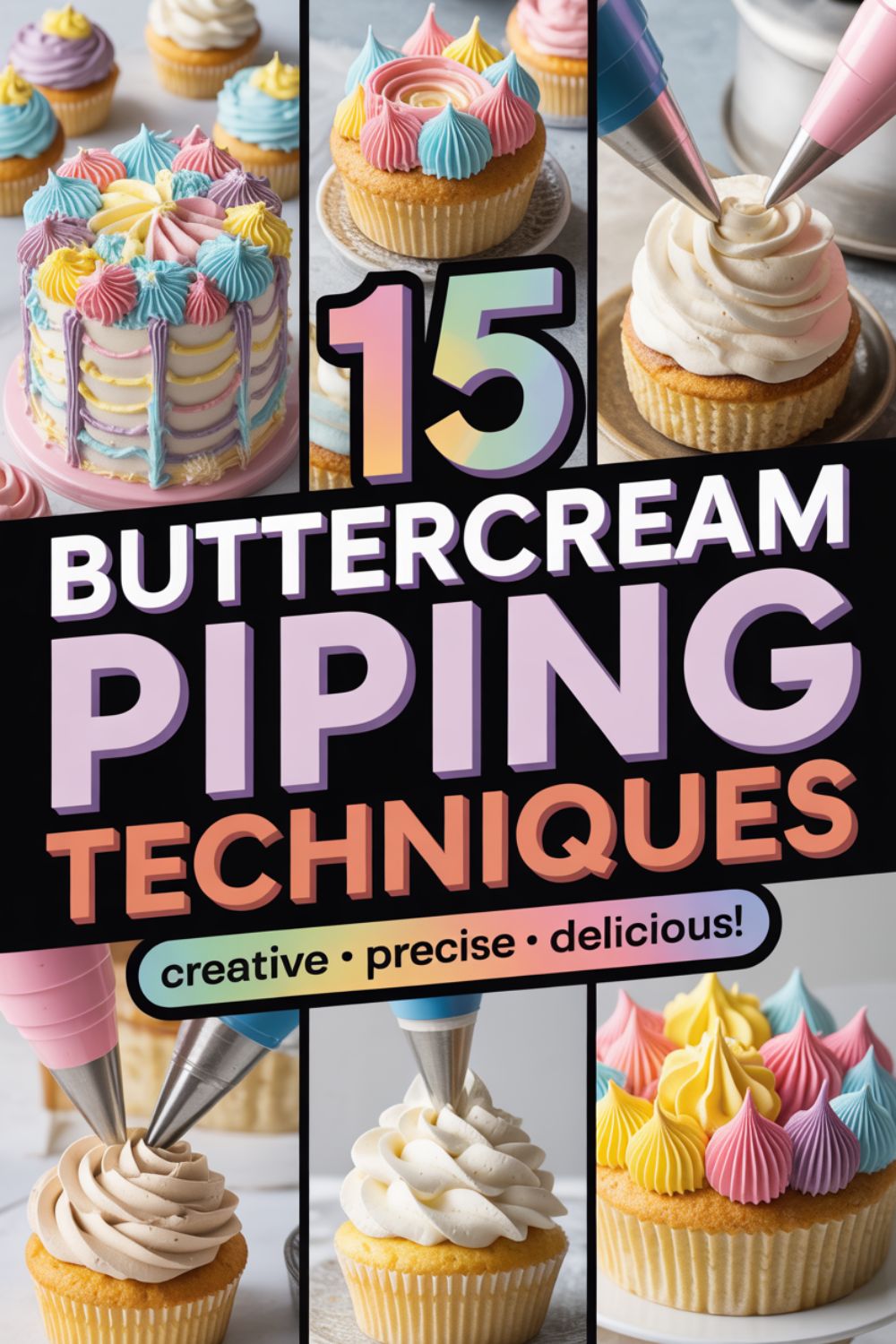
15 Buttercream Piping Techniques That’ll Transform Your Cake Decorating Game
So you’ve baked the perfect cake, whipped up a silky batch of buttercream, and now you’re staring at your piping bag like it’s some kind of alien technology. Trust me, I’ve been there. The first time I tried to pipe a rose, it looked more like a sad cabbage than anything remotely romantic.
Here’s the thing though—buttercream piping isn’t nearly as intimidating as it looks on those Instagram videos where people casually create edible masterpieces in under 60 seconds. With the right techniques and a bit of practice, you’ll be piping like a pro faster than you can say “Swiss meringue buttercream.”
I’m breaking down 15 buttercream piping techniques that actually work in real kitchens with real skill levels. No fancy culinary degree required.
Why Buttercream Piping Techniques Actually Matter
Look, you could absolutely slather frosting on a cake with a butter knife and call it a day. But learning proper piping techniques opens up a whole new world of cake decorating possibilities. You can turn a basic layer cake into something that looks bakery-worthy without spending hours on fondant (which, between you and me, doesn’t taste half as good anyway).
Piping techniques also help you control portion sizes better—especially important when you’re trying to frost multiple cupcakes with consistent swirls. Plus, there’s something genuinely satisfying about squeezing that bag and watching a perfect rosette appear under your hands.
The science behind buttercream consistency matters too. According to food science research, the ratio of butter to sugar significantly affects the structural integrity and piping performance of buttercream frostings. Too soft and your designs will melt into sad puddles; too stiff and you’ll get hand cramps before you finish the first dozen cupcakes.
Getting Your Setup Right Before You Start
The Piping Bag Situation
First things first—you need a decent piping bag. I used to think those flimsy disposable bags from the grocery store were fine until one exploded mid-rose and covered my kitchen in pink buttercream. Not my finest moment.
I switched to these reusable silicone piping bags and haven’t looked back. They’re sturdier, easier to grip, and you can actually see the frosting level through the material. Plus, they wash up in seconds.
If you’re going the disposable route (totally valid for big projects where cleanup sounds like torture), grab heavy-duty disposable piping bags instead of the wimpy ones. Your hands will thank you.
Piping Tips That Actually Get Used
You don’t need every piping tip ever invented. Honestly, you can accomplish about 80% of cake decorating with just five or six tips. Here’s what I actually reach for on a regular basis:
- Round tips (sizes 2, 4, 12): Perfect for writing, dots, beads, and basic borders
- Star tips (1M, 2D): Your go-to for classic rosettes and swirls
- Petal tip (104): The only one you need for roses and ruffles
- Leaf tip (67, 352): Makes instant greenery without the frustration
- Multi-opening tips: Creates grass, hair, or fur textures in one squeeze
I keep mine organized in this clear tip organizer because fishing through a drawer of pointy metal objects gets old fast.
Technique #1: The Classic Rosette (Start Here)
If you’re going to master one technique, make it the rosette. It’s the Swiss Army knife of piping techniques—works on cupcakes, cakes, and even as borders. You’ll use a large star tip (1M is the standard).
Hold your bag perpendicular to the surface, about half an inch above your target. Apply steady pressure while moving in a tight circular motion from the outside in. Release pressure and pull straight up at the center.
The trick? Consistent pressure and keeping that circular motion smooth. I practiced on parchment paper about 47 times before I felt confident enough to try it on an actual cupcake. Worth it.
Technique #2: The Petal Rose (Looks Harder Than It Is)
Roses intimidated me for months until I realized they’re basically just controlled wiggles. You’ll need a petal tip (104) for this one. The wide end goes at the base, narrow end points up.
Start with a cone of buttercream as your base (or use a flower nail if you’re feeling fancy). Pipe overlapping petals while rotating your surface, keeping that wide end anchored at the bottom. The first few will look wonky—that’s normal. By the tenth one, you’ll start seeing actual flower shapes emerge.
Want to level up your cake game even more? Check out these frosting recipes that pair perfectly with advanced piping techniques.
Technique #3: The Ruffle Border
This one makes any cake look exponentially fancier with minimal effort. Same petal tip as the rose, but you’re moving it side to side while piping forward along your cake’s edge.
Think of it like drawing a wavy line, except you’re controlling the waviness with how much you move that tip back and forth. Tight movements create tight ruffles; wider movements create dramatic swoops. I use this technique on basically every kid’s birthday cake because it screams “professional bakery” while being surprisingly forgiving.
Technique #4: Shell Borders (Underrated Classic)
Shell borders might sound old-school, but they’re having a moment again—and for good reason. They add texture and polish to cake edges without requiring advanced skills.
Use a star tip and hold your bag at a 45-degree angle to the surface. Squeeze while pulling slightly forward, then release pressure and pull toward you to create that tail. Repeat, overlapping each shell slightly with the previous one’s tail.
The rhythm is squeeze-pull-release, squeeze-pull-release. Once you get into the groove, you can do an entire cake border in under five minutes.
Piping Tools That Actually Make a Difference
After years of trial and error (and several frosting disasters), here’s what I keep within arm’s reach:
Physical Essentials:
- Professional piping tip set with organizer – Includes all the basics plus a few specialty tips you’ll grow into
- Revolving cake stand – Seriously changes the game for even frosting and consistent borders
- Offset spatula set (small, medium, large) – For smoothing between piping sessions and fixing small mistakes
Digital Resources:
- Video Tutorial Library: Step-by-step piping technique walkthroughs (easier than reading instructions while covered in frosting)
- Printable Piping Guide: Reference sheet showing which tip creates which design
- Buttercream Recipe Calculator: Calculates exactly how much frosting you need for any project size
Technique #5: The Swirl (Cupcake Perfection)
This is what you see on every bakery cupcake, and it’s easier than it looks. You can use either a round tip or a star tip—both create different but equally delicious effects.
Start at the outer edge of your cupcake and pipe in a continuous circular motion, spiraling inward and upward. When you reach the center, release pressure and pull straight up to create that signature peak.
The secret to a tall, Instagram-worthy swirl? Don’t be timid with the pressure. Really commit to that squeeze. Timid pipers end up with sad, flat swirls that look like they’re melting.
Technique #6: Basketweave Pattern
Want people to think you attended pastry school? The basketweave pattern looks incredibly complex but follows a simple, repetitive sequence. You’ll need a flat basketweave tip (though a round tip works in a pinch).
Pipe vertical lines spaced about an inch apart around your cake. Then pipe horizontal lines over and under these verticals, creating that woven appearance. It’s tedious, I won’t lie—but the effect is stunning.
I usually save this technique for special occasions because it does take time. But when I want to really impress someone with a cake, basketweave is my secret weapon. Looking for the perfect cake to showcase this technique? These unique cake flavors provide the perfect canvas.
Technique #7: The Grass/Fur Texture
This multi-opening tip technique is surprisingly therapeutic. You’re basically just squeezing and pulling straight up repeatedly to create texture. Perfect for lawn decorations, fuzzy animals, or adding dimension to cake sides.
The consistency of your buttercream matters here more than most techniques. Too soft and it won’t hold the spiky texture; too stiff and your hand will cramp after 30 seconds. Aim for somewhere between peanut butter and toothpaste consistency.
Technique #8: Writing and Lettering
Writing on cakes stresses people out more than it should. Here’s the truth: nobody expects perfect calligraphy on a homemade cake. They expect a heartfelt message that shows you cared enough to make something from scratch.
Use a small round tip (size 2 or 3) and practice your message on parchment paper first. I keep these reusable practice boards specifically for this purpose—write, wipe, repeat until it looks decent.
Keep your bag at a 45-degree angle and maintain steady, even pressure. Move your whole arm, not just your wrist, for smoother lines. And FYI, cursive is actually easier than printing for piping because you rarely have to lift the tip.
“I was terrified of writing on cakes until I followed this practice-first approach. Now I pipe birthday messages that actually look intentional instead of like a ransom note!” – Jenny from our baking community
Technique #9: Star Flowers (Fast and Impressive)
These aren’t as delicate as roses, but they’re perfect when you need to cover a lot of cake real estate quickly. Use a star tip and pipe small bursts of frosting while barely moving the bag. Each squeeze creates one flower.
Add a small dot in a contrasting color at the center using a round tip, and suddenly they look way more sophisticated. I use these all over spring cakes because they give that garden party vibe without the time investment of roses.
Technique #10: Rope Borders
Rope borders add dimension without overwhelming your design. They work beautifully on rustic cakes or anywhere you want texture without too much fuss.
Hold your star tip at a 45-degree angle and pipe in an “S” shape, overlapping each curve with the previous one. The overlapping creates that twisted rope effect. It takes a couple tries to get the rhythm, but once you’ve got it, you can pipe an entire border on autopilot.
Pro move: Use two different colored frostings in the same bag for a striped rope effect. Just fill opposite sides of your piping bag with different colors and watch the magic happen.
Resources That Made Me a Better Cake Decorator
Beyond the physical tools, these resources seriously leveled up my piping game:
Must-Have Tools:
- Turntable with non-slip base – Cannot overstate how much easier this makes everything
- Coupler set for quick tip changes – Switch tips without emptying your bag. Genius.
- Bench scraper – Perfect for smoothing buttercream before piping details
Digital Guides & Community:
- Troubleshooting Guide: What went wrong and how to fix it next time
- Seasonal Piping Ideas: Monthly inspiration for holiday-themed decorations
- WhatsApp Baking Group: Real-time advice from other bakers when you’re mid-project and panicking
Technique #11: Drop Flowers (When You’re Short on Time)
These are my go-to when I need to decorate something quickly but still want it to look intentional. The drop flower tip creates an entire flower shape in one squeeze—no assembly required.
Hold your bag perpendicular to the surface, squeeze until the flower reaches your desired size, release pressure, and pull straight away. That’s it. Add a contrasting center dot if you’re feeling ambitious, but honestly, they look great as-is.
I used this technique exclusively when making 60 cupcakes for a baby shower last month. Nobody knew I took the easy route, and I finished in time to actually attend the party instead of arriving exhausted and covered in frosting.
Technique #12: Leaf Designs
Leaves add the perfect finishing touch to floral designs, and they’re surprisingly easy with the right tip. The leaf tip (67 or 352) has that perfect teardrop shape built right in.
Hold the bag at a 45-degree angle with the pointed end of the tip facing forward. Squeeze hard at first to create the base, then gradually release pressure as you pull away to form that natural tapered leaf shape. A little flick of your wrist at the end creates a realistic pointed tip.
You can make them curved or straight depending on how you angle your bag. IMO, slightly imperfect leaves look more natural anyway—real leaves aren’t perfectly symmetrical.
Speaking of natural decorations, you might love these coconut cake recipes that pair beautifully with leafy buttercream designs.
Technique #13: Zigzag Borders
The zigzag is like the rope border’s more casual cousin. It’s faster to execute and gives cakes a fun, playful edge—literally.
Using a star tip, pipe in a continuous zigzag motion around your cake’s border. The key is maintaining consistent height and width throughout. I practice the motion in the air a few times before committing to the cake because muscle memory really helps with repetitive patterns like this.
This technique works particularly well on kids’ birthday cakes where you want something visually interesting but not too formal.
Technique #14: Dots and Beads
Never underestimate the power of simple dots. They’re clean, modern, and surprisingly versatile. You can create polka dot patterns, pearl-like borders, or use them to hide imperfections (guilty).
Hold a round tip perpendicular to your surface and squeeze while keeping the tip in contact with the frosting. As the dot expands to your desired size, stop squeezing and pull straight up—no sideways movement or you’ll get a little tail.
For uniform dots, maintain consistent pressure and hold the tip the same distance from the surface each time. This is harder than it sounds, which is why I actually use one of those piping pressure control tools when I need perfectly even dots for a minimalist design.
Technique #15: The Open Star Swirl
This is similar to the classic rosette but creates more texture and drama. Use a large open star tip (2D is my favorite) and pipe in that same circular motion as the rosette, but with more height variation.
Start low and gradually build height as you spiral inward and upward. The open star tip creates those beautiful ridges that catch light and photograph like a dream. This is my signature technique for celebration cakes because it looks incredibly fancy but takes the same effort as a basic swirl.
The buttercream consistency matters here too. Research on emulsion stability shows that temperature control significantly impacts frosting structure—which explains why this technique works better in a cool kitchen.
Common Piping Mistakes (And How to Fix Them)
Let’s talk about what goes wrong because nobody’s piping career is perfect. I’ve made every mistake on this list at least twice.
Air bubbles in your bag: Those annoying bursts that ruin your clean lines? Squeeze frosting down toward the tip until you see it start to come out, then twist the top of the bag. No more surprise explosions.
Hand fatigue: If your hand cramps up after five minutes, your frosting is too stiff or you’re gripping too hard. I use these ergonomic bag holders for big projects—they distribute pressure more evenly across your hand.
Inconsistent shapes: Usually comes down to inconsistent pressure. Practice squeezing at a steady rate without varying the force. It takes time to develop that muscle control, but it’s the difference between okay piping and great piping.
Frosting too soft: Your designs melt immediately after piping? Your kitchen is too warm or your butter-to-sugar ratio is off. Stick the bowl in the fridge for 10 minutes and try again.
Practicing Without Wasting Frosting
Here’s a secret: you don’t need to waste buttercream while practicing. I pipe onto parchment paper, scrape it back into the bowl, and reuse it for practice sessions. It’s not going on a cake someone will eat, so who cares if it’s been recycled a few times?
Once you’re happy with your technique, that’s when you make fresh buttercream for the real deal. This approach saved me probably 20 pounds of butter during my learning phase.
You can also practice with whipped cream or even mashed potatoes if you’re really committed to not wasting ingredients. The consistency is different, but the mechanics are similar enough to build muscle memory.
Frequently Asked Questions
What’s the best buttercream consistency for piping?
You want buttercream that holds its shape but isn’t so stiff you need superhuman strength to squeeze the bag. Think peanut butter texture—firm enough to maintain clean edges but soft enough to pipe without straining. If the buttercream slides off your spatula slowly, you’re in the right zone. Too soft? Add more powdered sugar. Too stiff? Add a teaspoon of milk or heavy cream.
Can I use any frosting for piping, or does it have to be buttercream?
Buttercream (especially American or Swiss meringue) holds shapes best because of its fat content and stability. Cream cheese frosting works but tends to be softer, so you’ll need to add extra powdered sugar for structure. Whipped cream and most ganaches are too soft for detailed piping work, though they’re fine for simple swirls. If you want crisp edges that photograph well, stick with buttercream.
How far in advance can I pipe decorations?
Buttercream decorations actually hold up surprisingly well. You can pipe flowers, borders, and other elements directly onto parchment paper, freeze them on a baking sheet, then transfer them to your cake later. They’ll keep frozen for up to three months. This trick is perfect for making wedding cake decorations ahead of time without the stress.
Why do my piped designs look messy instead of clean?
Usually it’s one of three things: inconsistent pressure (practice squeezing steadily), moving the bag while you’re still squeezing (release pressure before you move), or buttercream that’s the wrong consistency. Also check your tip—if frosting is squeezing out around the edges instead of through the opening, you need a coupler or your tip isn’t fully inserted.
Do I really need special piping tips or can I just cut a corner off a plastic bag?
You can absolutely cut a plastic bag for basic borders and simple swirls. It won’t give you the texture and definition that proper tips create, but it works for casual projects. That said, a basic tip set costs about the same as two bags of powdered sugar and opens up way more decorating possibilities. Worth the investment if you bake more than occasionally.
Final Thoughts on Mastering Buttercream Piping
Here’s what nobody tells you about learning to pipe: it’s not about perfection. It’s about progress. Your first rosette will look ridiculous. Your fifth one will look slightly less ridiculous. By your twentieth, you’ll see actual improvement.
The techniques I’ve shared here cover everything from absolute beginner to intermediate decorator. You don’t need to master all fifteen before you start decorating real cakes. Pick two or three that appeal to you, practice until they feel comfortable, then add more techniques to your arsenal as you go.
I still mess up sometimes. Last week I spelled “birthday” as “birhday” on a cake and had to scrape it off and start over. The birthday girl was turning six, so she thought it was hilarious. Turns out people remember the gesture way more than they remember slight imperfections in your piping work.
So grab that piping bag, fill it with buttercream, and just start. Your cakes are about to get a serious upgrade.