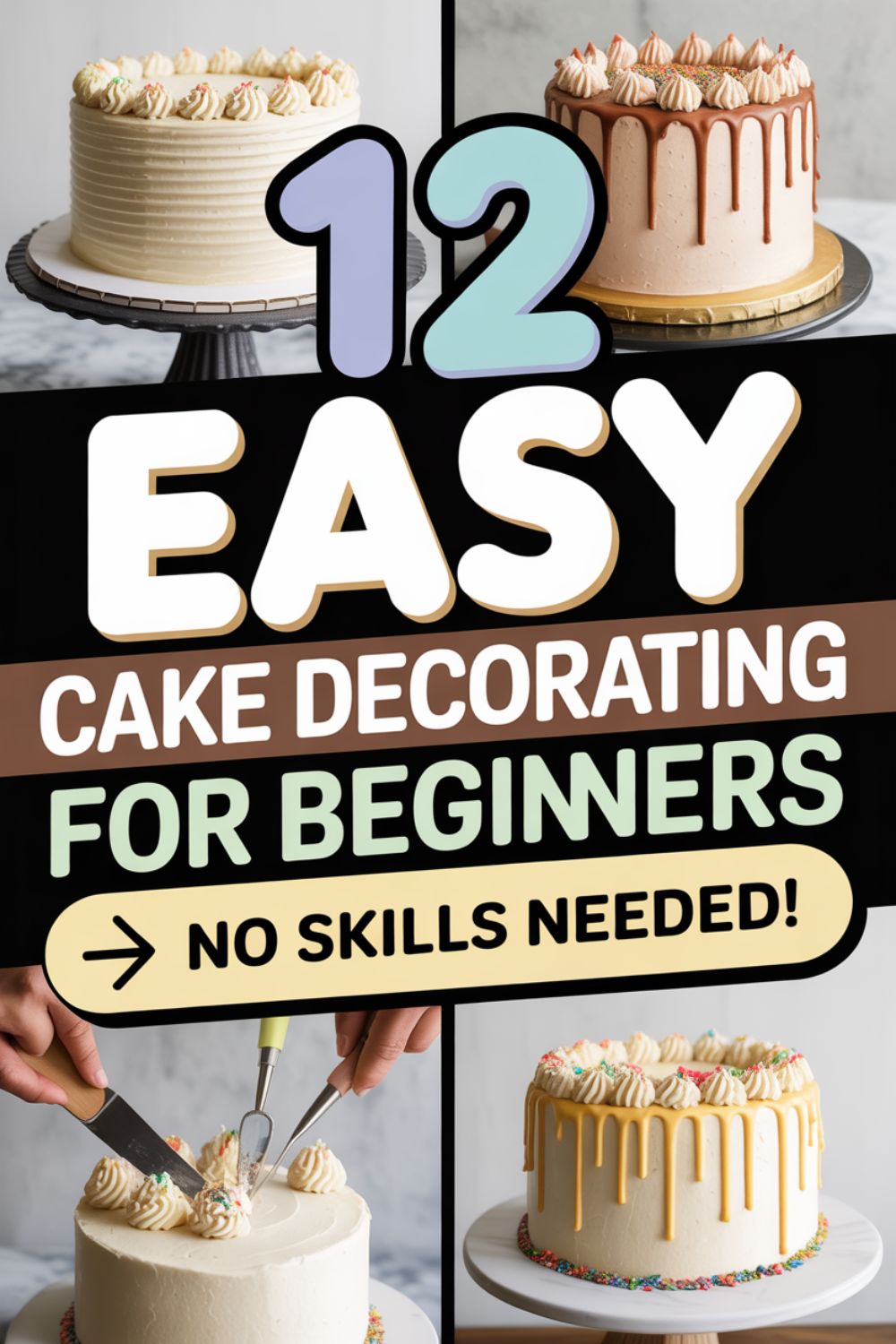
12 Easy Cake Decorating Tips for Beginners
Look, I get it. You see those picture-perfect cakes on Instagram and think there’s no way you could pull that off without a culinary degree and twelve years of practice. But here’s the thing—most of those gorgeous cakes you’re drooling over? They’re made by regular people who just learned a few key tricks.
I’m not gonna lie and tell you that your first cake will look like it belongs in a bakery window. Mine sure didn’t. But after countless frosting disasters and lopsided layers, I figured out what actually works. And honestly? It’s way simpler than you’d think.
The real secret to cake decorating isn’t some expensive tool or magical technique—it’s understanding the basics and not overthinking it. So if you’re tired of cakes that look homemade in the worst way possible, stick around. These twelve tips will get you from “I tried” to “Wait, you made that?” faster than you can say buttercream.
1. Cool Your Cake Completely (Seriously, I Mean It)
This sounds obvious, but you’d be surprised how many people skip this step because they’re excited or in a hurry. I’ve been there. You pull that cake out of the oven, it smells amazing, and you think “eh, it’s cool enough.”
Wrong. So wrong.
Warm cake will literally melt your frosting and turn your beautiful creation into a sad, drippy mess. The science behind butter temperature explains why—butter begins to soften around 65°F and fully melts around 90°F. Your fresh-from-the-oven cake? Way hotter than that.
Give your cakes at least two hours to cool at room temperature. Better yet, wrap them in plastic wrap and stick them in the fridge overnight. Cold cake is actually easier to work with because it’s sturdier and less likely to shed crumbs everywhere.
2. Level Your Layers (Yes, Even If They Look Okay)
That dome on top of your cake? It’s gotta go. I know it looks kinda cute, but trust me—it’s standing between you and a professional-looking cake.
You can use a cake leveler or just a long serrated knife. I personally prefer using a serrated bread knife because I’m cheap and it works just as well. Place your cake on a turntable (or a lazy Susan, or even an upside-down plate), hold your knife parallel to the counter, and slowly rotate the cake while keeping the knife steady.
Some people get stressed about wasting cake, but here’s a secret: those scraps make excellent “quality control” samples. Which is baker-speak for “eating cake while you work.” You’re welcome.
If you’re planning to bake more elaborate designs later, you might want to explore easy cookie recipes first—leveling cookies is way more forgiving than cakes, so it’s good practice.
3. Master the Crumb Coat (Your New Best Friend)
This is the game-changer that nobody tells beginners about. A crumb coat is basically a thin layer of frosting that seals in all those loose crumbs before you add your final decorative layer.
Think of it like primer before paint. You spread a super thin layer of frosting all over your assembled cake—and I mean thin, like you should still be able to see the cake through it. Then you chill it for 15-30 minutes until it’s firm.
This creates a smooth base that catches all the crumbs, so when you apply your final frosting layer, you get that clean, professional finish instead of a crumb-speckled disaster. According to cake decorating experts, frozen cakes are less crumbly and easier to frost smoothly.
After you’ve nailed the crumb coat, your final layer goes on like butter. Literally.
4. Invest in an Offset Spatula (Not Optional)
Listen, I tried decorating cakes with regular kitchen spatulas and butter knives for way too long. Don’t be like past me.
An offset spatula is bent at an angle so your knuckles don’t drag through the frosting. This small design change makes a massive difference. You can glide smoothly across the cake’s surface without your hand constantly bumping into what you just frosted.
I recommend getting two sizes—a larger one (around 8-9 inches) for covering big surfaces, and a smaller one (4-5 inches) for detail work and touching up edges. You can find decent ones for under twenty bucks, and they’ll last forever.
The angled design also gives you better control for creating those smooth sides everyone obsesses over. Once you use one, you’ll wonder how you ever managed without it.
5. Get a Turntable (Or Fake It)
A cake turntable is one of those tools that seems unnecessary until you use one. Then you can’t imagine life without it.
The ability to spin your cake while keeping your frosting hand stationary makes everything easier. It’s like the difference between trying to paint a portrait while the canvas spins versus trying to walk circles around it with your paintbrush.
That said, if you’re not ready to commit, a lazy Susan works fine. Or get creative—I’ve used an upside-down cake pan on top of a bowl in a pinch. It won’t be as smooth as a real turntable, but it’s better than nothing.
FYI, you don’t need to spend a fortune on one of those fancy metal turntables. A basic plastic rotating cake stand will do the job just fine for beginners.
Speaking of basics, if you’re working on building your fundamental baking skills, simple 5-ingredient cookies are perfect for practicing technique without overwhelming yourself.
6. Choose the Right Frosting (Not All Buttercreams Are Equal)
Here’s where people get tripped up. They see a recipe for some fancy meringue buttercream and think it’ll automatically make their cake look better. Sometimes yes, sometimes no.
For beginners, I’d honestly recommend starting with American buttercream. Yeah, it’s the simple one made with butter, powdered sugar, and milk. But you know what? It’s stable, easy to work with, and holds up at room temperature.
Swiss meringue and Italian meringue buttercream are gorgeous and silky, but they require more precision and can be finicky about temperature. Research shows that butter starts breaking down above 82°F, which makes American buttercream with some shortening more reliable for beginners.
Whatever you choose, make sure it’s the right consistency—not too stiff (it’ll tear your cake) and not too loose (it’ll slide off). If it’s too thick, add a tiny bit of milk. Too thin? More powdered sugar.
And always, always make more frosting than you think you need. Running out halfway through is the worst.
7. Practice Piping on Parchment First
Before you touch that piping bag to your actual cake, practice your designs on a sheet of parchment paper or wax paper. This is non-negotiable if you want to avoid disasters.
You can practice borders, rosettes, writing—whatever you’re planning to put on your cake. The muscle memory you build from a few practice runs makes a huge difference. Plus, if you mess up on parchment, you can just scrape the frosting back into the bowl and try again.
When you’re ready to pipe on the actual cake, work from the middle of the cake toward the edges with your designs. Never pipe right on the edge—leave about a quarter inch of space. This gives you room for error and keeps your decorations from looking cramped.
If you’re completely new to decorated desserts, starting with no-bake cookie recipes can help you practice decorating techniques without the pressure of a full cake.
8. Temperature Control Is Everything
I cannot stress this enough—temperature will make or break your cake decorating experience. Your cake needs to be cool, your frosting needs to be at the right temperature, and your room shouldn’t be a sauna.
Ideal buttercream consistency happens when it’s around room temperature (roughly 70-75°F). Too cold and it won’t spread smoothly. Too warm and it’ll slide right off your cake like it’s trying to escape.
If your frosting seems too soft, stick it in the fridge for 10-15 minutes. If it’s too stiff and tearing your cake, let it sit at room temperature for a bit or give it a quick re-whip.
And here’s something nobody warned me about: if you’re frosting a cake in a hot kitchen, even perfect buttercream will start misbehaving. Turn on the AC, work in the coolest room you have, or frost your cake in the morning before it gets hot.
9. Less Is More (Especially at First)
I see beginners trying to recreate these elaborate multi-colored, fondant-covered, hand-piped masterpieces for their first cake. Then they get frustrated when it doesn’t turn out like the photo.
Start simple. A smooth, evenly frosted cake with fresh berries on top looks elegant and professional. You don’t need fifteen different piping tips and four colors of frosting to make something beautiful.
IMO, a perfectly smooth finish with minimal decoration beats an over-decorated hot mess every single time. Master the basics first—smooth frosting, clean edges, simple borders. Once you’ve got those down, then start adding complexity.
Think of it like learning to cook. You wouldn’t attempt a seven-course French dinner for your first meal, right? Same principle. Those classic chocolate chip cookies everyone loves? They’re classics because simplicity works.
10. Use the Right Tools for Smooth Sides
You want those bakery-smooth sides? You need a bench scraper (also called an icing smoother). This is the secret weapon professional bakers use.
Here’s the technique: hold the bench scraper against the side of your cake at a 45-degree angle. With your other hand, slowly rotate the turntable while keeping the scraper still. The excess frosting will pile up on the scraper—just scrape it back into your bowl and keep going.
Make sure you get a metal bench scraper, not plastic. The metal ones can be warmed up slightly with hot water, which helps create an even smoother finish. Just run it under hot water, dry it completely, and use it while it’s still warm.
It might take a few tries to get the hang of it. Don’t get discouraged if your first attempt isn’t perfect—mine looked like I’d frosted it in the dark.
11. Sprinkles and Toppings Are Your Safety Net
Look, we all have those moments where the frosting just isn’t cooperating. Maybe there’s a weird spot you can’t smooth out, or the edge got messed up, or there’s a small divot you can’t fix.
This is where sprinkles, fresh fruit, edible flowers, or chocolate shavings become your best friends. Strategic decoration can cover a multitude of frosting sins.
Press sprinkles around the bottom edge to hide any wonky spots where the cake meets the board. Pipe some rosettes on top to disguise that area where you accidentally touched the frosting. Add some berries where the layers shifted slightly.
It’s not cheating—it’s called “problem-solving.” Professional bakers do this all the time. The difference is they’re so good at it, you can’t tell they’re covering mistakes.
If you’re exploring different flavor profiles, try incorporating elements from soft and chewy cookies—those same principles of texture and moisture apply to cake decorating too.
12. Refrigerate Strategically (Not Always)
This one confuses people. Should you refrigerate a decorated cake or not?
It depends. American buttercream is stable at room temperature for 2-3 days thanks to its high sugar content. If your kitchen is cool and your cake doesn’t have perishable fillings, it’s fine to leave it out.
But if you’re using cream cheese frosting, fresh fruit fillings, or you live somewhere hot and humid, refrigeration isn’t optional—it’s required for food safety.
The trick with refrigerated cakes is condensation. When you take a cold cake out into warm air, moisture forms on the surface and can make your frosting look sweaty. To prevent this, store your cake in a box while refrigerated. The condensation will form on the box instead of your beautiful cake.
Take the cake out of the fridge about 1-2 hours before serving so it can come to room temperature gradually. Cold cake tastes muted anyway—room temperature is when all those flavors really shine.
When you’re looking to expand your repertoire beyond basic cakes, experimenting with gluten-free alternatives can teach you about different flour behaviors and moisture content—knowledge that transfers directly to cake decorating.
Frequently Asked Questions
What’s the easiest frosting for beginners to work with?
American buttercream is your best bet when you’re starting out. It’s made with just butter, powdered sugar, milk, and vanilla—simple ingredients you probably already have. It’s stable at room temperature, easy to color, and forgiving if you need to adjust the consistency. Plus, it holds its shape well for piping but spreads smoothly enough for covering cakes.
Why does my frosting keep tearing my cake apart?
This usually happens for one of two reasons: either your frosting is too stiff, or your cake isn’t cold enough. Make sure your cake layers are properly chilled before frosting—this makes them sturdier and less likely to shed crumbs. If your frosting is the problem, add a tiny bit of milk or cream (like a teaspoon at a time) to loosen it up. The consistency should be spreadable but not runny.
Do I really need a turntable, or is it just a fancy extra?
You don’t absolutely need one, but it makes your life so much easier. A turntable lets you spin the cake while keeping your frosting hand steady, which is key for getting smooth, even coverage. That said, if you’re not ready to invest, a lazy Susan or even an upside-down plate on a bowl works in a pinch. Once you try one though, you’ll probably want to upgrade.
How far in advance can I decorate a cake?
It depends on your frosting and filling. Cakes with American buttercream can be decorated 1-2 days ahead and stored at room temperature (covered) in a cool place. If you’re using cream cheese frosting or fresh fruit fillings, refrigerate it and decorate no more than a day ahead. The texture and flavor are always best within 24 hours of decorating, but properly stored cakes will stay good for several days.
What should I do if my cake layers come out uneven?
Don’t panic—this is totally fixable. Level each layer with a serrated knife or cake leveler to remove the domed tops. When you stack them, use a small amount of frosting between layers as “glue,” and press down gently to secure everything. If one layer is significantly thinner, put it in the middle where it’s less noticeable. Small imperfections get hidden once you add the crumb coat and final frosting.
Final Thoughts
Here’s the truth: your first few cakes probably won’t be Instagram-worthy. Mine sure weren’t. But every cake you decorate teaches you something new—what frosting consistency works best, how much pressure to apply with the spatula, when to stop messing with something that’s “good enough.”
The most important thing is to actually start. Stop watching tutorial videos and overthinking every detail. Bake a cake, frost it, and see what happens. You’ll learn more from one hands-on attempt than from a hundred videos.
Remember that even professional cake decorators had to start somewhere. They’ve just made more mistakes than you have—and mistakes are how you learn. That wonky first cake? It’ll still taste delicious, and your friends and family will be impressed that you made it from scratch.
Keep these twelve tips in your back pocket, be patient with yourself, and don’t be afraid to get creative. Maybe you’ll discover your own tricks along the way. And when that day comes when someone asks “Wait, you made that yourself?”—you’ll know all the practice was worth it.
Now go bake something. You’ve got this.